
News
Middle-income families can now enter the draw for public homes in Barajas
Finding a rental in Madrid without spending half one's salary on housing has become one of the greatest difficulties for many families. Now, the City Council has opened the first draw for public homes designed specifically for middle-income households, a group increasingly struggling to remain in the city. The call offers 52 affordable rental homes in Barajas, and the registration deadline is 11 June.
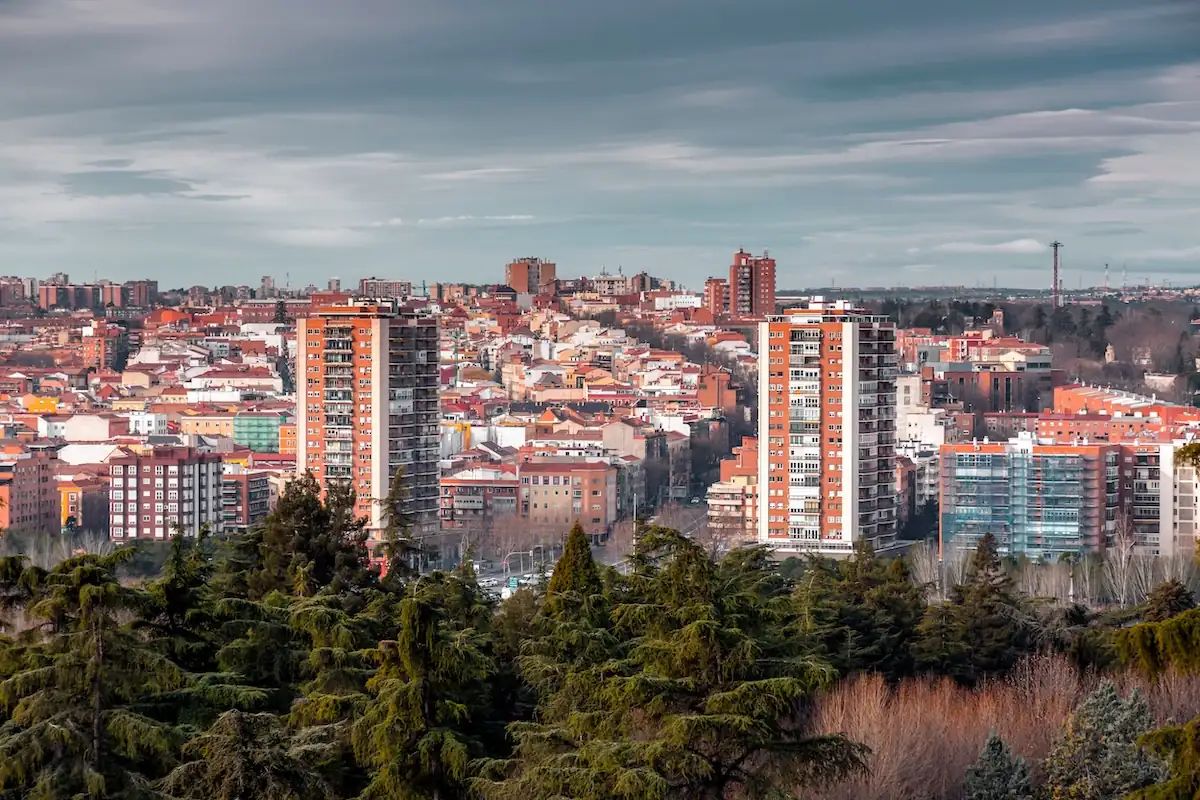
The application can only be made online through the EMVS website. The programme is aimed at people aged between 18 and 50 who have been registered as residents in Madrid for at least five consecutive years —or eight in the past decade— and whose household income, in the case of a family with two children, is between 42,000 and 68,000 euros gross per year.
The City Council says that rent will not exceed 30% of household income. Planned rents range from 700 to 1,000 euros per month for two- and three-bedroom flats, all with a parking space. In a city where many rents already far exceed those figures even in outlying neighbourhoods, the measure seeks to ease the pressure on people who work and have financial stability but have been shut out of both the open market and traditional subsidised housing.
The Iberia Loreto 1 development, located in Barajas, also marks a change in the municipal public-housing model. Until now, many developments were reserved for lower incomes, but the new programme broadens access to middle-income groups who are also suffering from rising prices in Madrid. The project has involved an investment of more than 14.6 million euros and includes adapted homes, bicycle spaces and flats reserved for large families.
The Barajas district is also beginning to transform beyond its usual association with the airport. Its connection with the city centre, new residential developments and a quieter setting than other parts of Madrid are increasingly attracting families seeking to escape the impossible prices inside the M-30 without giving up urban life entirely.
The call has also sparked political debate about who is truly excluded from the system. The opposition points out that thousands of lower-income families are still waiting for public housing and criticises the fact that many vulnerable households will not be able to access this development. The City Council, meanwhile, argues that Madrid needs to expand supply to prevent a growing share of the middle classes from being driven out of the city by rental prices.
Housing has already become one of the major issues reshaping Madrid neighbourhood by neighbourhood. Developments such as the one in Barajas reflect how the city is trying to respond to an increasingly visible reality: even people with stable jobs and average salaries are beginning to struggle to build a long-term life in the capital.