
News
Madrid changes neighbours: occasional-use homes are concentrated in Salamanca
The district of Salamanca has 17,142 homes that are not used as main residences. They make up 21.47% of the 79,809 homes recorded in the latest Censo del INE, an exceptional proportion within Madrid that helps explain a phenomenon increasingly visible in the most expensive areas of the centre: owners who use their flats only during certain times of the year.
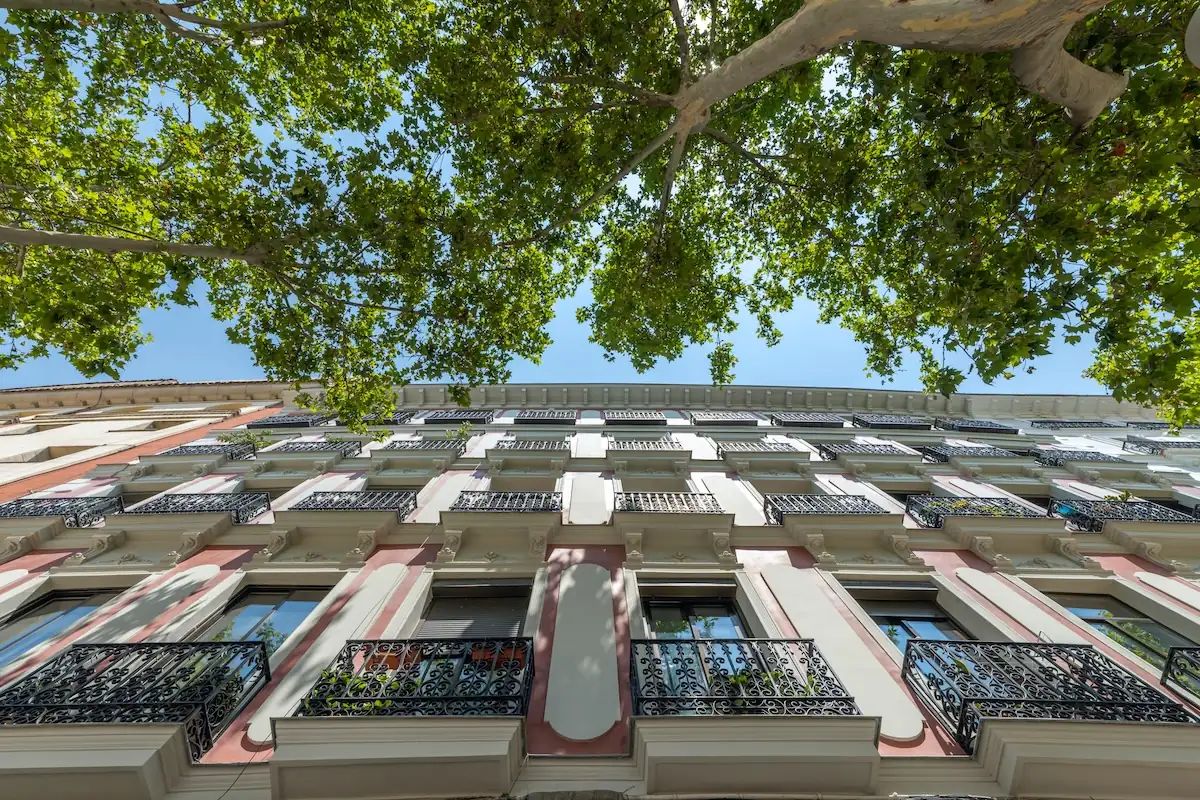
The statistics require a clarification. The INE classifies them as non-main homes, a category covering both second residences used seasonally and empty properties. It is therefore not correct automatically to present the 17,142 as second homes or to state that all belong to foreign buyers.
What the most recent property data do show is that Salamanca continues to attract a market very different from much of Madrid. Transactions recorded in deeds analysed by the General Council of Notaries place some Recoletos streets among the country’s most expensive. In the area around Jorge Juan, Lagasca, Conde de Aranda and Columela, averages close to 15,000 euros per square metre have been reached.
This demand includes buyers who do not need to establish their permanent residence in Madrid. The phenomenon has given rise to the pied-à-terre: high-end homes their owners use when they come for work, their children’s studies, holidays or particular periods, and which remain ownerless for part of the year.
Chamberí increasingly appears as a continuation of that market. In postcode 28010, which includes much of Almagro and Trafalgar, sales in the last year were around 700 transactions, with an average price close to one million euros and an area of 112 square metres. Slightly more than a fifth of buyers were foreign.
The price difference explains part of the shift. In July, sale listings averaged 10,890 euros per square metre in Salamanca and 9,245 euros in Chamberí. Almagro retains features much sought after in the luxury market — classic buildings, large flats and proximity to Castellana — but still makes it possible to find more square metres for the same budget than on Recoletos’ most expensive streets.
The effect is not limited to sale price. When a home is used only for some weeks or months of the year, the relationship with the neighbourhood also changes: the presence of permanent residents in certain buildings decreases and part of consumption adapts to a population with greater mobility and purchasing power. It is a phenomenon difficult to measure street by street, but especially visible in some areas of Salamanca.
The latest portal data also show that renting continues to become more expensive in both districts. In August, supply reached 28.3 euros per square metre in Salamanca, 5% more than a year earlier, and 25.8 euros in Chamberí, 3.1% more.
The great unknown is how much the number of occasionally used homes has really changed since the 2021 Census. Spain still has no new comparable census picture by district, so current developments can be observed in sales and buyer profiles, but do not yet allow it to be stated that Salamanca and Chamberí are experiencing a new quantifiable “boom” in second residences.