
News
Madrid introduces new Cercanías trains with up to 1,884 places per train
New high-capacity Stadler trains began service on the C-7 on 24 August.
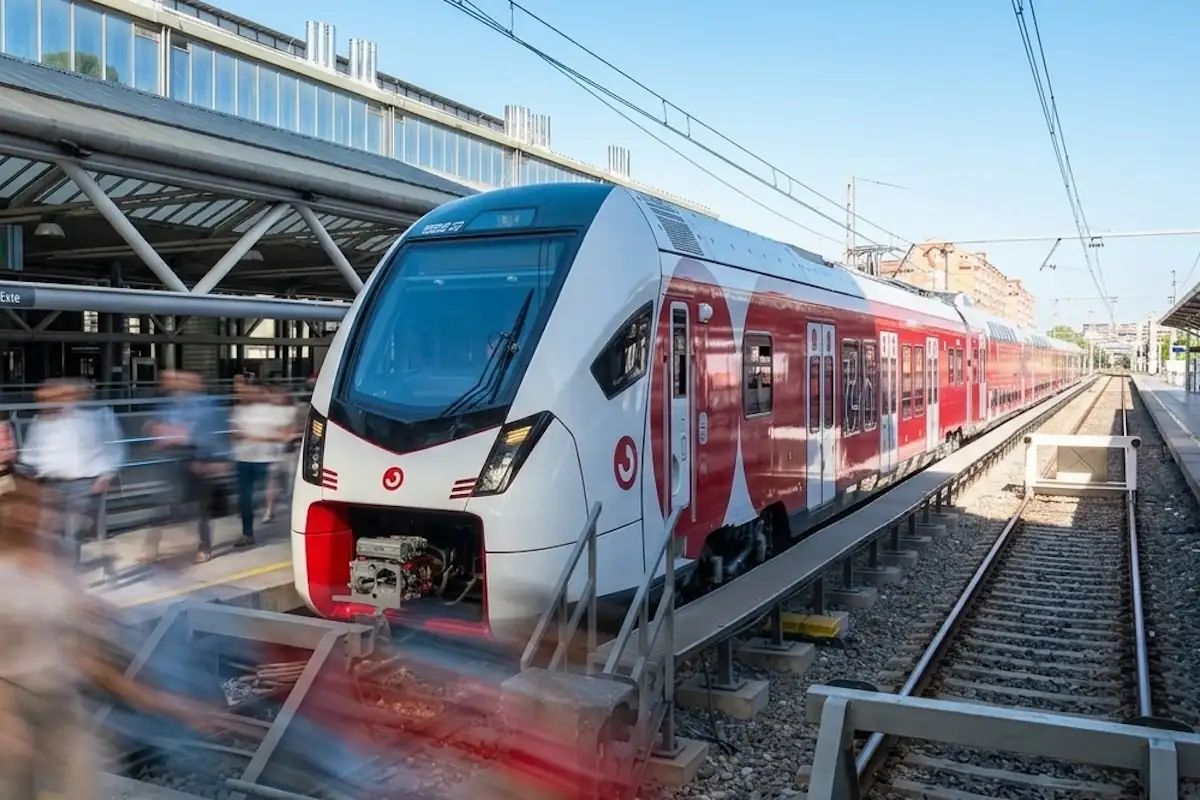
The change is most noticeable in the space available. Renfe has ordered two versions, of approximately 100 and 200 metres, combining single- and double-decker carriages. The first can carry up to 912 passengers and the longer one reaches 1,884 seats, around 20% more capacity than the Civia trains used as the benchmark until now.
The first units are running on the C-7, which connects Alcalá de Henares with Madrid and the western corridor. The rollout will be gradual and Renfe plans to use these trains on all lines in the Madrid network except the C-9, the mountain line between Cercedilla and Cotos.
All 79 will not arrive at once. Renfe plans to complete the introduction during 2026 of nine trains of around 100 metres and eight of 200 metres. Deliveries will then continue until an order for 79 units awarded to Stadler for 1.306 billion euros is complete.
For those who use Cercanías every day, the difference is not only that more passengers can be carried. Some of the doors are at the same height as the platform, with no steps, to make it easier for people with reduced mobility to board and to speed up boarding and alighting at stations with high demand.
The interiors also incorporate multifunctional areas for bicycles, pushchairs and luggage. The 100-metre trains can set aside space for up to six bicycles and the 200-metre trains for 18. There are power sockets and USB connections at the seats, passenger information screens and video surveillance throughout the train. Renfe also plans to add Wi-Fi.
The greater length of some trains, however, requires parts of the infrastructure to be adapted before they can be fully operated across the network. This is especially relevant on the C-5, where Adif is working to extend platforms such as those at Embajadores and Laguna, and Renfe is preparing a new maintenance base at Móstoles-El Soto.
The C-5 will be one of the key points of this renewal. The line, which connects Móstoles and Fuenlabrada with central Madrid, records around 72 million journeys a year and accounts for nearly four out of every ten entries across the entire Cercanías network. Its transformation plan includes 28 measures and joint investment of 1.350 billion euros in trains and infrastructure.
The arrival of the Stadler trains will also make it possible to reorganise the existing fleet. Some of the Civia trains currently running in Madrid will be moved to other networks, while the new higher-capacity vehicles are initially concentrated on a Madrid network that exceeds 730,000 passengers a day.
The rollout has only just begun. Following the first units introduced on the C-7, Renfe will add new trains over the coming months until it reaches 17 before the end of 2026, while the necessary adaptations continue so that the 200-metre trains can be used on the corridors with the greatest demand.