
News
Madrid studies how silicon can extend battery life
The MADBAT project is researching how to incorporate silicon into lithium-ion batteries without accelerating their degradation. The Comunidad de Madrid aims to increase their storage capacity and extend their lifespan, as well as reduce their environmental impact.
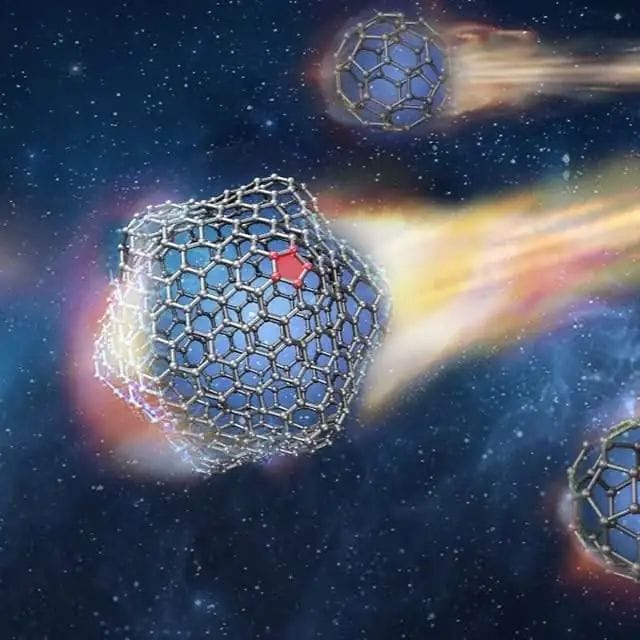
The theoretical storage capacity of silicon can be up to ten times greater than that of graphite, but the material can change in volume by as much as 300% during charging and discharging. This movement damages the components and accelerates battery degradation.
MADBAT aims to tackle this problem through research that brings together companies, universities, and scientific centres in the region. IMDEA Materiales and IMDEA Energía are participating, along with Universidad Rey Juan Carlos and Floatech.
The volume of silicon limits its use in batteries
Silicon is abundant and could help reduce Europe’s dependence on certain critical raw materials. It also offers a way to increase the range of electric vehicles. Its potential, however, depends on whether the components can withstand numerous operating cycles without losing stability.
Floatech, the first business project to spin out from IMDEA Materiales, is a MADBAT partner and is among the international leaders in the development of silicon anodes.
Models and tests to measure wear
IMDEA Materiales will develop computational models to reproduce and predict how materials and batteries behave at different scales. The simulations will make it possible to study the effect of volume changes on the internal structure of the components and to assess design solutions that reduce mechanical damage.
This work will combine those models with experimental tests. The tests will provide parameters and allow predictions to be compared with the actual behaviour of the materials and batteries.
A commitment to the industrial chain in Madrid
MADBAT seeks to strengthen the business and technology ecosystem of the Comunidad de Madrid in a sector that is strategic for the energy transition and electric mobility. The collaboration between research and business aims to connect scientific knowledge with solutions that can be applied in industry.
Regional activity also includes cultural initiatives, such as the November programme at Condeduque, featured in this November agenda.
The technical challenge is to harness the capacity of silicon without its volume changes compromising safety or performance. That is why MADBAT will study how to reduce mechanical degradation and extend the service life of accumulators. The experimental tests will be used to check the models against the real behaviour of the materials.