
News
Madrid will see an eclipse and the Perseids on the same night of 12 August
The night of 12 August will turn Madrid into one of Europe's best places to look at the sky. The first total solar eclipse visible from the peninsula in more than a century will coincide with the Perseids' peak activity, offering an exceptional astronomical combination that will not recur for decades. The Community is already preparing special arrangements to enable safe observation of the phenomenon.
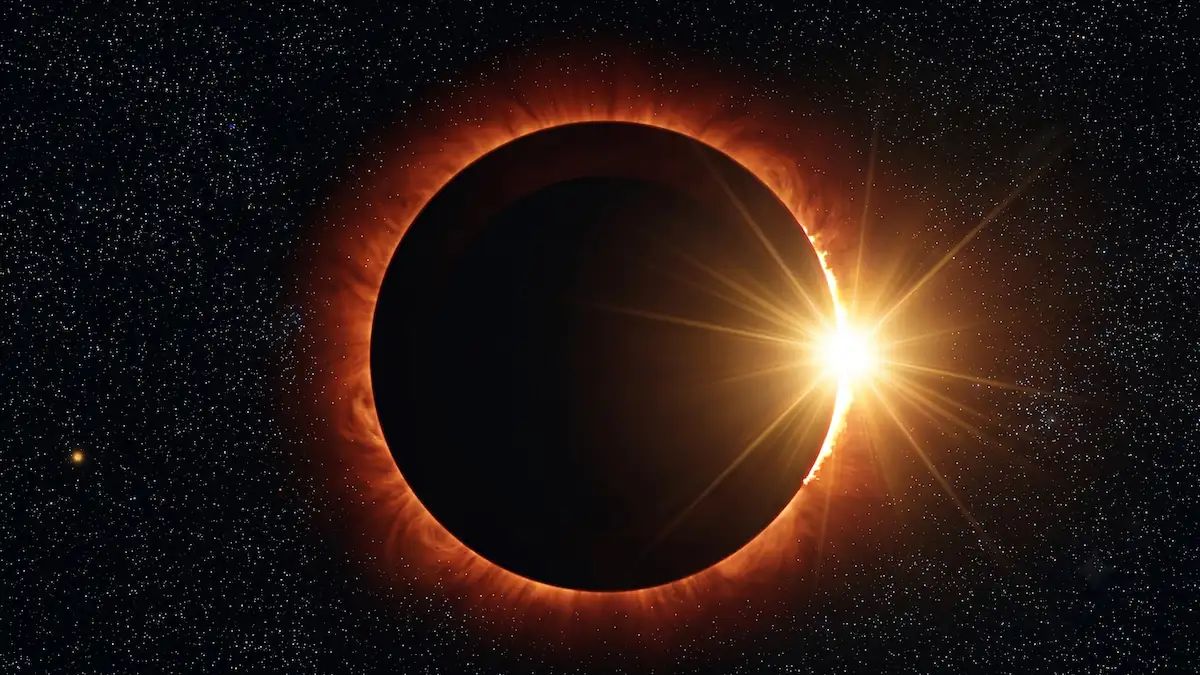
The Sierra Norte will be the main attraction. Municipalities such as Somosierra, Buitrago del Lozoya, La Cabrera, El Molar and Navacerrada will lie within or very close to the band of totality, where the Sun will disappear completely for around one minute. In Madrid city the eclipse will be partial, but the Moon will cover more than 99% of the solar disc, causing a spectacular darkening of the sky just before sunset. The eclipse will begin at around 19:36, reach its maximum at about 20:32 and end shortly after 21:15.
To make observation easier, the Comunidad de Madrid has set up 51 official sites across the region. Many of them will be in the Sierra Norte, where educational and family activities will also be organised. One of the main ones will be the Eclipse Festival in Buitrago del Lozoya, while municipalities such as El Molar and Pedrezuela are also preparing special days with viewing areas and the distribution of approved glasses.
There will also be prepared spaces in the city of Madrid to follow the phenomenon. Parque Forestal de Valdebebas-Felipe VI will be one of the main observation points organised by the City Council, designed to enjoy the eclipse with less light pollution and greater safety. When the Sun disappears below the horizon, it will be the turn of the Perseids, which this year can be seen in almost ideal conditions thanks to the absence of moonlight.
Experts recommend seeking open places away from city lights to enjoy the meteor shower. Among the best locations are the star-viewing lookouts at the El Atazar reservoir and various high points in the Sierra Norte, where the darkness makes it possible to observe a greater number of meteors throughout the night.
Observing the eclipse requires extreme precautions. Only approved glasses that comply with standard EN ISO 12312-2:2015 or instruments fitted with specific solar filters should be used. Looking directly at the Sun with sunglasses, smoked glass, X-rays or any other homemade method can cause irreversible eye damage.
The eclipse on 12 August will also begin an exceptional cycle for astronomy in Spain. This phenomenon will be followed by new eclipses visible in 2027 and 2028, but this summer's will be the only one to coincide with the Perseids' peak, a combination that will make the night of 12 August one of the most special for enthusiasts and curious people throughout the Comunidad de Madrid.