
News
Madrid prepares for the most anticipated solar eclipse in decades
Madrid is preparing to experience one of the most anticipated astronomical phenomena in decades. On Wednesday, 12 August 2026, part of the Community will be able to see a total solar eclipse, an event not observed from the Iberian Peninsula since 1905 and one that will turn the north of the region into a major meeting point.
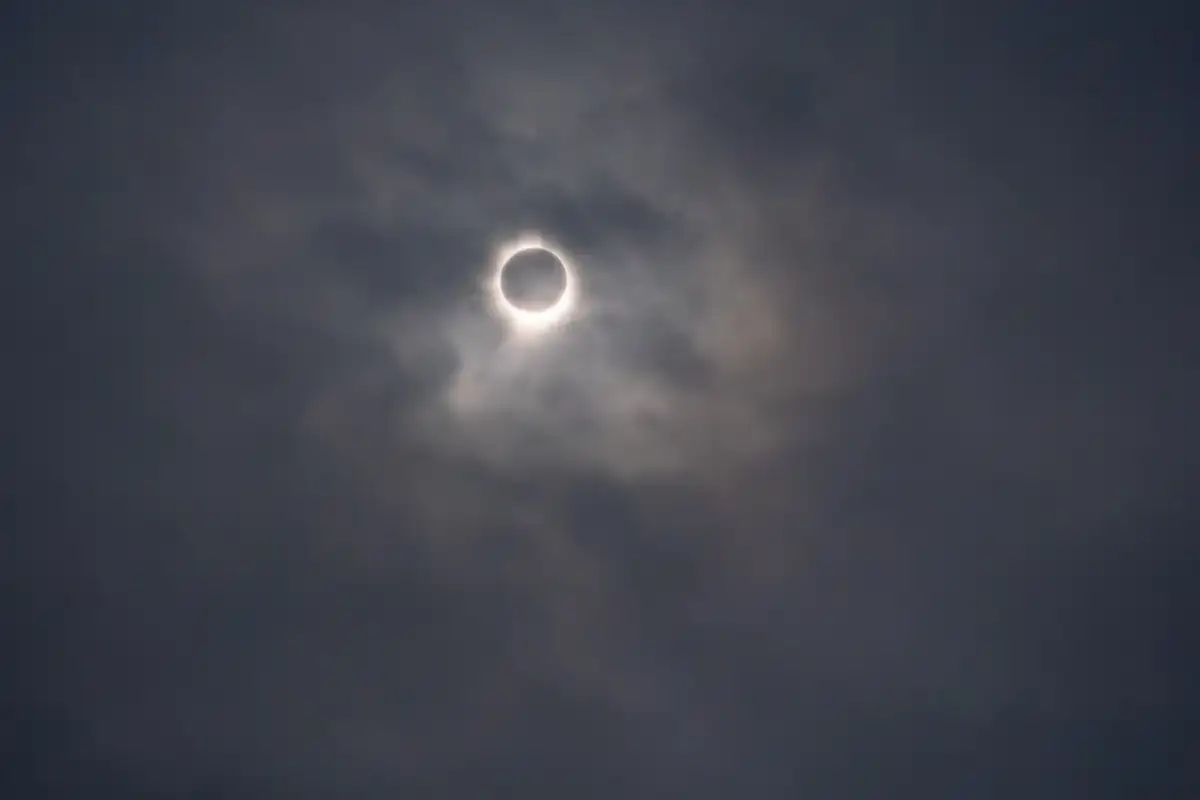
The path of totality will pass through the northern area of Madrid, where the Community has planned cultural and educational activities at 11 observation points. The idea is to distribute the public, make the experience easier and prevent everyone from gathering at the same viewpoints or on the same roads.
The designated locations include Somosierra, Buitrago de Lozoya, La Cabrera, El Molar, Meco, San Agustín de Guadalix, Puerto de Navacerrada, Colmenar Viejo, Alcalá de Henares, Tres Cantos and San Sebastián de los Reyes. The duration of totality will vary by municipality, from just over half a minute to nearly a minute and a half.
The timing will be one of the main constraints. The partial phase will begin at around 19:30, the total phase will arrive at around 20:32, and sunset will be at 21:17. As it will occur at dusk, choosing a place with an unobstructed horizon towards the west will be as important as being within the correct path.
For those living in Madrid city, planning will be key. Many observation points will be a short distance away by car or public transport, but high demand and possible delays are expected on access routes to northern municipalities. Leaving with time to spare can make the difference between watching the eclipse calmly and getting stuck on the way.
The Comunidad de Madrid will also distribute certified special glasses at official activities. This is important because looking at the Sun without protection can cause serious damage to the retina. Ordinary sunglasses, X-rays, smoked glass or homemade filters are not suitable for observing the eclipse.
During the partial phase, it will be essential to use approved glasses or certified solar filters. Only during the seconds of totality, and only from points where the Sun is completely covered, may the phenomenon be observed without a filter. Outside that moment, protection becomes compulsory again.
The eclipse will be much more than a spectacle in the sky. It will draw visitors, fill towns, activate family plans and test the organisation of a region unaccustomed to managing an astronomical event on this scale. For a few minutes, looking towards the horizon will be the great plan of the summer.