
News
The Auditorio Nacional closes the season with Mahler, Broadway and zarzuela
The Auditorio Nacional approaches the end of the season with three very different events that have something in common: all seek to fill the Symphony Hall with large-scale music. The Filarmonía de Madrid, conducted by Pascual Osa, will combine Mahler, Broadway and zarzuela in a final stretch spanning the monumental, the popular and the traditionally Madrid-inflected.
The first stop will be on 31 May, with Gustav Mahler’s Symphony No. 8 in E-flat major, known as the Symphony of a Thousand. It is not a work that is programmed every day: it requires a huge ensemble, several choirs, soloists and an orchestra capable of sustaining an overflowing score. The concert will also celebrate the 25th anniversary of the Orquesta Filarmonía de Madrid and bring its Ciclo Esencial 2025/26 to a close.
On stage will be the Orquesta and Coro Filarmonía, the Participativos Filarmonía, the Escolanía de Segovia and seven vocal soloists, led by Pascual Osa. The event will take place at 19:30 in the Sala Sinfónica, with tickets across several price bands. For anyone seeking an experience more intense than a conventional concert, Mahler offers exactly that: music that seems to push the walls of the auditorium.
On 6 June there will be a complete change of register with Broadway en Concierto 2026. Filarmonía is bringing back a format that has already become a familiar fixture for Madrid audiences: a large orchestra, more than 400 voices, soloists from Spanish musical theatre and a repertoire designed for those who enjoy both live music and spectacle.
The programme will include extracts from major musicals and musical films, with titles such as The Lion King, Les Misérables, Evita, Frozen, Matilda, Billy Elliot, Moana and The Hunchback of Notre Dame. It is a night with less solemnity than Mahler and more desire to sing from the stalls, which explains why this format has gained audiences year after year.
The third event will be on 16 June, also at 19:30, with an Anthology of Zarzuela. After the success of previous concerts devoted to the genre, Filarmonía is once again bringing to the Auditorio Nacional a selection intended for those who want to reconnect with a tradition closely linked to Madrid, but also for those who may know zarzuela only by hearsay.
The three offerings work almost like three gateways into live music. Mahler speaks to audiences looking for a vast symphonic experience; Broadway attracts those coming from musical theatre and popular culture; zarzuela brings back to the stage a repertoire that forms part of the city’s sentimental memory.
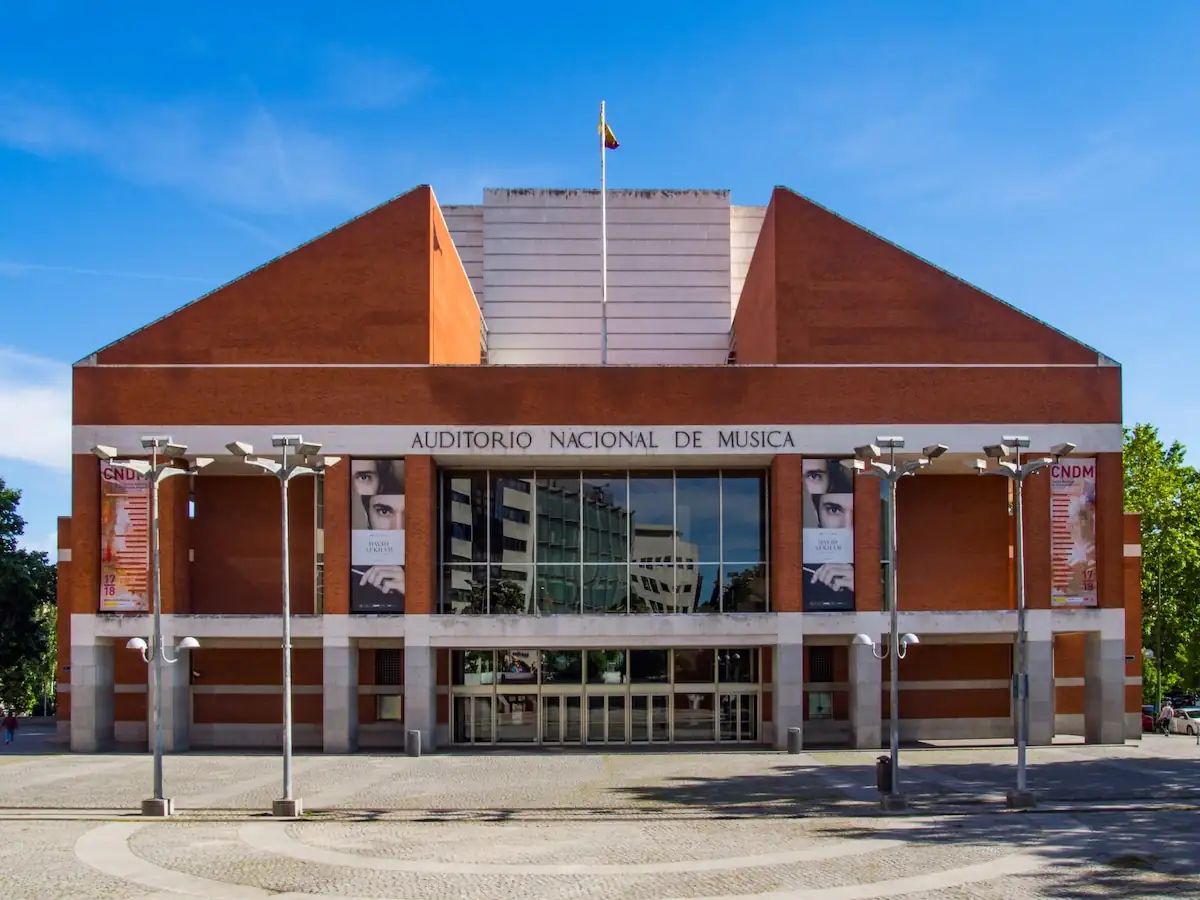
The Auditorio Nacional, on Príncipe de Vergara, needs little embellishment to justify its importance in Madrid. But an agenda like this is a reminder of why it remains a point of reference: within a few weeks it can move from a gigantic symphony to a night of musicals and then to an anthology of zarzuela. That variety is precisely what keeps the city’s cultural scene alive: it does not force people to choose a single way of listening to music, but opens the door to different audiences under the same roof.