
News
Metro de Madrid modernises its simulators to train drivers
Metro de Madrid is going to comprehensively renew the simulators it uses to train its drivers. The public company has launched a technological upgrade aimed at replacing old equipment with systems that are more realistic, immersive and adapted to the current and future network.
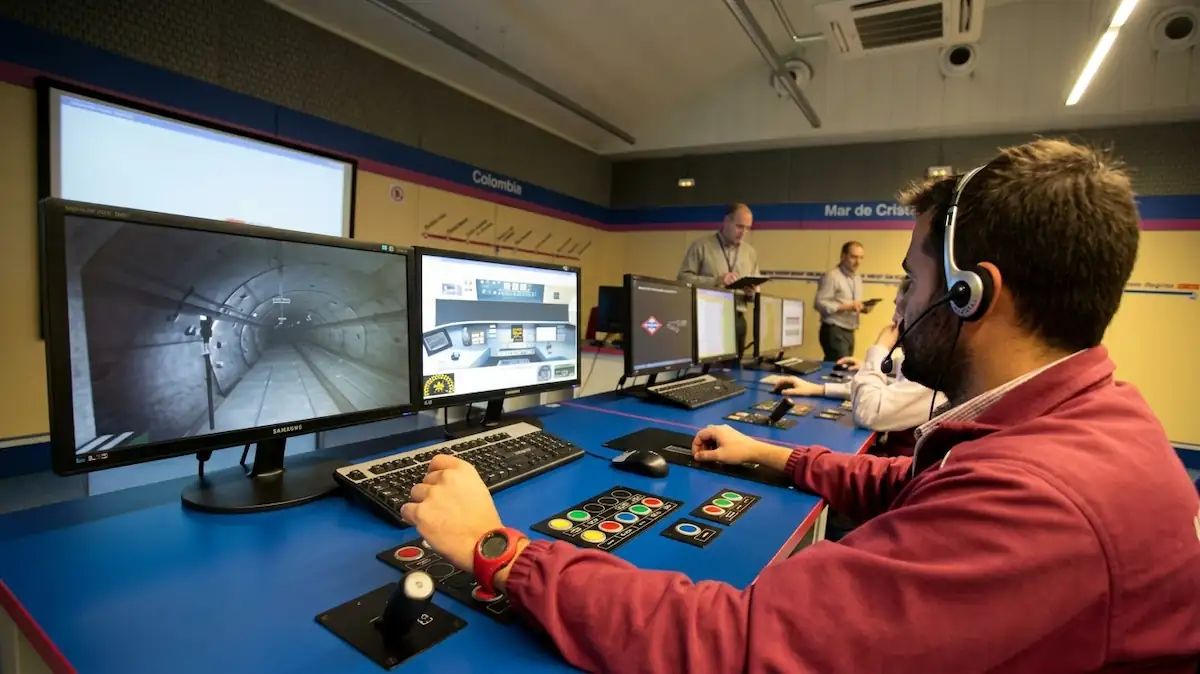
The investment exceeds €2.3 million, including VAT, and will affect the training facilities located at the Cuatro Vientos, Canillejas and Hortaleza depots. These are key spaces for preparing the professionals who will later drive trains on different lines of the network.
The refurbishment will not be merely aesthetic or digital. The new simulators will make it possible to recreate the driver's cab, controls, routes and situations that a train driver may encounter during service more accurately. The idea is for training to resemble the real experience of driving a train more closely.
One of the most significant changes will be the incorporation of new track layouts. These will include the future extension of line 11 between Plaza Elíptica and Conde de Casal, one of the most important projects for the Madrid Metro in the coming years.
Other operating environments will also be updated, such as those on line 9A, Metrosur, and stations or modifications that were not included in the current versions. This will mean that training does not remain anchored to a network that has already changed and will continue to grow.
The problem is that some of the current equipment has fallen far behind. According to Metro documentation, some simulators still operate with obsolete operating systems, such as Windows XP or Windows 7, which are no longer supported. In addition, the level of immersion is low compared with current possibilities.
At Cuatro Vientos, for example, the system does not even fully reproduce the driver's console. Instead of controls similar to those of a train, training is carried out with a mouse, an obvious limitation for training that must prepare people for rapid decisions and complex situations.
Metro also wants to reduce technical incidents in the current simulators. The company admits that some faults hinder systematic and planned training, something especially delicate when this equipment is used to train drivers of different train series and lines.
The modernisation will include new hardware to reproduce driving controls more accurately. In some cases, the equipment has been in operation for more than 20 years, with wear that already affects both reliability and the usefulness of the training.
The update comes at a time of major changes for the network. Metro is preparing new infrastructure, the redistribution of trains and projects such as the automation of line 6, where training has already begun for the first operators linked to future driverless trains.
For passengers, these simulators will not be seen on the platform or appear on network maps, but they form part of the service's day-to-day safety. The more realistic the training, the better prepared train drivers will be to respond to incidents, signalling changes, breakdowns or unexpected situations.
The refurbishment of the simulators shows a less visible part of public transport: before a train arrives on time, stops smoothly or resolves an incident without blocking half a line, there are hours of training behind it. Madrid is thus modernising a discreet but essential tool to make the Metro operate more safely and adapt to the network ahead.