
News
Thousands fill Montjuïc to see Pope Leo XIV amid flags and security checks
Montjuïc became one of the main gathering points during Pope Leo XIV's visit to Barcelona. Around 40,000 people filled the Estadi Olímpic Lluís Companys to take part in the vigil, on an afternoon marked by flags, access checks, music and great anticipation.
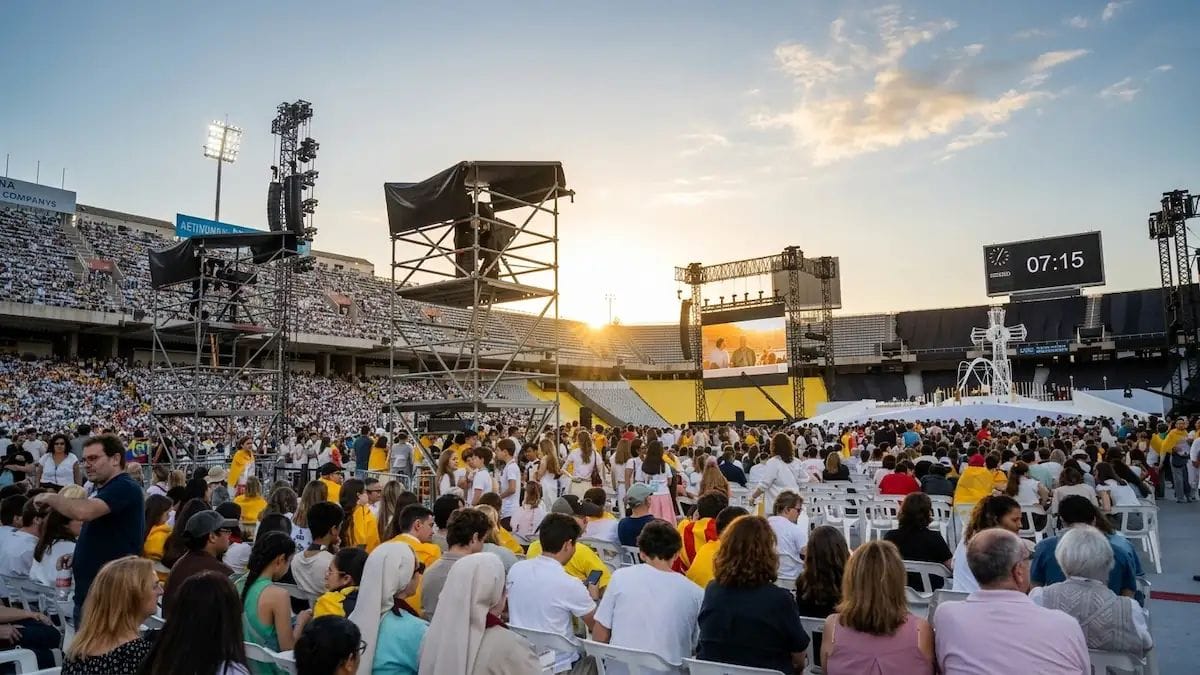
The Pope's arrival mobilised worshippers, young people, families, religious people and visitors who made their way up the mountain hours in advance. The arrangements required entrances, queues and controlled routes to be organised, in an area already sensitive because of its role in the city's major events.
The atmosphere combined religious celebration and a major urban occasion. In the stands, there were flags, banners and groups arriving from different parts of Catalunya and from other autonomous communities. For many attendees, the vigil was the most accessible opportunity to see León XIV up close during his stay in Barcelona.
The event included music, testimonies and moments of prayer before the pontiff's address. León XIV alternated between Spanish and Catalan on several occasions, a gesture received attentively by attendees and one that reinforced the local character of a visit with international reach.
During his message, the Pope focused on social issues such as mental health, violence against women and the need to care for young people in a society marked by pressure, image and performance. The tone sought to connect with a broad audience, beyond the strictly liturgical nature of the gathering.
Security was one of the key aspects of the day. Access to the stadium took place with checks and tickets, while the Montjuïc surroundings were integrated into a special operation that also affected mobility, public transport and travel around the city.
The vigil coincided with a difficult week for Barcelona, marked by traffic restrictions, recommendations to work from home, teachers' protests and the start of the PAU. Even so, the event unfolded as one of the most crowded images of the papal visit.
The scene left a very recognisable picture: a city accustomed to major events once again testing its organisational capacity. Montjuïc was not only a religious setting, but also a gauge of how the city absorbs mass gatherings amid emotion, checks and everyday life.