
News
More than 10,000 evacuated and maximum alert over fires in Madrid and Ávila
Forest fires advancing through south-west Madrid and the province of Ávila have forced more than 10,000 people to leave their homes. Villa del Prado, San Martín de Valdeiglesias, Pelayos de la Presa and Aldea del Fresno are among the municipalities most affected by an emergency that has kept roads closed and disrupted numerous journeys.
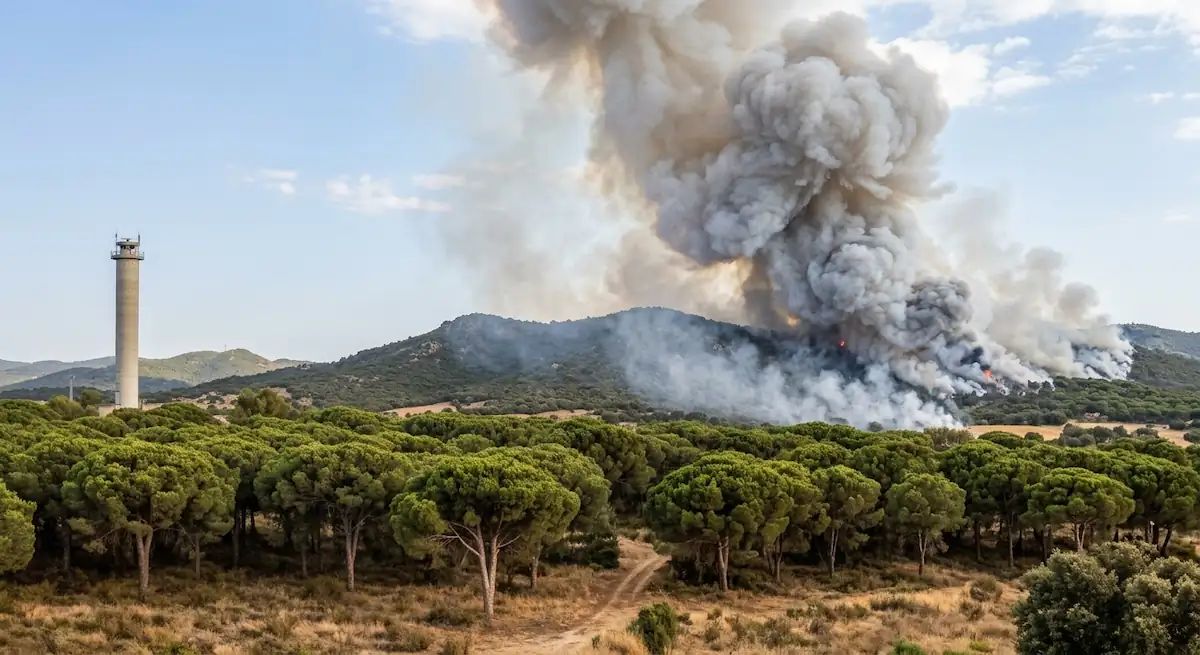
The government has declared a national emergency and the Ministerio del Interior has taken charge of coordinating state, regional, and local resources. The Unidad Militar de Emergencias is leading operations on the ground alongside firefighters, Guardia Civil, Protección Civil, and medical teams.
Pedro Sánchez is overseeing the response from the Comité Estatal de Coordinación y Dirección, while the Puesto de Mando Avanzado de Cenicientos is handling many of the operational decisions. From there, the evolution of the fire fronts is monitored and evacuations, reinforcements, and the protection of populated areas are organised.
Wind remains the main obstacle to firefighting efforts. Shifts in wind direction can quickly bring the flames closer to roads, housing developments, and rural areas, so the authorities are keeping new preventive evacuations open and are asking people not to return to their homes without permission.
Movement is heavily restricted throughout the area. Several roads remain closed and bus routes have had to be changed or suspended, while emergency vehicles need to keep access routes to affected towns clear.
Healthcare services have increased support for elderly people, those with chronic illnesses, and residents of care facilities. Overnight, shelters have been set up and people who could not leave the area on their own have been relocated.
In Ávila, the Burgohondo fire has also forced the evacuation of residential and tourist areas. The proximity of the different fire fronts and the changing wind are causing concern about an emergency that goes beyond administrative boundaries and requires a joint response.
Sports centres, cultural centres, and car parks are now serving as improvised shelters for families who left with medicines, documents, a few bags, and their pets. The night has left villages nearly empty and thousands of people waiting by their phones, still unsure when they will be able to return home.