
News
Outdoor films and legendary pools at the Reina Sofía
The Museo Reina Sofía is once again turning its summer nights into an outdoor film event. This year, the series is titled The Swimming Pool: Swim or Sink and proposes looking at the big screen from a very specific place: the legendary, unsettling, sensual or decadent pools that have marked the history of cinema.
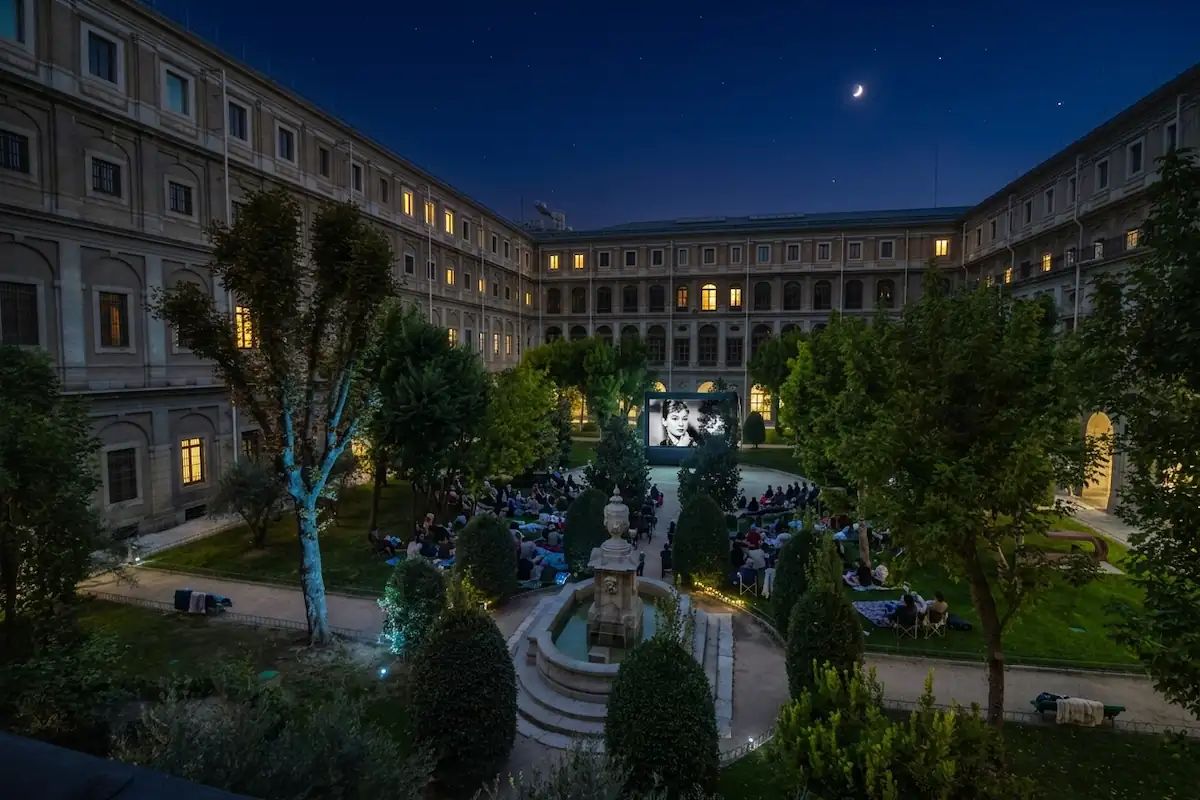
Screenings are held in the neoclassical garden of the Sabatini Building, a space the museum presents as a newly restored green oasis. There, every Friday and Saturday in July and August, the screen joins the setting of sculptures and vegetation to turn the visit into a different evening plan in the heart of Madrid.
The programme revolves around the swimming pool as a setting for desire, leisure, danger, status and melancholy. It is not only about seeing bodies by the water, but about understanding how cinema has used that space to speak of identity, social class, summer, youth, family crises or worlds that break apart beneath an appearance of calm.
Highlights include El nadador, by Frank Perry and Sydney Pollack; Somewhere, by Sofia Coppola; La ciénaga, by Lucrecia Martel; Swimming Pool, by François Ozon; Canino, by Yorgos Lanthimos; and La piscine, by Jacques Deray, starring Alain Delon and Romy Schneider. The selection combines classics, auteur cinema and more experimental perspectives.
The series also includes less predictable sessions, such as a programme of experimental cinema devoted to water, bodies and perception below the surface. Works by Barbara Hammer, Barbara Klutinis, Bette Gordon, Tony Hill, Rickard Eklund, Gunilla Leander and Jakobois expand the idea of the pool beyond conventional narrative.
Admission will be free until capacity is reached, with tickets to be collected in advance at the box office or through the museum's website from the Monday before each screening. In addition, part of the capacity is reserved for those who come directly on the day of the session, a useful option for last-minute plans.
The 22:00 start time suits a city which in summer moves much of its cultural life into the night. In contrast to the daytime heat, the Reina Sofía garden offers a peaceful alternative for seeing films, meeting friends or approaching the museum through a more relaxed experience than the usual visit.
The series leaves a very Madrid-like image of summer: taking refuge from the heat without entirely shutting oneself indoors, seeking culture when the sun goes down and turning a historic garden into an open-air cinema. In a capital full of terraces, rooftops and summer screens, Reina Sofía opts for a proposal with its own identity: swimming in the memory of cinema without leaving the Atocha neighbourhood.