
News
Poblet plans €17.1 million to protect the monastery and its monastic life
The church vault and accessibility are among the priorities of the new plan for Poblet. The planned investment totals €17.1 million, with €14.4 million allocated up to 2030.
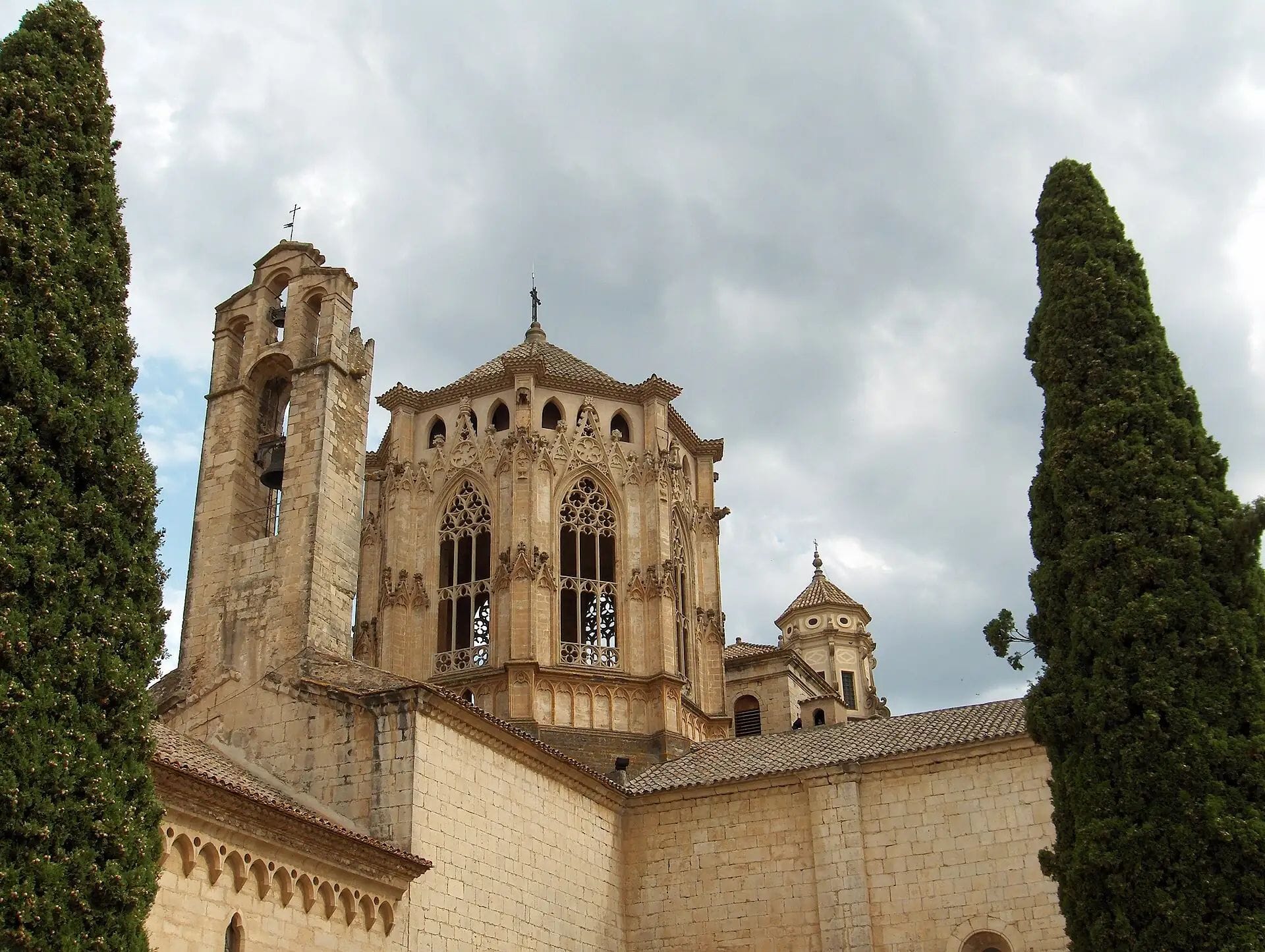
The Plan Director 2026-2036 will set out the conservation work and future use of the site.
The vault of the central nave of the church is among the areas requiring structural consolidation. There are also concerns about damp in the façade and the west wall, in a programme that links the conservation of the monastery with accessibility for both the monastic community and visitors.
The Real Patronato del Monasterio de Santa María de Poblet, in Tarragona, has agreed to launch Relanzar Poblet 2026-2030 and the foundations of the Plan Director 2026-2036. The total planned investment amounts to 17.1 million euros; 14.4 million are allocated up to 2030.
Conservation with a timetable and priorities
The Dirección General de Patrimonio Cultural del Departamento de Cultura has prepared a technical programme identifying damage, priorities, timetable and budget. It plans to allocate 4.28 million euros to works between 2026 and 2028.
In addition to the vault, the main interventions include addressing damp in the façade and west wall, improving the watertightness of the Palau de l’Abat, and removing architectural barriers in the cloister, the church, the chapter house and the museum. The assessment highlights structural stability and architectural issues in the main church, along with accessibility.
The usage plan identifies thirteen areas for intervention and assigns 12.8 million euros to these actions. Among the spaces mentioned are the car park, which is to be renaturalised, the Museo y Palacio de Martí l’Humà and the Pou de Gel. The former schools, the wine cellars, the educational space and the Palau Nou de l’Abat are also included.
A monastery connected to its surroundings
The Plan Director will organise five related areas. Heritage and nature will each have their own working space; culture and thought, promotion and management complete the planned areas.
The proposal positions the monastery as a cultural and heritage destination linked to the Ruta del Císter. It also incorporates its natural surroundings: the work will cover the monastic site, the Ruta and the Paratge Natural de Poblet, as well as the Muntanyes de Prades.
The cultural programme could include temporary exhibitions, activities linked to the Arxiu Montserrat Tarradellas i Macià and a future Universitat d’Estiu. Specific projects and their dates will be defined within the Plan Director and annual action plans.
In Barcelona, Pavilion 2 of Montjuïc is also facing a change of use: the space will be transformed into a municipal sports centre.
Monastic life as a condition of the project
The Generalitat de Catalunya will lead the implementation together with the monastic community and with the participation of the Patronato. The balance between the protection and public projection of Poblet and the continuity of monastic life, silence and spirituality is set as a cross-cutting condition.
The model envisages reactivating the governing bodies of the Real Patronato and establishing oversight mechanisms. It also includes the gradual creation of a professional team for management, products and services, marketing, communication and administrative support.
This model will need to be coordinated with the general collaboration protocol between the Ministerio de Cultura, the Departamento de Cultura and the Cistercian community. The protocol guarantees the permanence of the community, the full exercise of monastic life, the means for its subsistence and its participation in defining activities.
The Patronato meeting was held on Thursday and addressed the overall vision, areas of action, governance and timetable. The Plan Director tender will be launched soon and its drafting is scheduled for 2027, with participation from the monastic community. The joint financial framework puts the works at 17.1 million: 11.5 million are expected to be spent between 2027 and 2030, with the remainder for later actions. The amounts will need to be specified through the relevant budgetary, administrative and legal instruments.