
News
Why Some Urban Barbershops Run More Smoothly Than Others
Urban barbershops vary greatly in how they operate, and the difference usually comes down to management. Booking systems, staff structure, client retention, and pricing all have a direct impact on whether a barbershop runs at full capacity or struggles to fill its chairs. In this guide, we look at the key factors that set well-managed barbershops apart from those that underperform, and what can be done about it.
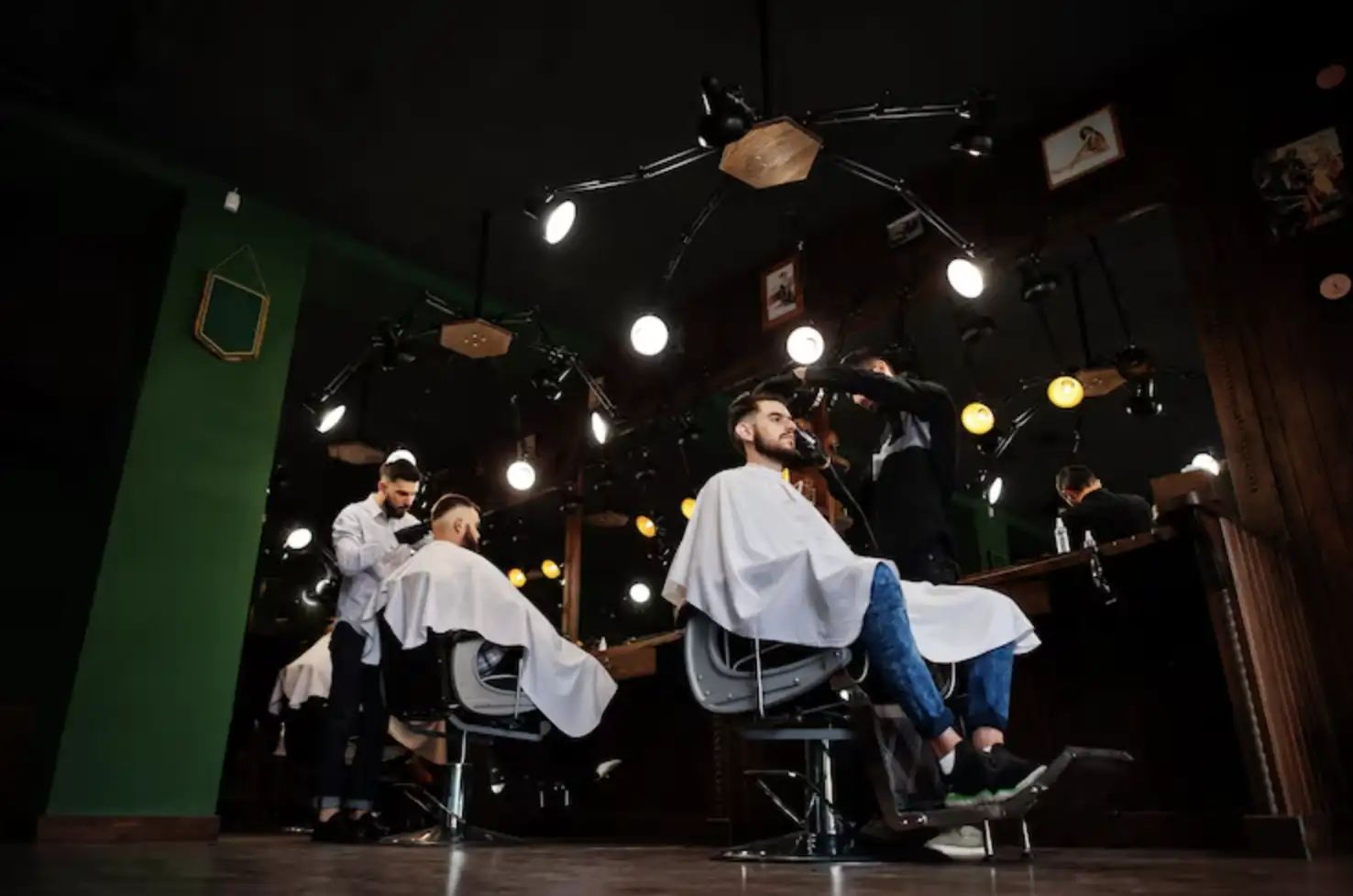

Well-managed urban barbershops succeed thanks to the consistent quality of their staff, demand-based scheduling and structured customer-retention systems
Pricing strategy and service-menu design directly affect customer quality, staff retention and long-term margins
Shops that treat marketing as a system rather than as an afterthought consistently outperform those that rely on occasional customers and sporadic social-media posts
Appointment-management tools such as Booksy help barbershops reduce no-shows, manage capacity and keep track of customer histories in one place.
What is barbershop management?
Barbershop management covers everything that keeps a barbershop running apart from the haircut itself. Scheduling, staff coordination, customer communication, pricing and marketing all fall within its scope. So do financial tracking, product inventory and managing walk-in customers alongside booked appointments.
Most barbershop owners are skilled barbers first and operators second. That difference quickly becomes apparent when the barbershop is very busy. Appointment-management software such as Booksy helps organise the diary, improve communication with customers and keep day-to-day operations under control, while operational management covers a broader set of processes and decisions.
Good barbershop management means the barbershop operates predictably: customers know what to expect, staff know their schedules, and the owner does not have to solve the same problems every week.
The booking system makes the difference
Scheduling determines the efficiency of most urban barbershops. A poorly managed calendar means idle barbers during quieter hours and overwhelmed staff at weekends, and both factors harm the business in cities such as Barcelona and Madrid, where footfall can surge at weekends and disappear during the week.
Why appointment-only models hold barbershops back
Appointment-only barbershops have no visibility of demand. On quiet days, barbers are idle. On busy days, customers wait too long and leave. There is no data on peak times, no way to plan staffing and no reliable revenue forecast. Over time, this creates inconsistency that customers notice and respond to by looking for a barbershop they can trust.
The right mix of bookings: online and walk-ins
The most stable barbershops operate with between 80% and 85% of appointments booked in advance, leaving the remaining slots free for walk-in customers. This keeps chairs occupied without creating chaos at peak times. Customers who book in advance attend more reliably, and the barbershop can plan staffing according to actual demand rather than guessing.
Which booking tools actually work for barbershops?
The best tools manage online bookings, automatic reminders and cancellation management in one place. Automatic SMS or email reminders significantly reduce no-shows. The right system also gives the owner a clear view of daily and weekly capacity, which makes staffing decisions much easier.
Staff management: the key to smooth operations
A barbershop's consistency depends on its team. Hiring skilled barbers is important, but how they are managed day to day determines whether the barbershop runs smoothly or depends entirely on the owner to keep it afloat.
Structuring shifts around demand, not convenience
Most barbershops are busiest from Thursday to Saturday, with midday and early afternoon being the busiest time slots. In Barcelona and Madrid, Saturday mornings tend to attract strong demand from walk-in customers. Scheduling shifts on the basis of this data, rather than personal preferences, reduces downtime and prevents the burnout caused by understaffing in the busiest periods. Owners who track booking data weekly can adjust shifts with great precision.
Self-employed barbers versus employed barbers
Self-employed barbers usually rent a chair and keep their own income, which gives the owner lower fixed costs and less management overhead. Employed barbers offer greater control over scheduling, service standards and team culture. Neither model is universally better. Barbershops with a strong brand identity and consistent service standards tend to favour the employee model. Barbershops with high footfall and established barbers often work well with chair rental.
Keeping quality consistent across the team
Customer retention falls when a regular customer books with a different barber and gets a noticeably different result. Regular team training, shared technical standards and clear service menus reduce that difference. Barbershops that invest in ongoing training, whether through internal sessions or external barbering courses, retain customers better when staffing changes occur.
Customer retention versus constant acquisition
Acquiring a new customer costs more in time and marketing than keeping an existing one. Most barbershop owners understand this in theory, but do not act on it systematically.
The real cost of losing a regular customer
A customer who visits the barbershop every three weeks and spends an average of 30 euros per visit is worth more than 500 euros a year. Losing five regular customers in a month represents a significant loss of revenue, not a minor inconvenience. Tracking the frequency of customer visits provides a clear picture of the state of retention and makes it possible to spot problems early.
Rebooking in the chair
The most effective retention tool costs nothing. Asking a customer to book again before getting out of the chair turns a one-off visit into a scheduled visit. Barbershops that make this a standard part of the payment process consistently show higher booking rates than those that leave it to the customer to remember.
Loyalty systems: what works and what feels like a gimmick
Simple loyalty cards or their digital equivalents work when the reward is genuinely worthwhile. A free haircut after ten visits is straightforward and easy to communicate. Overly complex points systems or app-based programmes with too many steps tend to have low uptake. The best loyalty systems are those customers actually understand and remember to use.
Pricing, services and perceived value
Price is a signal. In a competitive urban market, a shop with prices that are too low often attracts customers who prioritise cost over quality, creating heavy pressure for volume and low margins. A clearly structured price list conveys professionalism even before the customer enters the shop.
Why competing on price attracts the wrong customers
Shops that base themselves on being the cheapest option in the area face a structural problem. Margins are slim, staff turnover tends to be higher and the customer base is the first to leave when a cheaper competitor opens nearby. Sustainable barbershops price their services according to skill level, time and the overall experience, rather than to undercut the shop opposite.
Creating a service menu that justifies the price
A well-structured menu separates basic services from premium add-ons. The standard haircut is the foundation. Beard trimming, hot-towel shaving, fades and hair treatments sit above it, at higher prices. This gives customers a clear entry point while creating natural opportunities for additional sales. Displaying prices transparently, both online and in the shop, reduces friction and pre-selects customers before they arrive.
Marketing that actually brings in customers
Most barbershops rely on Instagram and word of mouth. Both work, but neither is enough on its own. A structured approach to local marketing always outperforms a sporadic one.
Social media: what to post and how often
Before-and-after photos, short videos of techniques and behind-the-scenes content consistently work well for barbershops. Posting three or four times a week maintains visibility without requiring a full content team. The aim is not viral reach, but staying visible to the local audience already following the account and attracting new followers from the same neighbourhood.
The Google Business profile as a free driver of walk-in visits
A fully optimised Google Business profile, with accurate opening hours, recent photos, a complete service list and a steady flow of customer reviews, consistently drives local walk-in traffic. Customers searching for ‘barbershop near me’ see this profile before they see any website. Barbershops that actively manage their profile and reply to reviews rank better in local search results and convert more searchers into new visitors.
Does word of mouth still work?
Recommendations remain one of the highest-converting sources of new customers for barbershops. The difference between passive and active word of mouth is a direct request. Satisfied customers rarely think of recommending a friend unless they are asked. A simple message after an appointment or a small incentive for bringing someone new turns a passive process into a reliable channel.
The barbershop as a community landmark
Urban barbershops occupy a particular social role that goes beyond the service they provide. In cities such as Barcelona and Madrid, a well-managed barbershop often becomes a regular meeting point for the neighbourhood, a place people return to not only to get their hair cut, but because they feel it is theirs.
The concept of the ‘third place’, developed by sociologist Ray Oldenburg, describes spaces outside the home and work where people regularly gather. Barbershops naturally fit this definition, and those that embrace it create a level of customer loyalty that is difficult for competitors to replicate.
What makes a barbershop a community hub:
Regular customers with whom barbers can build a relationship over time
A welcoming atmosphere that makes customers want to stay a few minutes longer
Participation in local events, sponsorships or neighbourhood causes
A space where conversation is a genuine part of the experience
Cultural awareness and representation within the team.
Photo by freepik.com
Technology in daily operations
Technology does not run a barbershop, but it removes friction from the parts of the operation that consume time and attention. The key is to choose tools that solve real problems rather than adding complexity.
Tools worth using and tools worth discarding
A reliable point-of-sale system that tracks daily revenue, service breakdowns and product sales gives the owner accurate data without manual effort. Customer-history records, where preferred styles, previous services and visit frequency are noted, improve the customer experience and make every barber more effective. Automated review requests sent after an appointment generate a steady flow of Google reviews without requiring manual follow-up. Retail-product inventory tracking prevents the best-selling products from running out of stock and reduces over-ordering.
Tools worth discarding: overly complex CRM systems designed for large companies, multiple overlapping apps that do not integrate, and any software that takes more time to manage than it saves.
Maintaining the human touch while running a more efficient business
Automated systems handle the administrative part. The experience inside the barbershop remains human. Customers notice when a barber remembers their name, their usual cut and something from the last conversation. Technology can help with that — a customer note in the booking system is a great help — but the interaction itself cannot be systematised.
Common management mistakes that keep shops struggling
Most underperforming barbershops share the same problems. The shop depends entirely on the owner's personal clientele, which means any absence causes a direct fall in revenue. Scheduling is reactive rather than planned, leaving staff underused in quiet periods and overloaded in busy ones. Marketing is done when someone remembers to post, rather than following a consistent calendar.
Negative reviews go unanswered, signalling to potential customers that the barbershop does not take their opinions seriously. Prices remain unchanged for years out of fear of losing customers, while costs keep rising. Staff turnover is regarded as an inevitability of the sector, rather than a management problem worth solving.
Each of these problems has a practical solution. None requires a large budget. What is needed is to treat the barbershop as a business with systems, not as chair rental with a sign on the door.
Comparison between well-managed shops and struggling ones
A well-managed shop usually operates with a hybrid booking system that combines online scheduling with walk-ins, helping to balance demand and reduce downtime. Staff work defined shifts that reflect expected footfall, rather than relying on the owner's last-minute decisions. Customer retention depends on a structured booking system, rather than waiting for customers to return on their own. Marketing is carried out consistently through several channels, rather than appearing only in occasional social-media posts. Prices follow a value-based model, with a clear and transparent menu, rather than a race to undercut competitors' prices. Daily operations rely on practical technology, such as point-of-sale systems, automatic reminders and review-management tools, while struggling shops often depend on manual processes or operate without any support system.
Photo by freepik.com
Frequently asked questions
What makes a barbershop successful in the long term?
Consistent quality, a reliable booking system and strong customer retention are the three pillars. Shops that grow sustainably take operations as seriously as the craft itself.
How many customers should a barber serve a day?
A productive barber typically serves between 10 and 15 customers a day, depending on the type of service and the average appointment duration. Fades and beard work take longer than basic cuts, so the service mix significantly affects capacity.
What is the best booking software for a barbershop?
The best option depends on the size of the barbershop and its workflow, but the most widely used tools offer online bookings, automatic reminders, customer history and payment processing on a single platform.
How do barbershops get customers to come back?
In-chair rebooking, consistent service quality and simple loyalty incentives are the most effective methods. Shops with the highest retention rates treat the end of every appointment as the beginning of the next.
Is managing a barbershop different from managing a beauty salon?
The fundamentals overlap, but barbershops usually have shorter appointments, a higher volume of walk-in customers and a stronger community dynamic. The social atmosphere of a barbershop plays a more important role in customer retention than it usually does in a beauty salon.