
News
Why is Don Quixote an eternal Spanish classic?
“Don Quixote” has long been part of universal culture and remains alive in readings, interpretations and reinterpretations from different eras. Interest in the novel lies in the way it intertwines the Spain of Cervantes’ time, the author’s personal experience and two different visions of the same reality. Through the story of Don Quixote and Sancho Panza, it reveals the constant tension between ideals and everyday life, which remains recognisable beyond time.
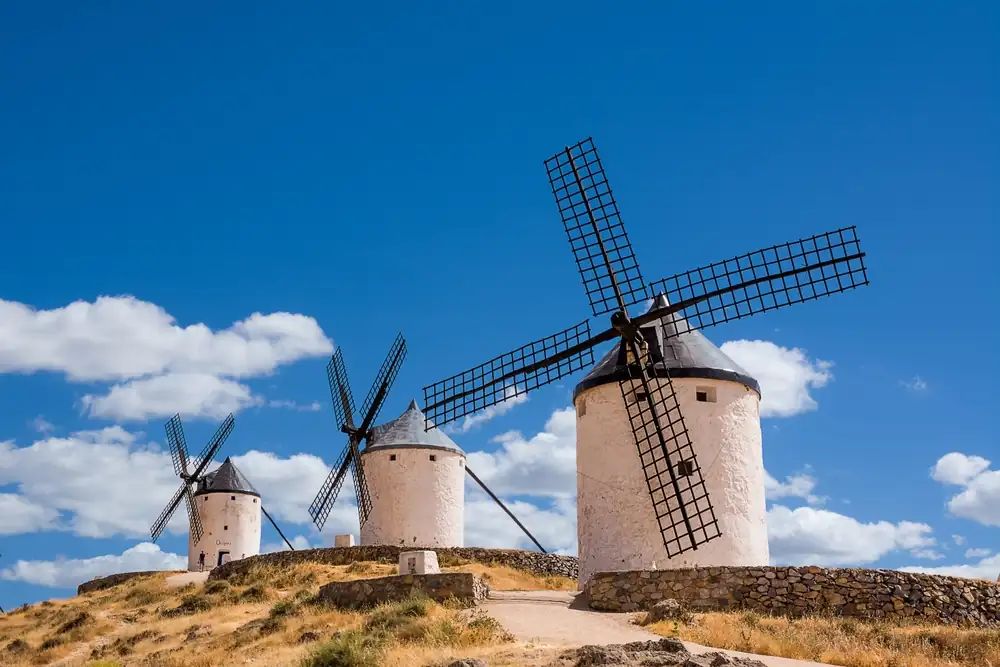
Don Quijote is one of the best-known novels in Spanish culture. Its plot is familiar even to those who have never opened the book. The image of the thin knight on an old horse and his faithful squire has long been part of world literature and cultural memory.
More than four centuries have passed since the novel appeared. Yet it continues to be read, republished and studied in schools and universities. It is staged, adapted for film and its characters are constantly invoked.
Photo by museocasanataldecervantes.org
And this raises a simple question: why has this particular story not become obsolete and instead become an eternal classic of Spain?
To understand this, we have to go back to the time of Miguel de Cervantes. It was a period when Spain was one of Europe's most powerful empires, but profound changes were already taking shape within it.
Cervantes' Spain: a world cracking from within
In Miguel de Cervantes' time, Spain presented itself as one of Europe's most powerful states. It possessed vast territories and influence, and its presence was felt far beyond Europe's borders, in America.
But behind that outward grandeur, internal contradictions were already concealed. The empire existed under conditions of a deep divide between the different strata of society. On one side were wealth, luxury and court life. On the other were poverty, instability and the harsh conditions of everyday life for most of the population.
This period is often described as an age of transition. The old ways of life had not yet disappeared, but were already losing their force. The new rules were barely beginning to form, and society was in a state of constant tension.
It was precisely in that world that the old ideals of honour, chivalry and service still existed. But reality was no longer corresponding to them. They remained in culture and in people's imaginations, but worked ever less well in everyday life.
The man behind the novel: Cervantes' experience in real Spain
Cervantes was not a man who spent his whole life sitting at a desk. His biography appears as a succession of different roles and unexpected turns.
He served as a soldier and took part in the naval Battle of Lepanto, where he was wounded and lost the use of his left arm. Later, he was captured in Algiers and spent several years there until his family raised the ransom. After returning to Spain, he held administrative posts related to supplies and tax collection. These occupations did not provide him with stability and often ended in debt and conflict.
Photo by David Andres Gutierrez / Shutterstock / FOTODOM
For almost all his life, he lived with scarce resources and in a constant search for income. His life included prison, temporary jobs and financial difficulties. At the same time, he observed the different strata of Spanish society: soldiers, officials, peasants, the urban common people and people at court. All of this became part of his life experience without distance or idealisation.
In this context, the literary background is also important. Chivalric romances were widespread in Spain. They were read everywhere and shaped readers' worldview. Cervantes knew them and used this material in his novel.
That is why two planes coexist in Don Quijote. Everyday reality, with its people and circumstances, and the world of stories about knights from popular books. Both meet in the same space and begin to separate from real life.
What Don Quijote is really about
Don Quijote is often said to be a parody of chivalric romances. Cervantes draws on the popular literature of his time about knights and their adventures. But the novel itself is not limited to that alone.
Photo by welburnstuart / Shutterstock / FOTODOM
Two worlds coexist in the novel. One is connected with books about knights, where there are feats, honour, service and rules of conduct. The other is connected with everyday life in Spain at the time, with taverns, peasants, officials and everyday situations.
These two layers do not match. They collide in every scene in which Don Quijote tries to act according to the rules of chivalric stories. The plot arises from this confrontation. Fantasy and reality do not exist separately. They constantly intersect and part ways.
The chivalric world of the novel, however, appears as something that no longer works in real life. It exists in books and representations, but not in the everyday reality observed by Cervantes.
Don Quijote and Sancho: two views of life
Alongside the “knight” appears his companion: Sancho Panza. He accompanies Don Quijote on his travels and is always by his side.
Don Quijote acts as though the world of chivalric romances truly exists. He bases himself on ideas of honour, service and feats that he draws from books. His behaviour does not correspond to the everyday reality he encounters on his way.
Sancho Panza sees the same events differently. He pays attention to the everyday side of what happens. His attention centres on food, rest and the practical conditions of life. He often tries to explain to Don Quijote what the real situation around them is.
Photo by Hect / Shutterstock / FOTODOM
In the novel, their conversations are constantly based on this difference in perception. One relies on ideas about the world that he has read in books. The other relies on everyday experience.
However, they do not exist as two opposing poles that exclude one another. They remain together throughout the story and face the same situations.
Their interaction shows that one view does not exist in complete isolation from the other. Don Quijote does not act without Sancho at his side. Sancho cannot simply abandon the path Don Quijote has chosen. That is why they constantly find themselves in the same reality, but describe it differently.
Why did the novel become the “first modern one”?
Don Quijote is often regarded as one of the first modern novels. In the text, this can be seen in the way the characters are constructed.
Don Quijote does not behave in the same way in every situation. His actions depend on how he interprets what is happening. He sees events through chivalric romances and tries to act according to their rules.
Sancho Panza reacts differently. He assesses situations according to food, the road, tiredness and money. His behaviour is linked to what is happening here and now.
In the dialogues between the two, the same scene is described differently. For example, what Don Quijote perceives as a feat, Sancho sees as an everyday occurrence or even a setback. These differences recur throughout the novel.
Therefore, the plot is based not only on events, but also on how the characters understand them. One and the same episode has two interpretations within the text.
Thus, the narrative shows not only the heroes' actions, but also their way of seeing what happens.
Don Quijote as a cultural archetype
Over time, the name Don Quijote came to be used outside the novel itself. It began to be used to refer to a person who acts according to their ideals and does not always reconcile them with reality. This meaning became established in culture and turned into a proper name.
Photo by Paulo Miguel Costa / Shutterstock / FOTODOM
The plot of the novel continued to live on in other works and interpretations. Its motifs and images passed into literature and, later, into film, where figures similar to Don Quijote and Sancho Panza reappeared.
The reason for such endurance is related to the structure of the story itself. In the novel, two ways of describing the same event constantly coexist. Don Quijote explains what happens through chivalric romances. Sancho Panza perceives it through everyday experience.
These two perspectives do not exist separately. They always act together in the same scene and offer different explanations for the same episode. It is precisely this combination that makes the character understandable in different cultures and at different times.
The eternity of the novel: why it never goes out of fashion
Don Quijote remains a work read in different periods. At the basis of the novel is the ever-present clash between two ways of seeing the world. Don Quijote relies on the ideas of chivalric romances. Sancho Panza is guided by everyday experience and practical circumstances. These two perspectives are present throughout the plot.
This structure is not tied to a single historical moment. In any period there are ideas that do not always coincide with the reality of everyday life. And the choice between them constantly emerges in the characters' actions.
That is why the novel is read differently in different periods. In some, the comic aspect stands out more. In others, the social observations and the structure of society.
Every reader sees their own emphasis in the novel. Some pay attention to Don Quijote's behaviour, others to Sancho, and others to their interaction in the same situations.
Don Quijote as a mirror of the human being
Don Quijote is not limited solely to the Spanish context.
The novel shows how the same world can be perceived differently. Don Quijote bases himself on the ideas of chivalry. Sancho Panza observes what happens through everyday life. These two ways of understanding reality coexist and constantly collide in the same situations.
For that reason, the novel is not read only as a story about a particular period in Spain. It shows a recurrent experience that occurs in different cultures and at different times.
Precisely for that reason, Don Quijote remains more than a Spanish classic. It has become part of world literature, read and reread regardless of the period or country.