
News
Why neighbourhood events matter more than they seem
Neighbourhood festivals, markets, workshops and open-air dances are not just leisure. In Madrid and Barcelona, they also help create community, support local trade and reclaim the street as a meeting place.
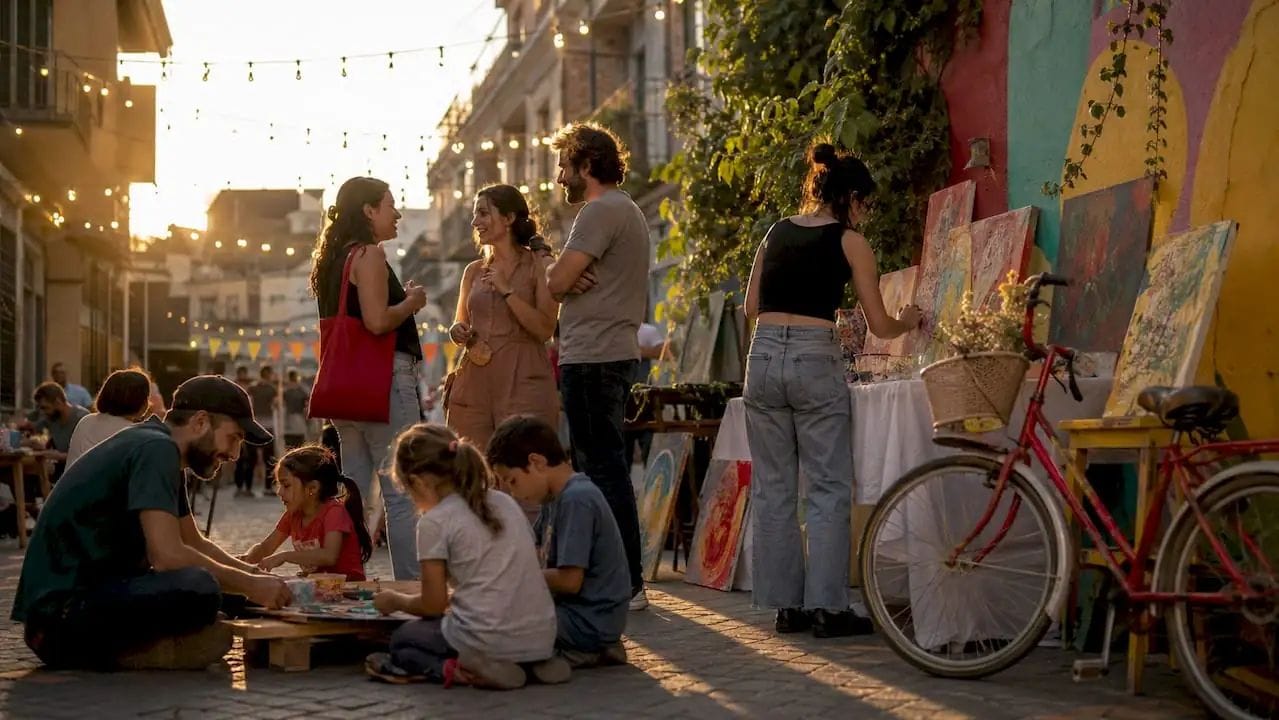
Why neighbourhood events matter more than you think
Neighbourhood festivals, farmers’ markets, workshops at cultural centres, and small street parties aren’t just ways to fill an afternoon. In big cities like Madrid and Barcelona, they also serve a less visible purpose: they help neighbours recognise each other, talk, and reclaim the street as a shared space.
Not every event has this effect. A concert might fill a square for a few hours and then vanish without much trace. But a well-thought-out neighbourhood activity, involving local businesses, associations, families, older residents, and neighbours, can change the way a street is experienced.
A neighbourhood begins when people stop passing each other in silence
In a big city, it’s easy to live for years in the same building without knowing almost anyone. Neighbourhood events break that routine in a simple way: they give people a reason to stay.
A shared table, a performance in the square, a children’s workshop, or a craft market spark conversations that don’t happen in the lift. That’s part of their value. They don’t turn every neighbour into a friend, but they do reduce anonymity.
And that matters. A neighbourhood where people greet each other, recognise each other, and know who runs a shop, an association, or a local initiative works differently. There’s more shared information, more trust, and it’s easier to ask for help when needed.
It’s not just leisure: it also boosts local business
Neighbourhood events also have a concrete economic impact. When a fair, festival, or market includes bakeries, bookshops, bars, florists, artisans, or local producers, the spending stays closer to home.
On a small scale, a well-placed activity can fill terraces, give visibility to shops that usually go unnoticed, and attract neighbours who don’t normally visit that area. It doesn’t have to be a big festival. Sometimes all it takes is a well-curated programme, a well-chosen square, and a clear reason to go out.
Barcelona has worked on this with initiatives linked to local business and neighbourhood markets. In Catalunya, many neighbourhood festivals are supported by residents’ associations, volunteers, and local networks. The underlying idea is simple: when the neighbourhood gets involved, the event stops being an external show and becomes something of its own.
The difference between attending and taking part
It’s not the same to just watch as it is to be part of the plan.
An event organised entirely from the top down can work very well as entertainment. People arrive, consume, listen to music, and leave. That’s fine, but its effect usually doesn’t last long.
The most interesting events for neighbourhood life are those that leave room for participation: a collective mural, a community meal, a charity collection, a neighbours’ workshop, a guided walk, a children’s activity organised with local groups, or a fair where the businesses aren’t just decoration, but the main players.
That’s where real change happens: the neighbour stops being just an audience member and becomes part of the plan.
What makes a good neighbourhood event
A good neighbourhood event doesn’t need to be huge. In fact, it often works better when it’s close, easy to understand, and possible to repeat.
What matters is that it has a clear reason to exist. It could be to celebrate a local festival, activate a square, support local business, offer family activities, recover neighbourhood memory, or connect new neighbours with local groups.
It also helps if it brings together different audiences. A morning with children’s activities, an afternoon with a market or workshops, and an evening with music allows families, young people, older residents, and businesses to share the same space without everything depending on a single time slot.
Continuity is key. A big annual event can be spectacular, but a small, regular programme creates a habit. And habit, in a city, is valuable: returning to the same square, recognising the same bookseller, knowing there’s a market every month or that the neighbourhood cultural centre offers something on Saturdays.
What to look for before you go
To choose a good neighbourhood event, it’s worth checking four things.
First, whether there’s real local participation: associations, businesses, schools, markets, cultural or residents’ groups. Second, whether the plan has clear times and activities for different audiences. Third, whether the space is comfortable to spend time in, especially if you’re with children or older people. And fourth, whether the event fits the neighbourhood or feels like a generic activity that could happen anywhere.
The best neighbourhood plans usually have something recognisable: a specific square, a local story, a unique festival, a tradition, a community around it, or a business that’s been part of the area for years.
Why they matter in Madrid and Barcelona
Madrid and Barcelona have huge cultural calendars, but often city life is best understood through the small things: a festival in Gràcia, a market in Poblenou, a family activity in Lavapiés, a neighbourhood day in Chamberí, a fair in Sants, or a weekend programme at a district cultural centre.
These plans aren’t always the most spectacular, but they can be the most useful. They help you discover the neighbourhood, support local projects, and find activities without turning every outing into a big production.
At a time when many cities are lived in a rush, neighbourhood events offer something valuable: they force you to slow down. They make you stay. And sometimes, that’s enough for a street to stop being just a place you pass through.
Summary
Neighbourhood events build community when they don’t just fill a square, but connect neighbours, businesses, and local groups.
They work best when they’re participatory, frequent, and easy to enjoy without lots of preparation.
For families, new neighbours, or people who want to get to know their city better, they’re one of the simplest ways to discover Madrid and Barcelona from the inside.
Y for neighbourhoods, they can be much more than leisure: a way to activate the street, support local business, and remember that the city is also built through small plans.