
News
New voices and uncomfortable themes take centre stage at the 2025 Book of the Year Awards
Madrid’s independent bookshops have once again highlighted the stories connecting with readers. The 2025 Book of the Year Awards, organised by the Madrid Bookshops Association, recognise works about grief, memory, mental health and identity, subjects that are increasingly occupying cultural conversations in the city.
In fiction, the award went to Una belleza terrible, by Edurne Portela and José Ovejero, published by Galaxia Gutenberg. The novel recovers the lives of people who fought to transform society and focuses on how collective memory continues to influence the present.
The young adult category recognised El silencio de la princesa Midas, by Alba Quintas (SM), a story about loss and the emotions that remain hidden after bereavement. The jury highlighted the sensitivity of a novel that connects particularly with young readers without falling into easy melodrama.
Among new voices, the Almudena Grandes Debut Novel Prize went to Niñas sucias, by Elena Correa (Pepitas). The stories explore motherhood, violence and mental health from an uncomfortable, highly personal perspective, in a vein increasingly present in contemporary Spanish narrative.
The winning essay was Breve historia del conflicto entre Israel y Palestina, by Ilan Pappé (Capitán Swing), a book that summarises decades of political and social tension in an accessible way for non-specialist readers. In comics, recognition went to El disturbio eterno, by Joe Sacco (Reservoir Books), focused on the religious and social fractures of contemporary India.
Poetry has also found a place in these awards with Adulta funcional, by Gloria Fortún (Dos Bigotes), a poetry collection about contradictions, exhaustion and life changes in adulthood. In children’s literature, bookshops highlighted El deseo más grande del mundo, by Eva Manzano (Nórdica Infantil), for its ability to combine profound questions with a close, optimistic tone.
One of the most notable moments of the ceremony was recognition for Mili Hernández, a key figure in LGTBI culture in Spain. From the Berkana bookshop and Egales publishing house, both in Madrid, she has spent decades promoting spaces of visibility and encounter through books.
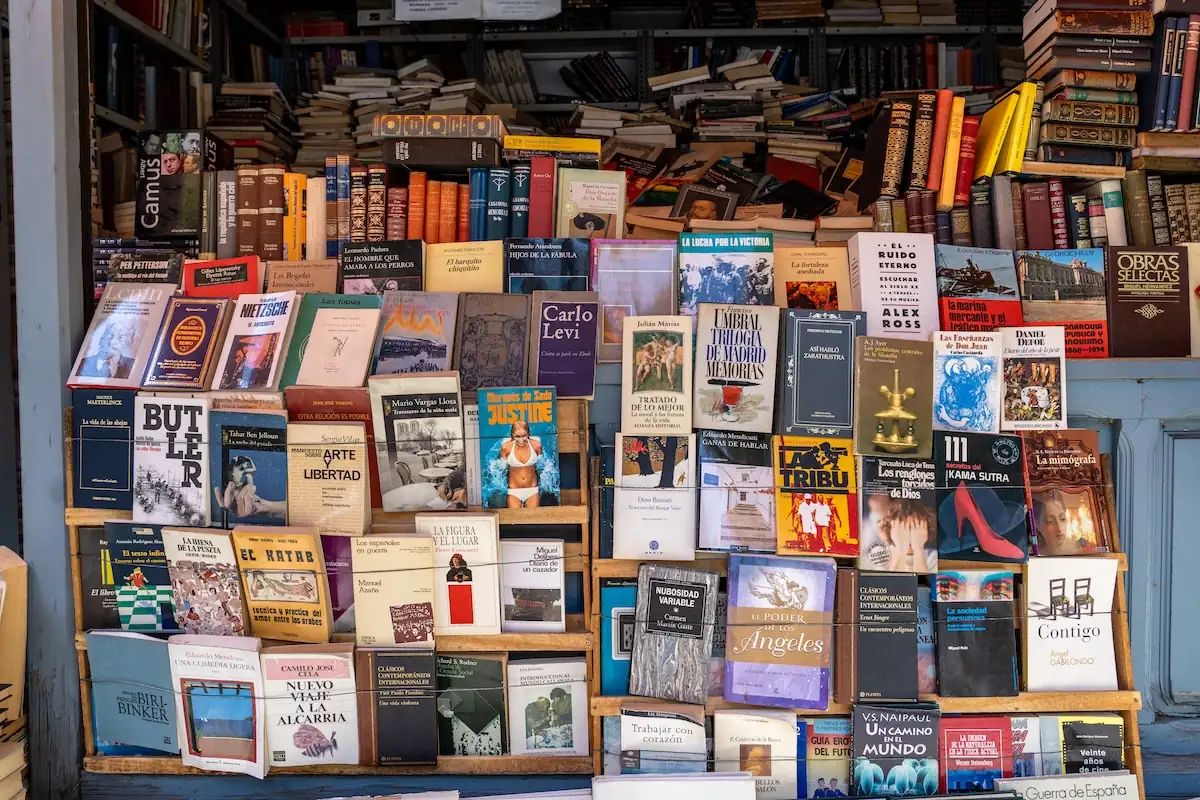
The awards also reflect the role neighbourhood bookshops continue to play in Madrid’s cultural life. In an age dominated by algorithms and automated recommendations, many readers still seek real conversations, personal advice and titles that do not always appear in the most obvious shop windows.