
News
A XVI-century relief stolen in Navarra turns up at a Barcelona auction
A carved wooden relief from the XVI century, stolen 16 years ago in Navarra, has been found at an auction house in Barcelona and finally returned to the Church. Its recovery brings to a close a long journey through various owners and shops, and once again highlights the irregular circulation of historical heritage.
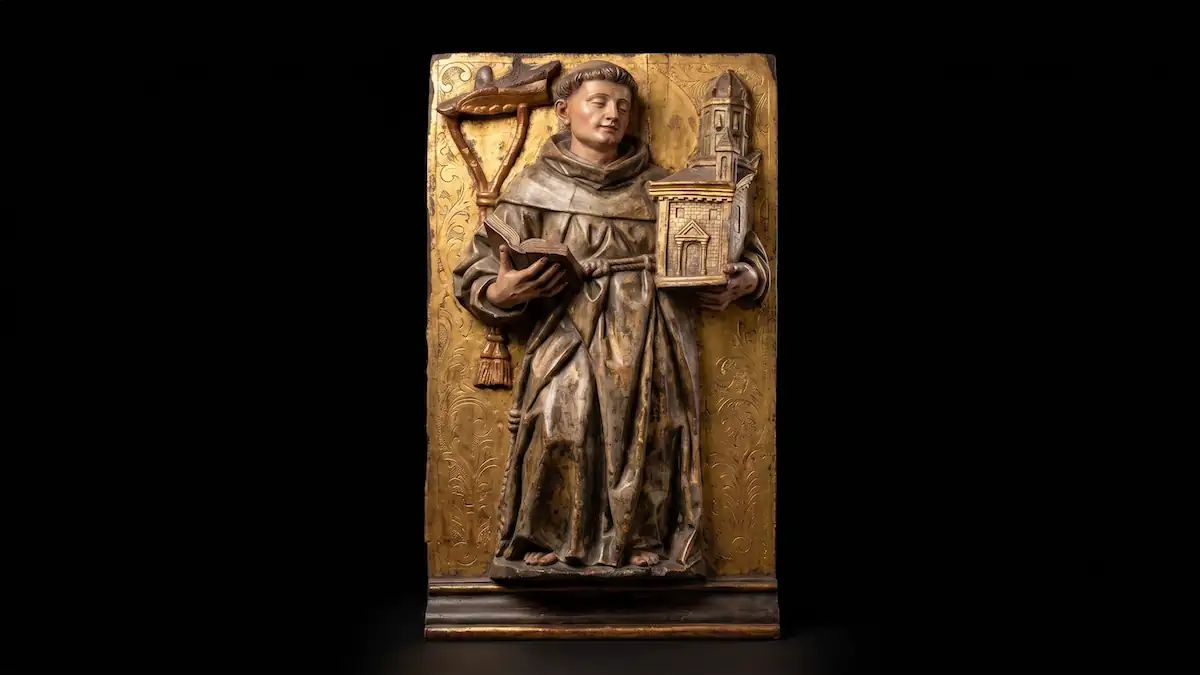
The piece depicts Saint Bonaventure and measures 81 centimetres high, 45.5 wide and 10 deep. It formed part of the high altar of the Monasterio de Santa Clara de Fitero, from where it was stolen before disappearing from the known circuit for years.
The relief, gilded and polychrome, is linked to the circle of the sculptor Juan de Anchieta. Its authorship, age and state of preservation made it a particularly attractive work for collectors and dealers specialising in religious art.
The investigation made it possible to reconstruct part of its journey. After the theft, the piece is believed to have passed through the Rastro de Madrid and through different hands before reaching Barcelona, where it was acquired by an auction house from a private individual.
Police detected the relief when it was about to be put up for sale and began checking its provenance. Analysis of the documentation and comparison with theft records confirmed that it was the work that had disappeared in Fitero.
Once its origin had been established, the piece was handed over to the parish priest responsible for the church on behalf of the Archdiocese of Pamplona and Tudela. The monastery thus recovers an important fragment of its main altarpiece and artistic memory.
The case shows the difficulties of tracing old works that change owner and city without complete documentation. Auction houses, antique dealers and private buyers play a key role in checking the provenance of pieces before bringing them onto the market.
The recovery leaves an unusual image: a sculpture that left a Navarrese monastery, passed through Madrid and ended up appearing years later in Barcelona. Its return shows that even works missing for a long time can return to their place of origin when the documentary trail can be reconstructed.