
News
AI robots will arrive at nine public schools in Madrid next academic year
The Comunidad de Madrid will extend the ROBIC programme next academic year to nine public schools in the region to support pupils with special educational needs. The robots will be used as a tool by teachers and therapists to adapt communication, psychomotor and expression exercises to each child’s pace.
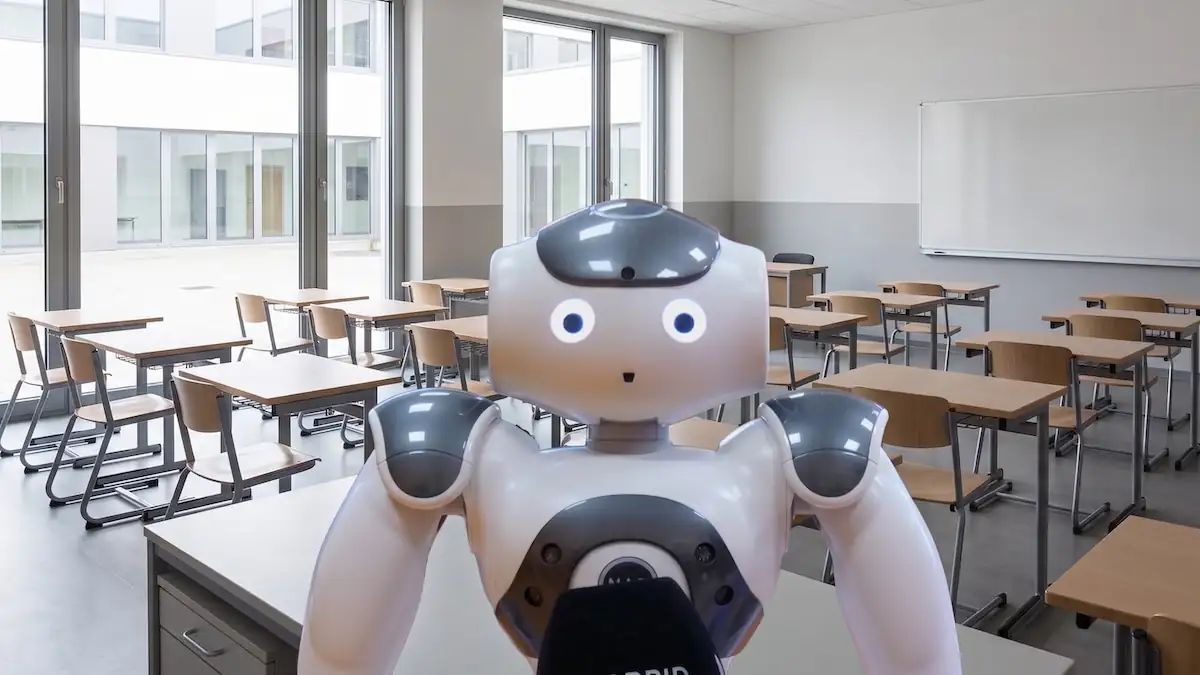
The expansion follows an eight-month pilot scheme at Colegio Gaudem de Madrid, a state-subsidised school specialising in supporting diversity. Thirty children aged between four and ten took part there, with profiles including autism spectrum disorder, developmental delay, neurodevelopmental disorders, motor or cognitive difficulties, and the after-effects of brain injury.
ROBIC works through a small humanoid robot fitted with 3D cameras and other sensors. During sessions, it interprets the pupil’s interaction and uses artificial intelligence to select, from a pre-designed catalogue, exercises suited to their needs and learning pace. Educational decisions, however, remain the responsibility of professionals.
The activities can work on anything from imitating movements and bodily coordination to language, concentration or recognising one’s own body. The information obtained during sessions is used to personalise tasks and, according to the Comunidad, its handling must comply with data-protection regulations.
The evaluation of the pilot points to greater pupil participation and motivation, better understanding of instructions and a calmer atmosphere during sessions. One notable case was that of a girl with ASD and significant difficulty speaking who began to show new communication skills when interacting with the robot.
From the 2026–2027 school year, the system will be introduced at Inmaculada Concepción in Madrid; Duque de Ahumada in Valdemoro; Miguel Hernández in Colmenar Viejo; Peñalara in Collado Villalba; Iker Casillas in Torrejón de Ardoz; Perú in Carabanchel; Maestra Trinidad García in Fuenlabrada; El Olivar in Rivas-Vaciamadrid; and Profesor Tierno Galván in Alcobendas.
For teachers, the aim is neither to replace therapies nor to automate teaching, but to have an additional tool that makes it possible to repeat exercises, adjust their difficulty and keep some pupils’ attention. The professionals who took part at Gaudem also highlighted that the robot could be incorporated into the usual routine without increasing their workload.
The introduction in nine schools will now make it possible to see whether the results obtained with a small group can be reproduced in different schools and with different pupils. The trial will be especially relevant for families: beyond the novelty of having a robot in the classroom, what will determine ROBIC’s value will be whether it can become useful everyday support for children who need particularly personalised attention.