
News
Rosalía transforms Palau Sant Jordi into a living museum with her ‘Lux Tour’
Barcelona experienced one of those nights that break the city’s cultural routine. Rosalía began her run of concerts in the Catalan capital at Palau Sant Jordi with a show that moves away from the usual pop format and opts for emotion, pauses and a highly polished aesthetic. From the outset, the audience understood that this was not a conventional concert.
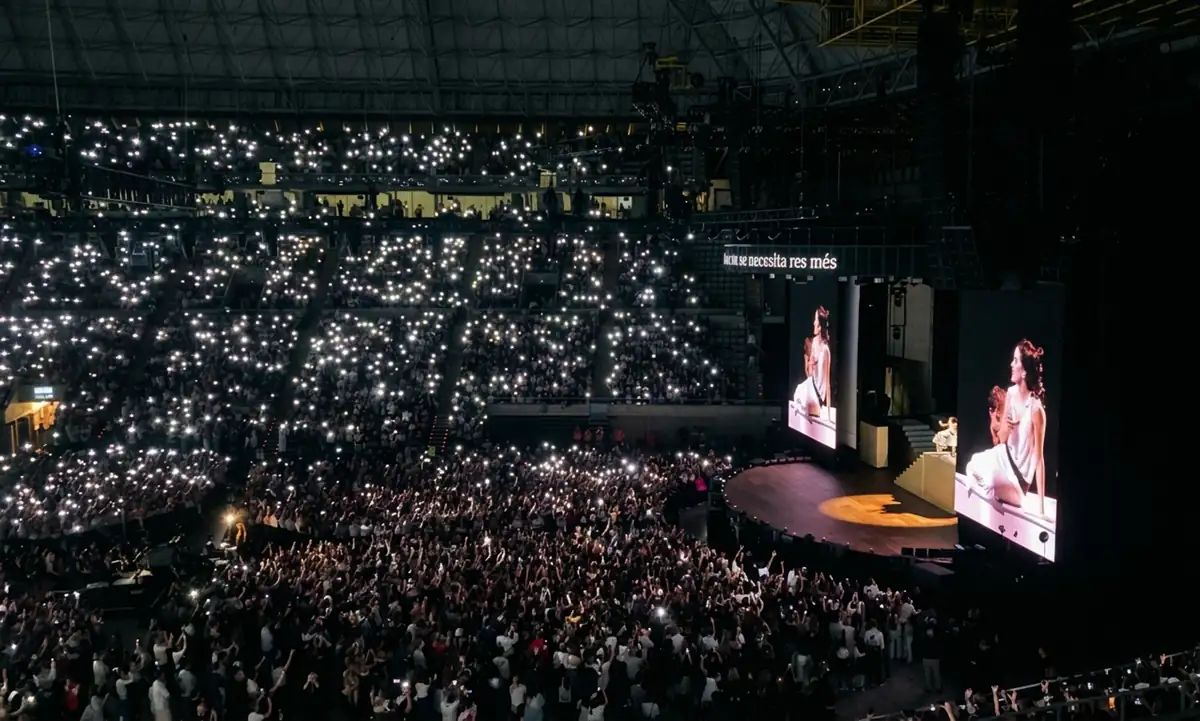
The opening set the tone for the entire show. With an atmosphere close to classical music and staging reminiscent of an art gallery, the artist appeared suspended by her dancers as though she were a moving sculpture. The production prioritised the visual and the symbolic over the fast pace that usually dominates this kind of event.
During the first songs, Rosalía opted for a restrained, almost motionless performance. Songs such as Sexo violencia y llantas, Reliquia and Porcelana were presented with an emotional intensity that contrasted with the usual energy of her Motomami period. The result was an atmosphere of contemplation unusual in a venue the size of the Sant Jordi.
One of the most talked-about moments came when the artist, visibly emotional, recalled Peret and her connection with Barcelona. Far from projecting a distant image, Rosalía appeared close, even vulnerable, connecting with an audience that filled the venue and responded to every gesture with attention and respect.
The staging also played a key role. Far from hiding the production, the show left the stagehands and costume changes in view, moving from the most sober black to a brighter final white. The presence of a live orchestra reinforced the feeling of being before a hybrid work between a concert and an artistic piece.
The concert was structured in chapters, with moments of unexpected interaction. Rosalía spoke with actress Yolanda Ramos in an improvised confessional, talked to a child attending their first concert and shared a hug with an older spectator. In addition, the lyrics were projected in Catalan and Spanish, making it easier to connect with the local audience.
In the second half, the pace changed. Songs such as Saoko, La fama and CUUUUuuuuuute brought energy back to the venue, with more powerful staging and striking visual elements such as a botafumeiro turned into a loudspeaker. The choreography for La perla, created by Dimitri Papaioannou, reinforced that balance between visual culture and pop spectacle.
The repertoire combined her most recent hits with references to her flamenco roots, such as De madrugada and La rumba del Perdón. This mixture reaffirms Rosalía’s evolution as an artist, capable of moving between genres without losing a recognisable identity. The closing performance of Magnolias returned calm to the Sant Jordi, leaving a sense of pause and depth unusual in large-format concerts.
Rosalía’s time at the Palau Sant Jordi is not only a musical event, but also a direct boost to Barcelona’s cultural and economic activity. Areas such as Sants-Montjuïc, Poble-sec and Plaza España see increased activity in bars, transport and services whenever the venue hosts major concerts. In addition, this type of show reinforces the city’s position as a key stop on international tours.
The Palau Sant Jordi, built for the 1992 Olympic Games, continues to establish itself as the city’s main stage for large-format concerts. Rosalía’s relationship with this space is special: every return means a reinvention of the live show and a different way of connecting with Barcelona.
The concert series will continue in the coming days, with new dates at the same venue. Everything suggests that each night will maintain this same artistic direction, albeit with its own nuances, in a proposal that seeks to leave a mark beyond the live performance.