
News
Sant Antoni will transform its streets with a new large pedestrian zone in 2026
Sant Antoni is about to radically change its urban landscape. The Ayuntamiento de Barcelona has awarded the contract for works that will transform the area around plaza Borrell and several streets in the neighbourhood into a large pedestrian area with more greenery, fewer cars, and new spaces designed for everyday life.
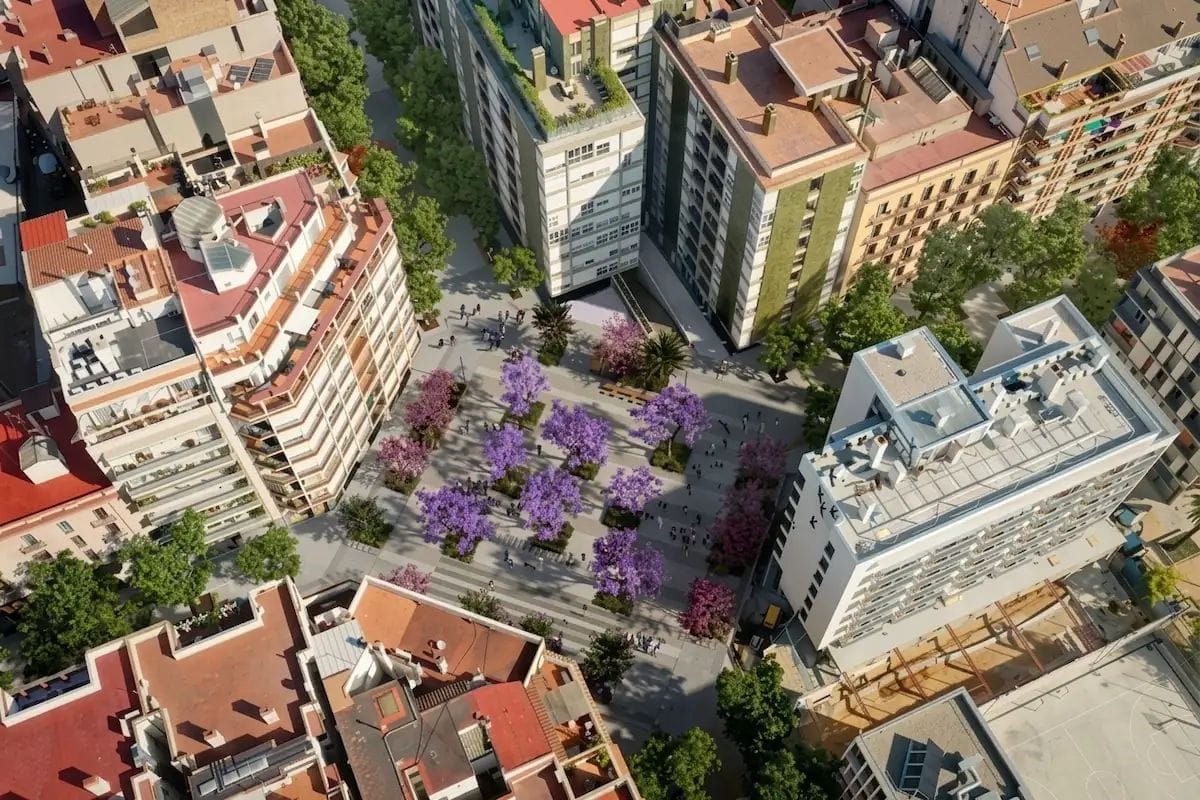
The project will affect more than 13,500 square metres and will change the way people move around one of the liveliest areas of the Eixample. The plan will remove the difference in height between the road and pavements to create a single-level platform around Comte Borrell y Parlament, following the superilla model that Barcelona has been expanding in various neighbourhoods for years.
Traffic will be greatly reduced and vehicles will no longer be able to cross the new square directly. Circulation will be mainly limited to one side, and Parlament street will absorb much of the permitted movement. For local residents, this will mean less noise, fewer cars constantly passing through, and a much more open feeling of space for walking or staying.
The redevelopment will also completely change the look of the neighbourhood. The new design will include large green areas, flowerbeds, renewed street furniture, and spaces for staying and playing. The aim is for Sant Antoni to gain shade, greenery, and meeting spaces in an area where commercial activity, terraces, and neighbourhood life are already part of daily identity.
Works will begin during the second quarter of 2026 and will last for about a year. During this time, there will be significant changes to mobility and occasional impacts on some neighbourhood access points, something common in this type of large-scale urban transformation.
The intervention is also another step by Barcelona to reduce the dominance of cars in the city's densest neighbourhoods. The superillas are designed precisely for this: to reclaim public space for pedestrians, local businesses, and community life in areas historically dominated by traffic.
Sant Antoni has become one of the neighbourhoods where the changes in Barcelona are most visible. Between the market, terraces, pedestrian streets, and the growth of green spaces, the neighbourhood has been transforming for years into a model of a city more oriented towards walking, socialising, and spending time in public spaces. The redevelopment of plaza Borrell further accelerates this transition.