
News
What to do in Sants-Montjuïc in April: routes, workshops and hidden spaces in architectural Barcelona
Sants-Montjuïc will bring together much of the programme for Barcelona World Capital of Architecture in April, with workshops, routes, exhibitions and family activities in places such as La Lleialtat Santsenca, Pavelló Mies and Montjuïc.
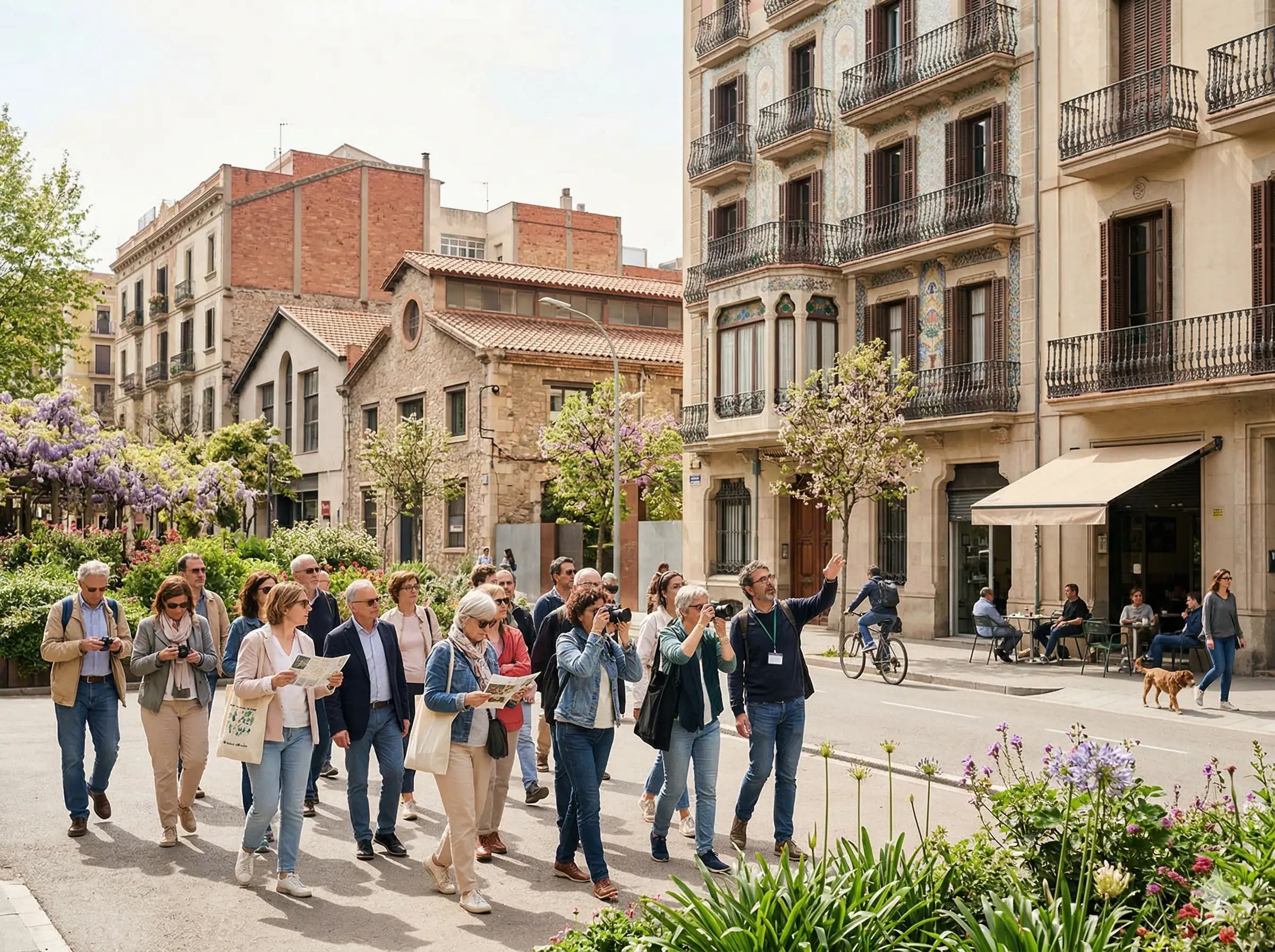
Throughout April, Sants-Montjuïc leads Barcelona's cultural agenda. Workshops, routes and exhibitions transform the district. Architecture and urban life mix in emblematic spaces. Discover activities for every audience and little-known corners.
This April, those who live in or move around Barcelona will notice how Sants-Montjuïc is becoming the heart of the World Capital of Architecture. The district hosts an intensive programme inviting people to rediscover its streets, buildings and green spaces through activities designed for every audience.
La Lleialtat Santsenca, with its history tied to the neighbourhood and its commitment to cooperative culture, becomes the focal point of the celebration until December. In April, this space will host everything from a wayfinding workshop focused on architectural accessibility to the Diàlegs d’arquitectura, where the transformation of the Sants thoroughfares and the creation of an elevated green promenade will be discussed. In addition, the travelling exhibition “De mitgeres a façanes. Un llegat per a la ciutat” will show ten projects that will turn party walls into living, green façades.
The programme extends across the district with distinctive routes and visits: the Grec and Laribal gardens, the former Climent brothers’ factory, the Tanatorio de Sants-Eixample, Jane’s Walk, the sensory itinerary “Tanca els ulls i escolta Montjuïc”, or a visit to the Font Màgica. The spring Open Barri in La Marina, promoted by 48h Open House Barcelona, will open less accessible spaces such as the Far del Llobregat and hidden gardens.
The proposals include participatory meetings such as “Millorem el barri a Sants-Montjuïc” and debates on the future of architecture, urban planning and landscape design, with particular attention to wellbeing in old age. Families will be able to enjoy workshops such as “Gratacels: reptes d’altura” at CaixaForum or “Dibuixa el Pavelló amb màgia” at the Pavelló Mies.
The Mies van der Rohe Pavilion joins in with open days and the “Converses desenfadades”, where architecture studios such as Michele & Miquel and Creus Carrasco arquitectos will reflect on the value of public space.
The World Capital of Architecture will also celebrate the Diada de Sant Jordi with a family day at the Casa de l’Arquitectura de Barcelona. On 19 April, the former Gustavo Gili building will fill with roses, books and creative activities for all ages, including a book and plant market, workshops and live music.
On 23 April, the Recinte Modernista de Sant Pau will open its doors with playful and informative proposals about the hospital’s history and restoration. Throughout the month, the agenda is completed by exhibitions such as “Kapwani Kiwanga. Estats canviants” at the Fundació Miró, routes through the Llobregat desalination plant and tours in the “Patrimoni Contemporani” cycle in Lleida and La Garrotxa.
Debates and conferences will take centre stage with meetings on the school of the present and the future at La Salle Barcelona and the “Novíssims” cycle, which highlights young architects in several Catalan cities. In addition, “Arquitectures filmades”, a documentary series about architecture and urban planning that can be seen on betevé until June, begins.
Barcelona 2026, World Capital of Architecture, is an initiative promoted by UNESCO and the UIA, organised by Barcelona City Council with the support of the Generalitat and the Ministry of Housing and Urban Agenda, which seeks to connect architecture, territory and community throughout the city and beyond.
La Lleialtat Santsenca, the epicentre of this month’s programme, is far more than a historic building in Sants. Born as a workers’ cooperative at the beginning of the twentieth century, it is now a community-managed space that promotes cultural, social and neighbourhood projects. Its rehabilitation has respected the collective memory and original architecture, making it a benchmark for citizen participation and local revitalisation in Barcelona.