
News
Agreement on the Sagrada Família that affects the future of around 200 flats stalls
The future of around 200 homes located opposite the Sagrada Família is once again in limbo. Negotiations between the Ayuntamiento de Barcelona, the Junta Constructora of the temple, and local residents regarding the future staircase of the Glòria façade have stalled after a year and a half of progress towards a possible agreement.
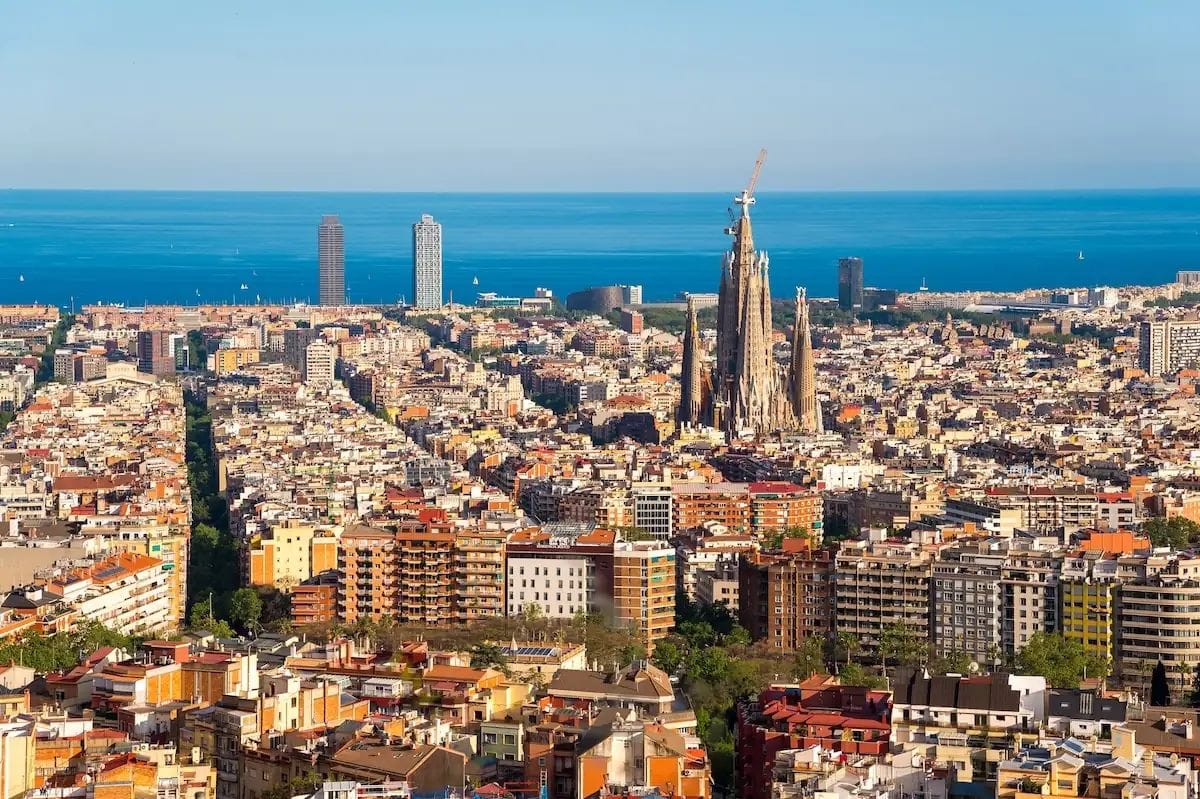
Before the summer, talks had brought positions closer together on one of Barcelona's oldest urban planning conflicts. The working scenario significantly reduced the number of potentially affected homes: from nearly a thousand considered in previous interpretations of the planning to around 200 flats, mainly concentrated in the block located right in front of the temple.
The solution required amending the current urban planning regulations. However, the City Council now admits there is not enough political support to process this amendment before the upcoming municipal elections, leaving the talks without an immediate resolution.
The conflict centres on the large staircase planned for the future Glòria façade. The 1976 metropolitan plan set aside space in front of the temple to create a large access area, but the existing urban fabric has for decades been occupied by homes, businesses, offices, and car parks.
In recent months, an alternative had gained traction that would concentrate demolitions in a single block, between the streets of Mallorca y València, instead of extending the impact towards Aragó. Calculations by neighbourhood associations put the maximum at around 216 flats, while other counts reduce the figure to between 156 and 213, depending on the final layout.
For residents, one of the main conditions is that people living in the affected homes are provided with housing solutions within the same neighbourhood and without incurring additional costs. The debate also affects tenants, businesses, offices, car parks, and tourist flats located in the potentially affected buildings.
The Junta Constructora maintains its intention to complete the Glòria façade and its monumental access. In recent months, its president had indicated that an agreement was close, while the City Council stressed the need to reconcile the completion of the temple with the rights of those living nearby.
The current deadlock does not mean the staircase has been definitively ruled out, nor that any building will be demolished immediately. It means that the necessary urban planning agreement to define who is affected, who is not, and what compensation will apply cannot be finalised now according to the planned timetable.
This prolongs the uncertainty for families who have spent decades living under urban planning restrictions without knowing if they will ultimately have to leave their homes. The City Council maintains it will continue to talk with all parties, but the solution is once again tied to a political decision that will likely be passed on to the next administration.
Meanwhile, work on the Sagrada Família continues to progress, and the Glòria façade remains one of the major unfinished elements of the project. Its development will be inseparable from the solution Barcelona finds for the buildings located in front of the temple.