
News
Sant Joan Despí is still waiting for the major Gallina Blanca project, now with 2028 as the new date
The development of the Gallina Blanca sector in Sant Joan Despí has yet to begin, despite plans for 413 homes, offices, a hotel and up to 1,000 jobs, while administrative and legal delays push the timeline back to 2028.
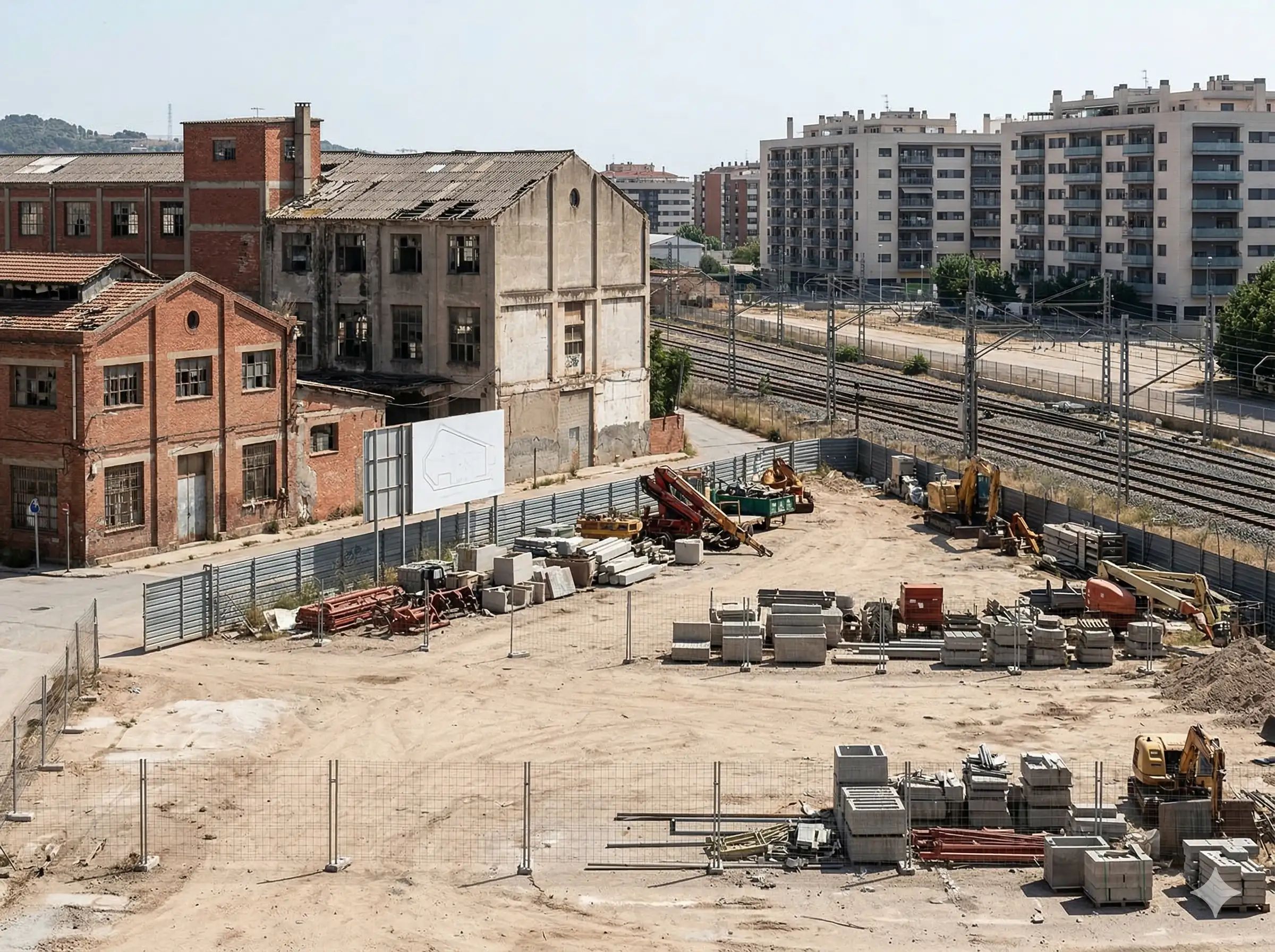
The development of the Gallina Blanca sector in Sant Joan Despí has yet to get underway. The project, valued at 150 million, promises housing, offices and jobs. Delays and legal obstacles have left residents and businesses in suspense. The key date is now 2028.
The future of the Gallina Blanca sector in Sant Joan Despí remains uncertain, despite the expectations among those who see this development as an opportunity to revitalise the area and connect historically isolated neighbourhoods. The project, which aims to transform the former industrial land into a new hub for housing, offices and economic activity, has suffered years of delays, keeping residents and businesses on edge.
In 2020, the council began the process of rezoning the land, with the expectation that construction would be completed in four years. However, things turned out very differently. Although the modification of the Plan General Metropolitano was approved in 2023 and initial approval was given to the reparcelling and urbanisation projects at the end of that year, progress has been slow. Only when both receive final approval can the building permit be requested to carry out Agrolimen’s plans, valued at 150 million euros.
The plan includes the construction of 413 homes — 184 of them subsidised — two office buildings, a commercial area and a hotel on the 45,000 square metres once occupied by the historic Agrolimen factory. It also foresees the creation of a large business park that could generate up to a thousand jobs and change the image of the Fontsanta industrial estate.
The delays are not accidental. The project first faced rejection from the Generalitat over technical issues, and then a legal dispute with the oil company Meroil, owner of a small plot that resisted expropriation. After years of negotiations and adjustments, the plan was finally unblocked, though far from the original schedule. This delay especially affects the relocation of Agrolimen’s headquarters, which had hoped to return to its historic site in 2025, but is now looking at 2028 as the new moving date.
Among the planned works is the construction of an underpass beneath the railway tracks, which will connect the paseo de Canalies with avenida de Barcelona and make it easier to access the Rodalies station from both sides. The new central square, with Agrolimen’s headquarters as its focal point, aims to break the isolation of the industrial estate and move beyond the single-use industrial model that has defined the area for decades.
The urban design also plans to integrate Renfe train lines, tram, bus and the future arrival of Barcelona’s L3 metro, strengthening connectivity and mobility in the municipality.
The arrival of the railway to Fontsanta in 1891 marked the start of industrial activity in the area, attracting companies like Gallina Blanca, which set up in 1955. However, over time, the railway tracks became a physical barrier that shaped urban growth and relegated these lands to industrial use, disconnected from the centre. The neighbourhoods that emerged later also failed to overcome this isolation, leaving the Gallina Blanca block as a leftover space.
Despite everything, the location retains its original appeal, now boosted by the growth of Sant Joan Despí and the dynamism of the metropolitan area, which explains the interest in finally unblocking the project.
The history of Agrolimen and its Gallina Blanca factory is closely linked to the industrial development of Sant Joan Despí and the growth of Fontsanta. For decades, the plant was an economic driver and a reference point for the municipality, encouraging the arrival of new companies and the consolidation of neighbourhoods around it. The closure of the factory and the subsequent wait for its transformation have kept hopes alive of reclaiming this space as a hub of activity and urban connection, at a time when integrating infrastructure and creating new uses are seen as key to the city’s future.
Timeline and design (4 Apr 2026): 2020 start, PGM 2023, initial reparcelling end of 2023 (Batlle i Roig: central square, Agrolimen headquarters). Bloqueo Meroil/Generalitat overcome; 2028 move. Railway underpass links Fontsanta and the centre. 1,000 jobs expected.