
News
An exhibition at the Mirador de Colón reinvents the Barcelona souvenir
Barcelona is full of magnets, T-shirts, bulls, flamenco dancers and miniatures repeated endlessly. But an exhibition at the Mirador de Colón poses a simple and rather uncomfortable question: if you had to take home a real memento of the city, would it really be any of those objects?
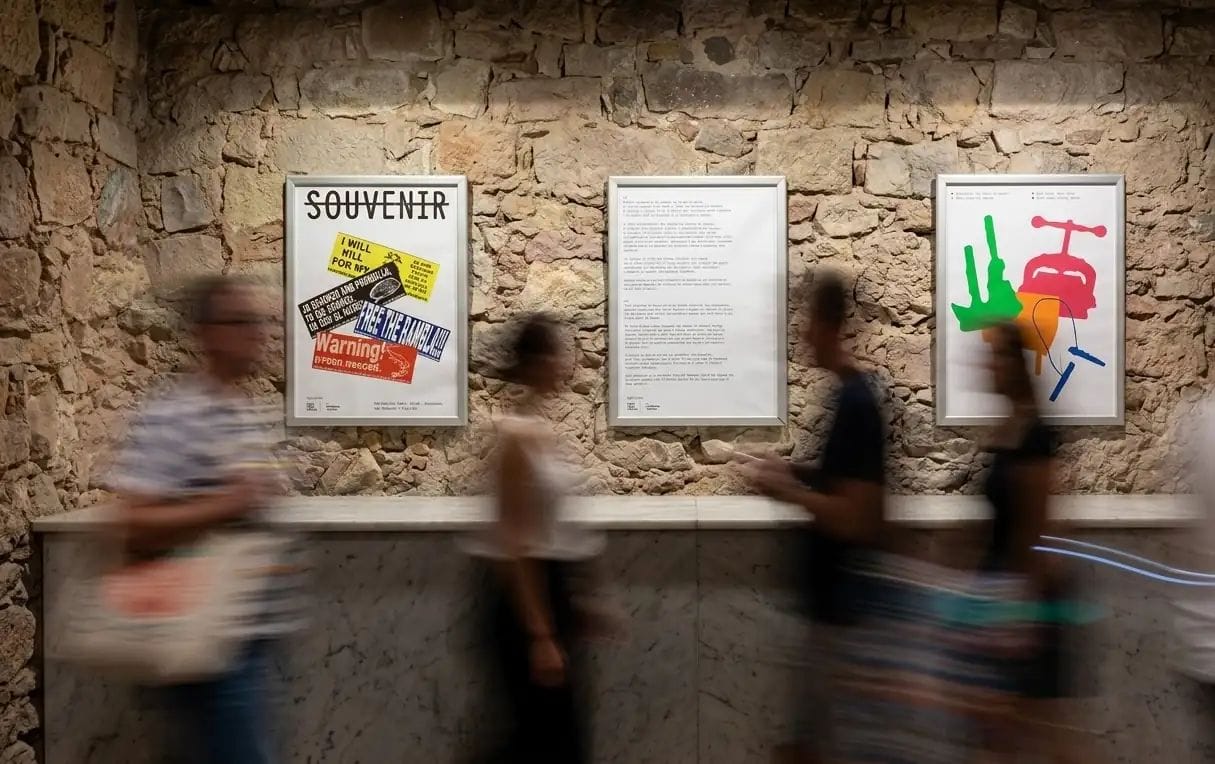
Until 2 July, the Elisava x Amics de La Rambla; Souvenir exhibition brings together eleven pieces created by design students seeking to escape the tourist cliché. The idea is not to sell another pretty keepsake, but to consider which objects can better tell the story of Barcelona’s life, gestures and memory.
The pieces draw inspiration from la Rambla and its surroundings, but not from an easy postcard image. There are references to Sant Jordi, La Boqueria, shared meals, industrial chimneys, everyday rituals and that mixture of movement, commerce and strolling that still defines one of the city’s most debated streets.
The proposals include a Sant Jordi rose-letter with texts in English, tableware designed for sharing bread and a main course, handcrafted paper cones inspired by market stalls, glass containers for dressing food at the table and ceramic jugs that look towards Barcelona’s industrial memory.
The exhibition also champions work with local materials and crafts. Ceramics, glass, paper and cork appear as an alternative to the mass-produced souvenir, the kind that could be bought in Barcelona, Lisbon or any other city with little difference.
That is precisely where the exhibition’s interest lies: it does not turn the keepsake into something nostalgic, but into a way of seeing better. A good souvenir does not have to be obvious or shout the city’s name. It can arise from a small gesture, a meal, a texture or a custom that explains something truer than a postcard.
The Mirador de Colón, at the end of la Rambla, works as the perfect place for that question. It is a thoroughfare for tourists, but also a symbolic gateway between the promenade, the port and the city. Placing an exhibition about souvenirs there forces a direct look at a very Barcelona tension: how to welcome visitors without reducing Barcelona to soulless objects.
At a time when la Rambla is preparing for a new phase, this exhibition offers a brief but useful pause. It invites us to walk it again more slowly and consider what memory we want the city to leave. Because perhaps the problem is not that Barcelona has souvenirs, but that too many have ceased to resemble Barcelona.