
News
Self-employed workers and taxi drivers bring their tax grievances to central Barcelona
Central Barcelona has once again heard the discontent of the self-employed. This Sunday, taxi drivers and other self-employed workers took to the streets to denounce a tax and bureaucratic burden they consider unsustainable. The demonstration formed part of a nationwide day of action called in 22 provinces by the Plataforma por la Dignidad de los Autónomos 30N and CEPA.
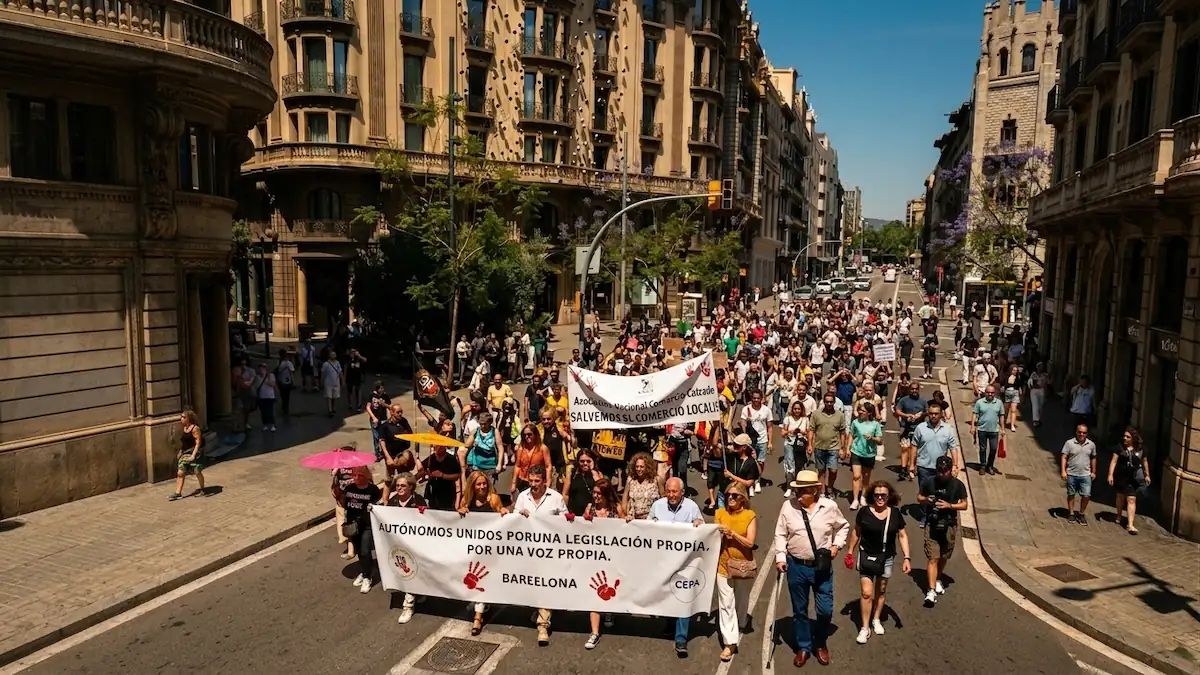
The Barcelona march was scheduled for 11:00 at the Jardinets de Gràcia, from where participants were expected to proceed towards Sant Jaume square via Pau Claris and Via Laietana. The chosen slogan, “For legislation of our own, for a voice of our own”, sums up one of the group’s main demands: to have a greater capacity for representation in decisions that affect their daily work.
The organisers denounce what they call a situation of “fiscal suffocation”, worsened by contributions, taxes, procedures and a sense of constant uncertainty. Their message is not aimed at one particular sector, although taxis have had a visible presence in Barcelona. The protest seeks to bring together small businesses, self-employed professionals and workers who provide a large part of the city’s everyday services.
CEPA, led by Daniel Vosseler, has taken on the main call in Barcelona, while Plataforma 30N has coordinated much of the organisation in the rest of the territory. The alliance between the two organisations aims to give greater strength to a movement that has spent months denouncing that the current model does not sufficiently protect those who work for themselves.
The demands include legal reforms, greater social protection, taxation better aligned with actual income and fewer administrative burdens. The self-employed maintain that small grants or one-off announcements are not enough: they are calling for a deeper review of the system to prevent closing a business or leaving the profession from becoming an increasingly frequent outcome.
In Barcelona, the protest has a strongly urban reading. Taxis, small shops, workshops, professional services and many neighbourhood businesses operate as an invisible network that keeps the city alive beyond large companies. When that fabric feels suffocated, the impact does not remain within one sector: it is felt in mobility, prices, customer service and neighbourhood life.
This Sunday’s mobilisation does not resolve the conflict, but it does put a question back on the table: what real room do the self-employed have to sustain their activity in an expensive, competitive and increasingly regulated city? Barcelona depends heavily on them, although it often only sees them when they stop, protest or take to the streets.