
News
TMB opens 400 positions to strengthen Barcelona Metro
Barcelona Metro is preparing to strengthen its workforce with one of the broadest recruitment drives in recent years. Transports Metropolitans de Barcelona has opened a selection process to fill 400 driver and customer-service agent positions, intended to sustain service on an increasingly demanding network.
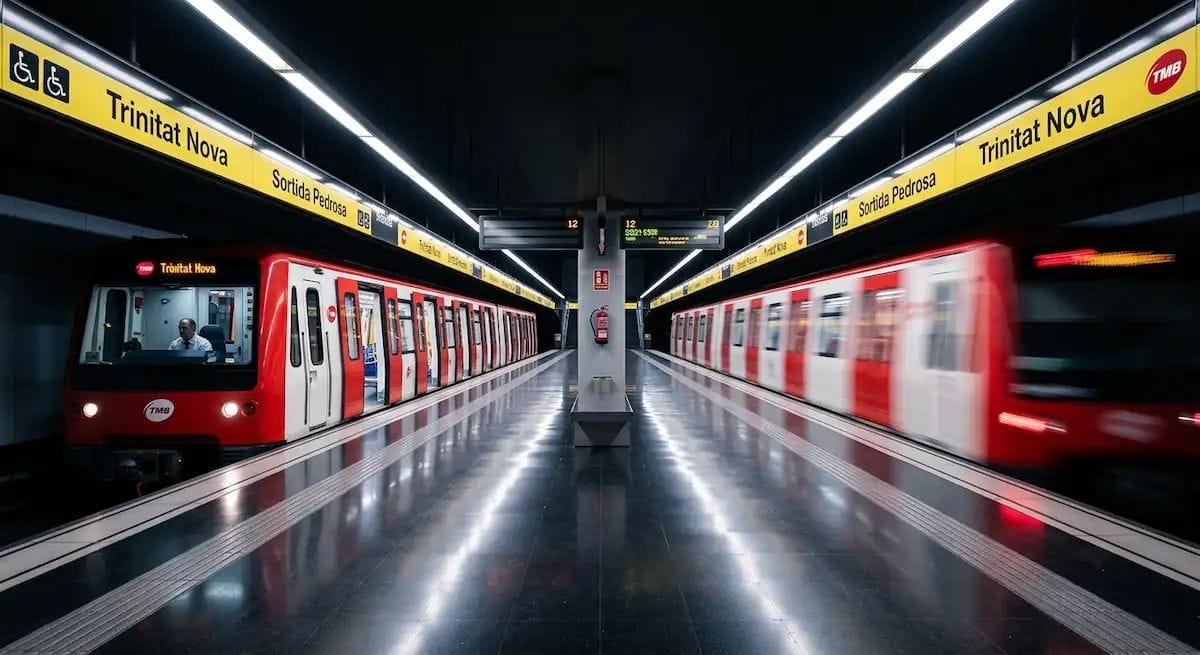
The recruitment call comes at a key moment for the city’s mobility. The metro absorbs millions of journeys every week, connects neighbourhoods, interchanges, tourist areas and work zones, and needs more staff to respond to demand peaks, incidents and service extensions.
The offer includes 200 posts already planned for drivers and another 200 for customer-service agents with multitasking duties. These roles combine driving trains with station customer service, incident management and direct support for users, a formula that makes it possible to move resources according to the needs of each moment.
The application period is open until 8 July. Applications must be submitted online with the required documentation, and candidates will have to follow process updates through the TMB website, where stages, notices and results will be published.
Requirements are more demanding than in previous calls. To take part, applicants must be over 18, hold the nationality of a European Union country, be proficient in Catalan and Spanish, and have Higher-Level vocational qualifications or a university degree. The company seeks profiles with technical ability, public-facing skills and adaptability to shifts.
The selection process will include psychometric tests, personality tests, interviews and specific training. Those who pass the initial phases must also pass a final examination relating to railway rules, safety and internal metro procedures.
The appeal of the call is not limited to the number of posts. Base salary is around €33,900 gross per year, but supplements for multifunctionality, productivity, public holidays and other items can raise pay above €42,000 per year, depending on the job’s conditions and working hours.
New workers could have a visible impact for users. More staff make it possible to reinforce stations, improve the response to incidents, cover shifts with greater stability and reduce pressure on a workforce serving one of Barcelona’s most-used public services.
The workforce expansion also comes amid works, closures and network changes during the summer. In a city where any metro incident is immediately felt on the street, having more drivers and agents can make the difference between a one-off disruption and a whole morning of delays.
The metro is not only underground infrastructure: it is a central part of daily life in Barcelona. TMB’s call is about employment, but also about something more everyday for millions of people: that the train arrives, that someone is at the station when a problem arises and that moving around the city remains possible even on the most difficult days.