
News
Works in Garraf from tomorrow: Rodalies R2 Sud on a single track, 80,000 travellers affected
The start of works in the Garraf tunnels adds more pressure to the Rodalies network. Thousands of travellers between Barcelona and Tarragona will see their journeys disrupted. Renfe is activating reinforcements and alternative services. The disruption threatens daily routines.
Update 16 March 21:20: the alternative plan has already started with direct buses between Sant Vicenç de Calders and El Prat de Llobregat, reinforcement of intercity routes and the first criticism from users over transfers. Read the new coverage here.
The start of works in the Garraf tunnels adds more pressure to the Rodalies network. Thousands of travellers between Barcelona and Tarragona will see their journeys disrupted. Renfe is activating reinforcements and alternative services. Collapse threatens the daily routine.
Tomorrow, Monday 16 March, works begin in the Garraf-Sitges tunnels, which will cripple the R2 South for three months with a single track, affecting 80,000 daily travellers between Barcelona and Tarragona. Frequencies: 8 trains/hour Barcelona-El Prat, 6 Castelldefels, 4 Garraf, 2 Sant Vicenç (double capacity); 14,400 extra bus places (direct Barcelona-Torredembarra-Altafulla, reinforced e15/e16). Free Rodalies is extended beyond 15 March because of the continuing crisis (200 speed restrictions still in force), confirms regional minister Sílvia Paneque.
Everyday travel between Barcelona and Tarragona faces a new complication from this Monday. Works in the Garraf tunnels, scheduled for at least three months, force thousands of Rodalies users to rethink their daily journeys. The affected section, one of the most used on the R2 South, carries around 80,000 passengers every day and will now operate on a single track between Sitges and Garraf, halving the usual train frequency.
The situation comes at a time when the network was already carrying recurring problems: frequent incidents, speed restrictions and lines such as the R3 still without service. Added to this is the fact that some journeys depend on shuttle buses and that the closure of the Rubí tunnel has also put pressure on freight transport. To cushion the impact, Renfe has reinforced the presence of information staff at key stations and expanded alternative services.
For the duration of the works, eight trains per hour in each direction will run between Barcelona and El Prat de Llobregat; six as far as Castelldefels; four as far as Garraf; and only two double trains will continue to Sant Vicenç de Calders. This is a notable reduction compared with the usual service, foreshadowing fuller platforms and less smooth journeys.
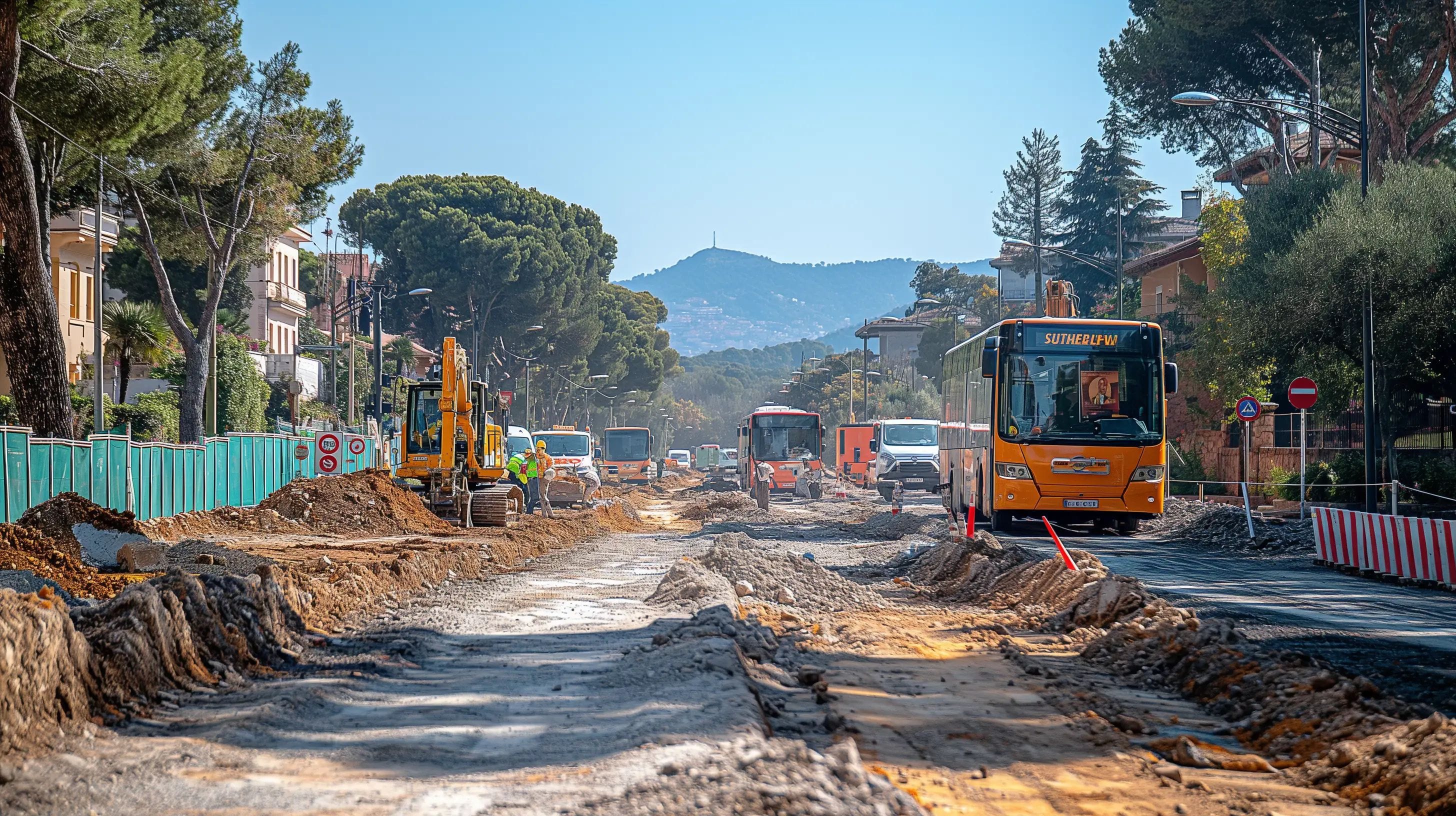
For regional-train travellers, a special bus service has been set up between Sant Vicenç and El Prat, and several road routes linking Barcelona and Vilanova i la Geltrú with other affected localities have been reinforced, adding 14,400 extra places. In addition, a new direct bus between Barcelona, Altafulla and Torredembarra is being introduced at peak times.
Criticism from user groups was not long in coming. They complain that the alternative plans do not take real transfer times into account and that saturation at points such as El Prat de Llobregat or Bellvitge may cause even more delays. Last week, the closure of the Rubí tunnel already caused a collapse in freight transport, and this weekend the windstorm forced the suspension of services on the R11 and RG1 between Girona and Figueres after trees and fences fell onto the tracks.
Meanwhile, Barcelona is reactivating the Low Emission Zone from today following the decree signed by Mayor Jaume Collboni, coinciding with the return to the ordinary regime after the temporary suspension of restrictions on the most polluting vehicles. All this comes in a context of extended free travel on Rodalies until the end of March, a measure that seeks to compensate for the inconvenience but does not resolve growing user dissatisfaction.
Rodalies has become a barometer of metropolitan mobility and travellers' patience. The network, managed by Renfe and Adif, connects Barcelona with dozens of municipalities and is essential to the day-to-day lives of students, workers and families. Improvement works and recurring incidents test the resilience of a system which, despite investment, continues to carry historical deficits in infrastructure and frequencies. The experience of these months will be key to assessing the future of public transport in the metropolitan area.