
News
Barcelona will see an almost red Moon in the 28 August eclipse
Barcelona will look to the sky again this August. In the early hours of Friday 28, a very deep partial lunar eclipse will cover around 96% of the Moon’s disc, leaving only a small illuminated strip. The best moment will come shortly after six in the morning, before the satellite disappears below the horizon.
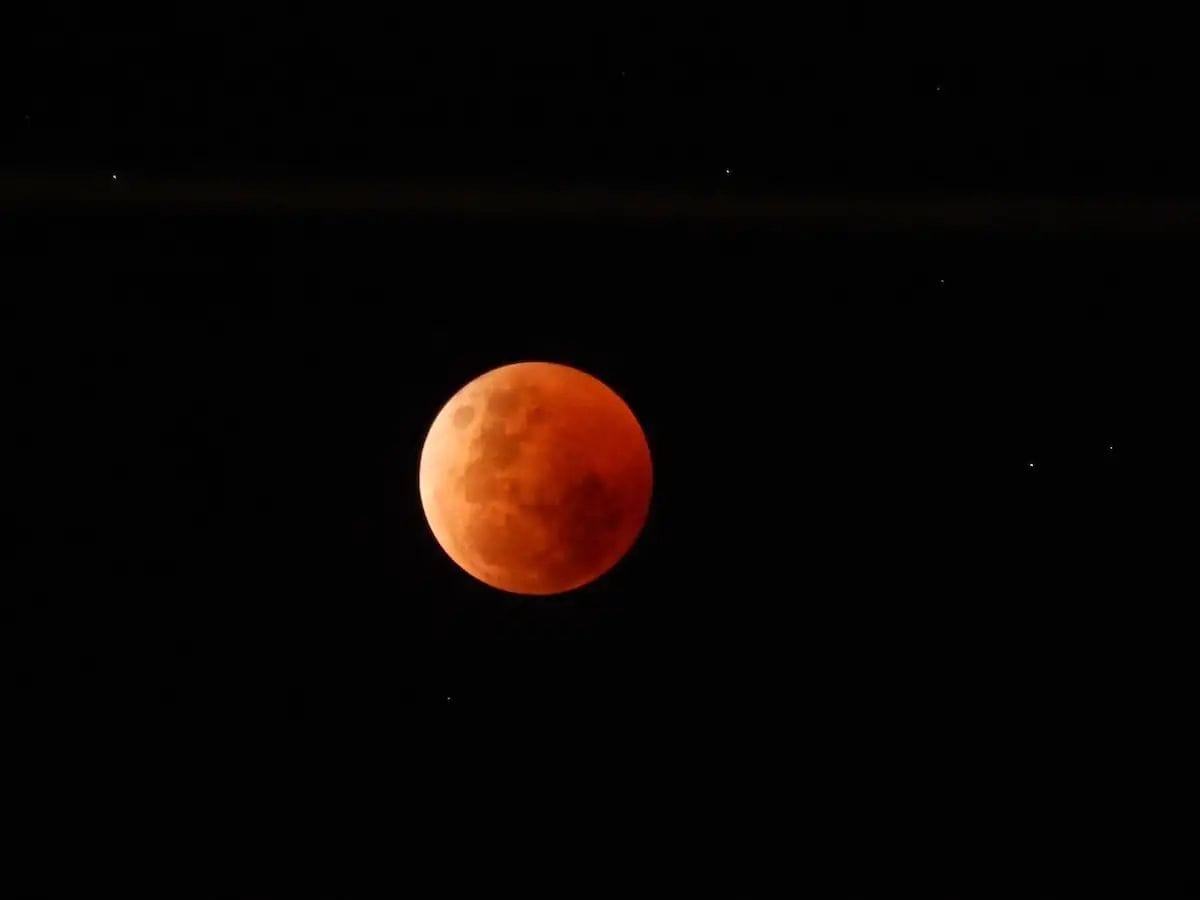
The phenomenon will begin discreetly at 3.23, when the Moon enters the Earth's penumbra. The most evident phase will begin at 4.33, with its entry into the darkest shadow, and will progress throughout the early morning until reaching its maximum at 6.12.
It will then be that the Moon presents its most striking appearance. Although technically it is not a total eclipse, approximately 96% of its disc will be covered by the Earth's shadow and much of the visible surface may take on reddish and coppery hues. A small portion will remain directly illuminated by the Sun.
From Barcelona there will be an important constraint: the Moon will be getting lower and lower. At the moment of maximum it will be towards the west-southwest, around 11 degrees above the horizon, and it will end by setting at around 7.21. The partial phase will continue afterwards, but it will no longer be visible from the city.
That makes choosing the location an important part of the plan. It is advisable to look for a spot with an unobstructed western horizon, avoiding buildings, trees or mountains that hide a Moon that will be very low during the most spectacular part of the eclipse. Moving away from urban lights can improve the experience, although the phenomenon can be seen with the naked eye.
Unlike the solar eclipse experienced on 12 August, this time special glasses or filters will not be needed. Lunar eclipses can be observed directly and safely. Binoculars or a telescope will make it easier to see how the shadow progresses, but they are not essential.
The reddish colour appears because, while the Earth blocks direct light from the Sun, part of that light passes through the Earth's atmosphere and reaches the lunar surface. Reddish wavelengths pass through it more easily, producing the coppery tone characteristic of deep lunar eclipses.
For Barcelona, the scene will be brief but especially photogenic: an almost completely darkened Moon descending towards the horizon as the sky begins to grow light. Anyone wishing to see it at its maximum will have to set their alarm before six and find an open place facing west.