
News
Ensanche de Vallecas unveils a large renovated, more accessible park
Ensanche de Vallecas unveils a renovated park that changes how one of its major green spaces is used. After months of works, nearly 40,000 square metres have been transformed with new paths, more vegetation, rest areas and spaces designed for walking, sport or spending the afternoon with the family.
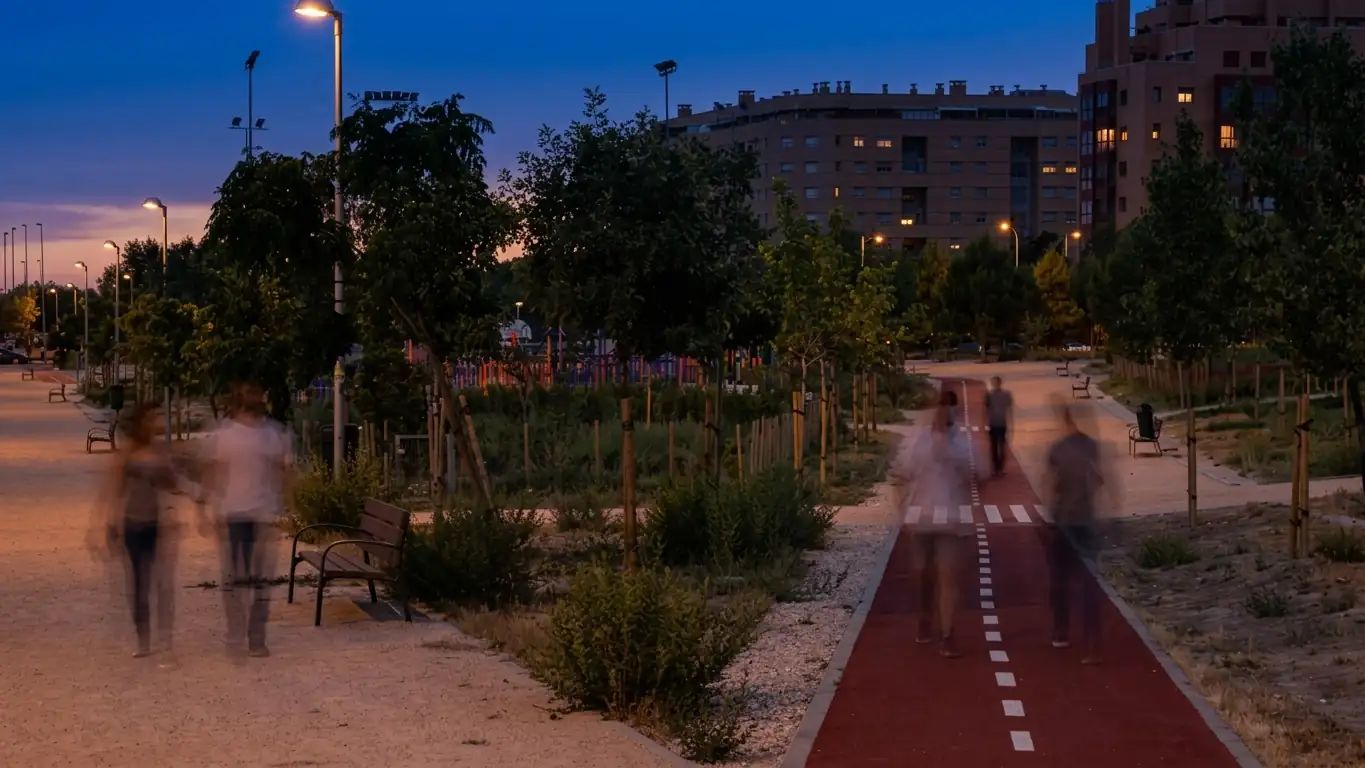
The project lies between Avenida de las Suertes, Avenida del Ensanche de Vallecas and Calle de Cañada del Santísimo. It is an area where many residents of a young neighbourhood pass through and spend time, with broad avenues and growing demand for comfortable, accessible and well-connected public spaces.
The investment was €1.1 million. With that budget, pedestrian routes have been renewed, daily-use areas improved, and the park made easier to cross for older people, families with prams, children and residents with reduced mobility.
One of the most practical changes is in the new accessible paths. The park gains clearer, more comfortable routes, something important in a neighbourhood where many distances are covered on foot between homes, schools, shops, transport stops and leisure areas.
Picnic areas with tables have also been created, intended to make the park more than a place to pass through. The idea is that residents can stay, eat something, rest or meet without always relying on terraces or enclosed premises.
Sport will have a greater presence with a new calisthenics area. This type of facility has become a common demand in many Madrid neighbourhoods because it allows people to train outdoors at no cost and makes better use of green spaces throughout the year.
The intervention also includes improvements to children’s and dog areas. For many families and dog owners, these spaces are what determine the park’s real use in the daily routine: going down for a while in the afternoon, meeting other neighbours or taking a break close to home.
The cycle lane has also been refurbished and signposted. The improvement helps organise coexistence between pedestrians and cyclists more effectively, and strengthens more comfortable mobility within a neighbourhood where internal distances can be long.
The environmental component is another of the project’s strengths. The park includes a sustainable drainage system to make better use of rainwater and reduce run-off, an increasingly necessary solution in a city alternating dry periods with episodes of heavy rain.
New vegetation will also change the landscape. Some 430 trees and more than 13,300 shrubs adapted to Madrid’s climate have been planted, a commitment intended to improve biodiversity, provide more shade over time and make the setting more pleasant in hot months.
In a neighbourhood such as Ensanche de Vallecas, green spaces have a special role. They are not merely urban decoration: they function as places for meeting, walking, play, sport and rest in an area of Madrid that has grown quickly and where many residents are calling for more nearby services.
The park’s renovation comes at a time when the city needs public spaces better prepared for heat, coexistence and intensive use. Shade, benches, accessible paths and trees are not minor details; they are the elements that decide whether a park is truly used or simply crossed without stopping.
For residents, the improvement will be apparent in simple things: walking without negotiating uncomfortable paths, training outdoors, sitting in the shade, taking children to the park or cycling more safely.
Ensanche de Vallecas thus gains a more complete, liveable green space. The works do not by themselves change every challenge in the neighbourhood, but they do improve an important part of daily life: the possibility of having a park nearby where one can stay, not only pass through.