
News
An archaeological find in the Gòtic forces Barcelona’s Roman map to be rewritten
Works in the heart of the Gòtic have changed the view of Barcelona’s origins. The Roman forum was not oriented as was believed. A millenary paving reveals an unexpected alignment with the sea. Urban history takes a radical turn.
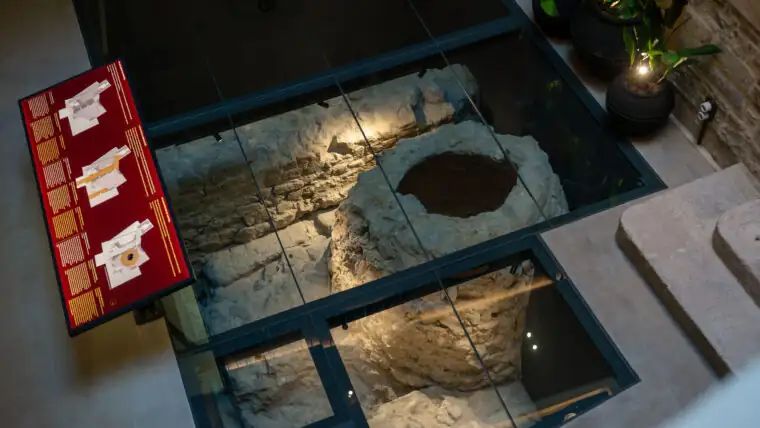
Works in the heart of the Gòtic have changed the view of Barcelona's origins. The Roman forum was not oriented as was believed. A millennia-old paving reveals an unexpected alignment with the sea. The city's urban history takes a radical turn.
Barcelona has just seen one of its historical certainties shaken. The expansion works at the Gran Hotel Barcino, in the heart of the Gòtic, have brought to light a Montjuïc stone paving that forces a reassessment of the orientation of the ancient Roman forum. This discovery, beneath Casa Requesens, directly affects the image many Barcelona residents have of the city's origins.
The find, dated between 15 and 10 BC, corresponds to the founding period of the Roman colony of Barcino. Until now, it was thought that the forum, the political and social centre of the ancient city, followed the mountain-to-sea axis. However, the slabs found show that Barcelona's Roman heart was aligned perpendicularly to what was believed, facing directly towards the sea.
This 90-degree turn in the interpretation of the urban past not only surprises experts, but also invites residents and visitors to look at the historic centre with different eyes. Archaeology, once again, shows that the city hides secrets beneath its busiest streets and that any building work can change Barcelona's narrative.
The discovery reopens the debate about how the city was built and what other enigmas may be waiting beneath the asphalt. For those walking through the Gòtic, knowing that they are walking over the true axis of the Roman forum adds a new dimension to the urban experience.
Casa Requesens, beneath which this find has been made, is one of the Gòtic's most emblematic buildings. Its history dates back to the Middle Ages, but its subsoil holds much older remains. Over the years, this enclave has witnessed urban transformations, refurbishments and discoveries that have gradually revealed layers of Barcelona at its least known. The recent find confirms that the city's past remains alive and ready to surprise.