
News
A Catalan hospital scans the mystery of a giant 70-million-year-old dinosaur
A dinosaur fossil found in Lleida is being scanned at a Catalan hospital. The tomography aims to reveal how such a huge skeleton could be so light. The discovery connects local science with the peninsula’s ancient history.
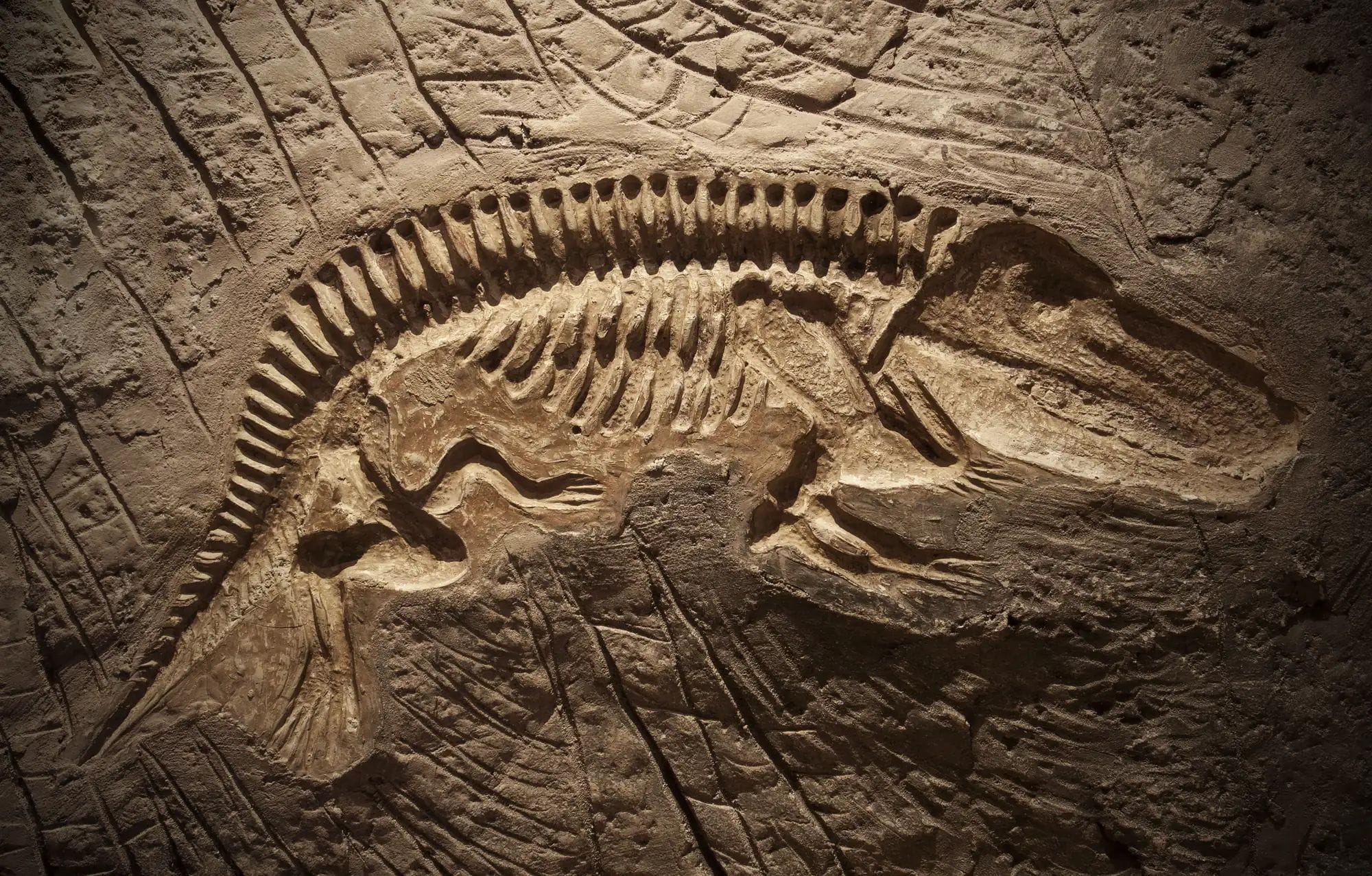
Science and medical technology in Catalonia have joined forces to uncover secrets that have been hidden underground for millions of years. The Pallars de Tremp hospital has performed a CT scan on a vertebra of Abditosaurus kuehnei, a long-necked dinosaur whose remains were found at the Orcau-1 site in Lleida.
This fossil, estimated to be 70 million years old, was scanned so researchers could analyse the internal structure of the bone and the air cavities that allowed these giants to maintain a surprisingly light skeleton. The aim is to better understand how these animals could reach such colossal sizes without collapsing under their own weight.
Abditosaurus kuehnei was discovered more than six decades ago, but its formal scientific description was not published until 2022. Now, medical technology applied to palaeontology is advancing knowledge of its biology and how it adapted to the environment it inhabited in what is now Catalonia.
The collaboration between hospitals and palaeontology teams shows how local innovation can provide answers to questions that once seemed impossible. Initiatives like this reinforce the role of Catalan research on the international stage and bring natural history closer to everyday life in the region.
Abditosaurus kuehnei belongs to a group of sauropod dinosaurs that dominated the landscapes of the Late Cretaceous in the Iberian Peninsula. Its discovery in Lleida has made it possible to reconstruct part of the fauna that lived in the area before the mass extinction. The Orcau-1 site is one of the most important palaeontological sites in Catalonia, and each new study of its fossils provides key pieces for understanding the evolution and diversity of European dinosaurs.