
News
Majadahonda to open a mental health centre costing 14 million
Majadahonda will have a new mental health centre serving nearly 424,000 people in the northwest of the Comunidad de Madrid. The investment exceeds 14 million euros and will allow the current facilities at the centro de Cerro del Aire to be replaced by a larger, more specialised building.
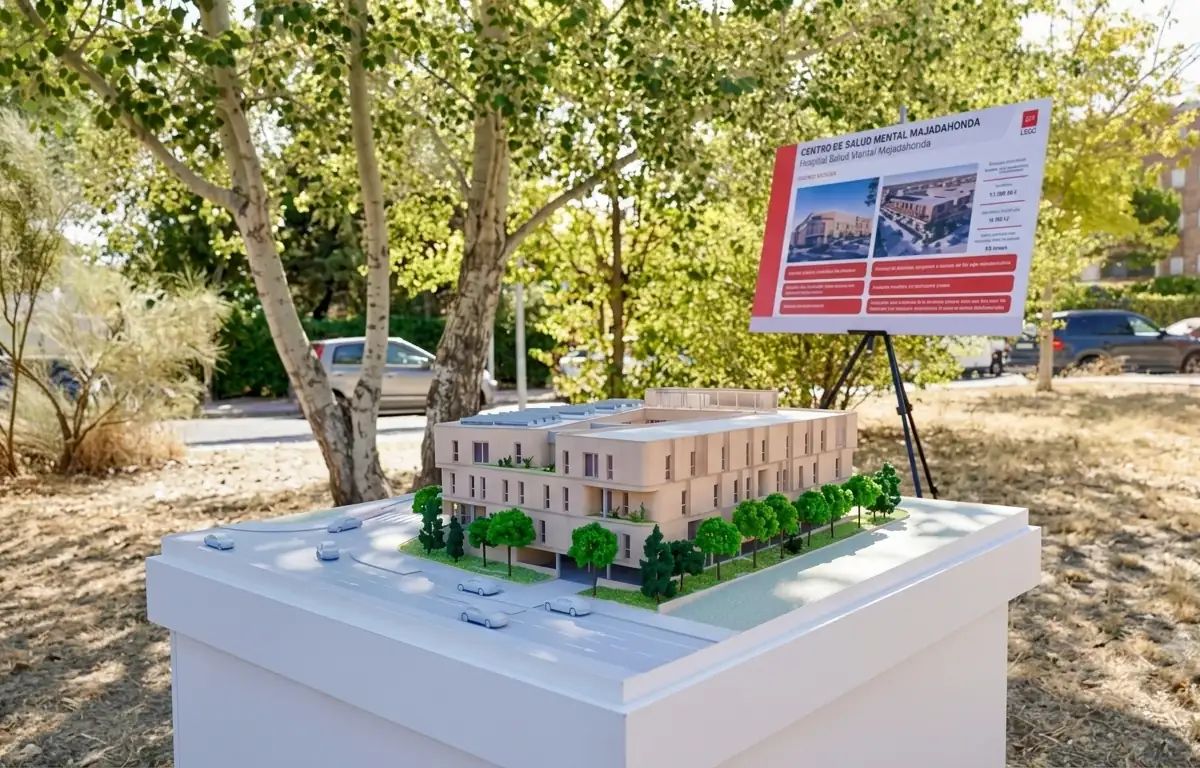
The complex will be managed by the Hospital Universitario Puerta de Hierro and will be built on a municipal plot on Manuel de Falla street, next to the Valle de la Oliva health centre. The construction contract will be put out to tender in the coming months and is expected to take 19 months to complete.
The building will cover 6,710 square metres over four floors and will include two outdoor courtyards. The project incorporates energy efficiency and renewable energy criteria, as well as spaces designed to reduce stress during consultations.
Care will be divided between adult services, child and adolescent services, and a new Hospital de Día for teenagers. This last unit will make it possible to treat cases requiring intensive follow-up without necessarily needing full hospital admission.
The centre will have 58 individual consultation rooms, eight group therapy rooms, and three low-stimulation spaces. These facilities will be specially adapted for people who may feel overwhelmed in healthcare environments, including some patients with autism spectrum disorder.
Around fifty professionals will work in the new facilities. The team will include psychiatrists, clinical psychologists, nursing staff, occupational therapists, social workers, and auxiliary care technicians.
Care will be coordinated with educational centres, drug dependency services, psychosocial rehabilitation resources, and justice and child protection agencies. Ongoing care programmes will allow patients to continue to be monitored once the most intensive phase of treatment is over.
The change will reduce pressure on the current centro de Cerro del Aire and prevent some users from having to travel elsewhere for certain treatments. The impact will be especially noticeable for families with children and teenagers, who will have a dedicated resource closer to home.