
News
A giant inflatable dog transforms Plaza Matadero and defines Art Week
Plaza Matadero is hosting a monumental inflatable sculpture by Yutaro Inagaki. The free, temporary installation invites reflection on urban life. Madrid thus adds a new point of interest in the middle of Art Week.
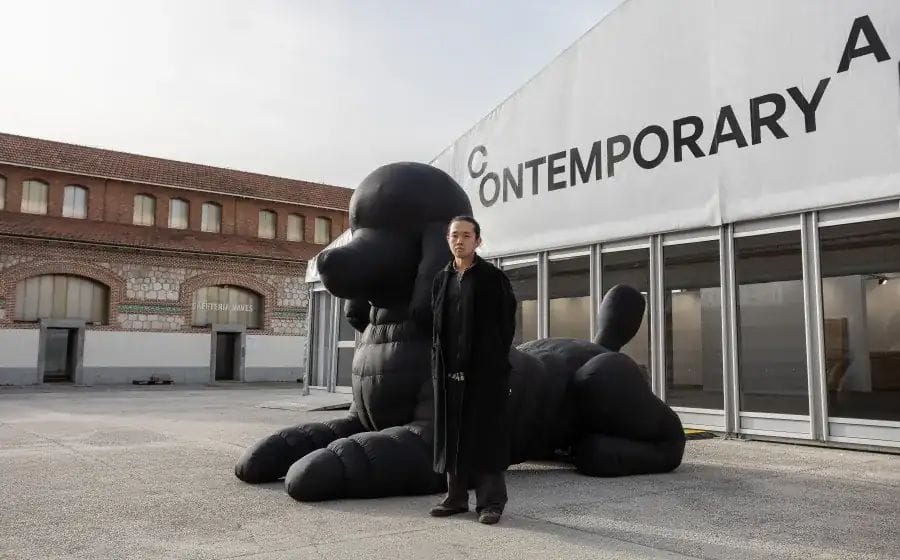
Plaza Matadero has become one of Madrid’s most photographed places these days. A monumental inflatable black dog greets those crossing the space, surprising both regulars and people visiting for the first time. The installation, entitled ‘Winter Cut’, is the work of Japanese artist Yutaro Inagaki and is being presented as part of the tenth edition of CAN Art Fair Madrid, an event that gains weight every year on the city’s cultural calendar.
The sculpture, visible until 8 March, occupies the centre of the square and becomes part of the urban landscape with a presence that does not go unnoticed. Inagaki, who is based in London, conceived this piece specifically for the surroundings of Matadero Madrid. The artist starts from his series of black stray dogs, inspired by objects found in the city, and brings them into public space in inflatable, large-scale form. The result is a work that engages with its setting and raises questions about anonymity, fragility and the fleeting nature of the everyday.
The installation, free and open to all audiences, adds to the range of activities for Semana del Arte, which is filling Madrid these days with exhibitions, open days and proposals for every taste. ‘Winter Cut’ does not seek permanence: its existence depends on the air that holds it up, and it disappears as soon as the motor is switched off. Beyond the reference to the iconic ‘balloon dog’, the piece becomes part of the district’s daily life and transforms the routine of those who pass through the square.
Matadero Madrid, a former industrial complex converted into a contemporary-creation centre, has established itself as one of the city’s most active and versatile cultural spaces. Its programme combines art, music, cinema and family activities, and its location beside the river makes it a meeting point for residents and visitors. The arrival of installations such as Inagaki’s reinforces Matadero’s role as an engine of cultural innovation and a space open to new forms of expression. Madrid is already beginning to move in that direction.