
News
A ‘ghost’ air-raid shelter emerges in La Sagrera in the 21st century
The construction of the future La Sagrera mega-station has taken an unexpected turn: amid excavators and concrete, an air-raid shelter that nobody knew about has appeared. It was neither in the 1938 register nor in the municipal archives. It simply lay hidden beneath the old freight terminal, waiting to be discovered.
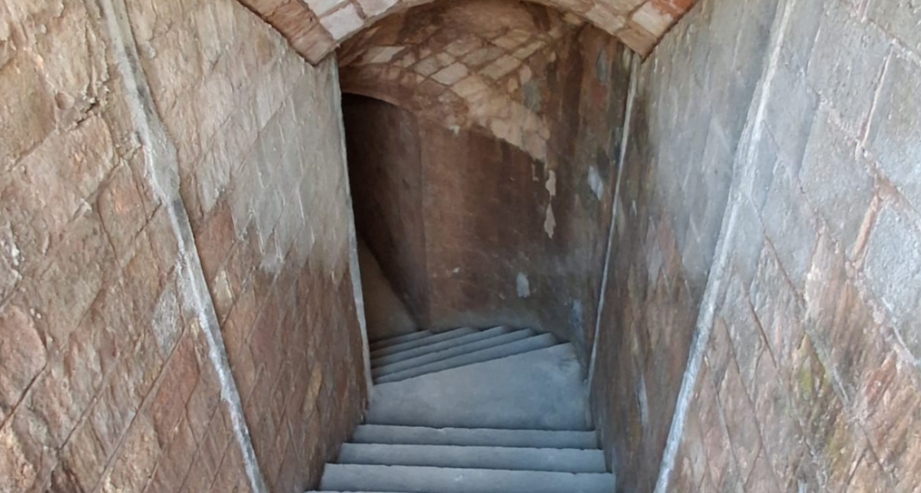
The structure, located during archaeological work led by Joel Blanco (ABANS), does not correspond to the most common model of urban shelters from the Guerra Civil. It is not a precarious tunnel dug in haste, but a technologically advanced bunker, built in the open with reinforced concrete and topped by a two-metre slab designed to withstand 100-kilo bombs. No improvisation: knowledge, time and resources were spent here.
The shelter connected two buildings that framed the station. One disappeared years ago; the other has until now been the headquarters of Adif’s offices. Beneath them, two narrow galleries lead to four large rooms, four toilets and spaces that may have served as a storeroom or treatment room. Benches, cables and lamp holders are still preserved, alongside graffiti from the mid-1950s and graffiti bearing the initials CNT and FAI, which reveal the project’s working-class and activist origins.
The history fits: the station, built between 1918 and 1922, was one of Barcelona’s great logistical hubs until its closure in 1990, and a military target during the Guerra Civil. The CNT, which collectivised the railway sector, would have promoted the construction of the shelter after suffering the bombings of 1937, when bombs were falling and there was no time to await decisions from distant offices.
Today, the discovery is being documented with a laser scanner before the works continue. The question is what the city will do with this unexpected piece: integrate it, turn it into a museum or seal it again. Paradoxically, the Barcelona accelerating towards high speed is forced to stop to look at what was once buried in haste: the silent trace of those who survived underground while the city burned.