
News
A fault cuts the AVE between Barcelona and Girona for ten hours during the return rush
High-speed services between Barcelona and Girona were interrupted for around ten hours on Sunday 30 August, one of the busiest days of the return from holidays. An electrification fault at La Sagrera halted trains towards Girona, Figueres and France and forced some travellers to continue their journey on Media Distancia and Rodalies services.
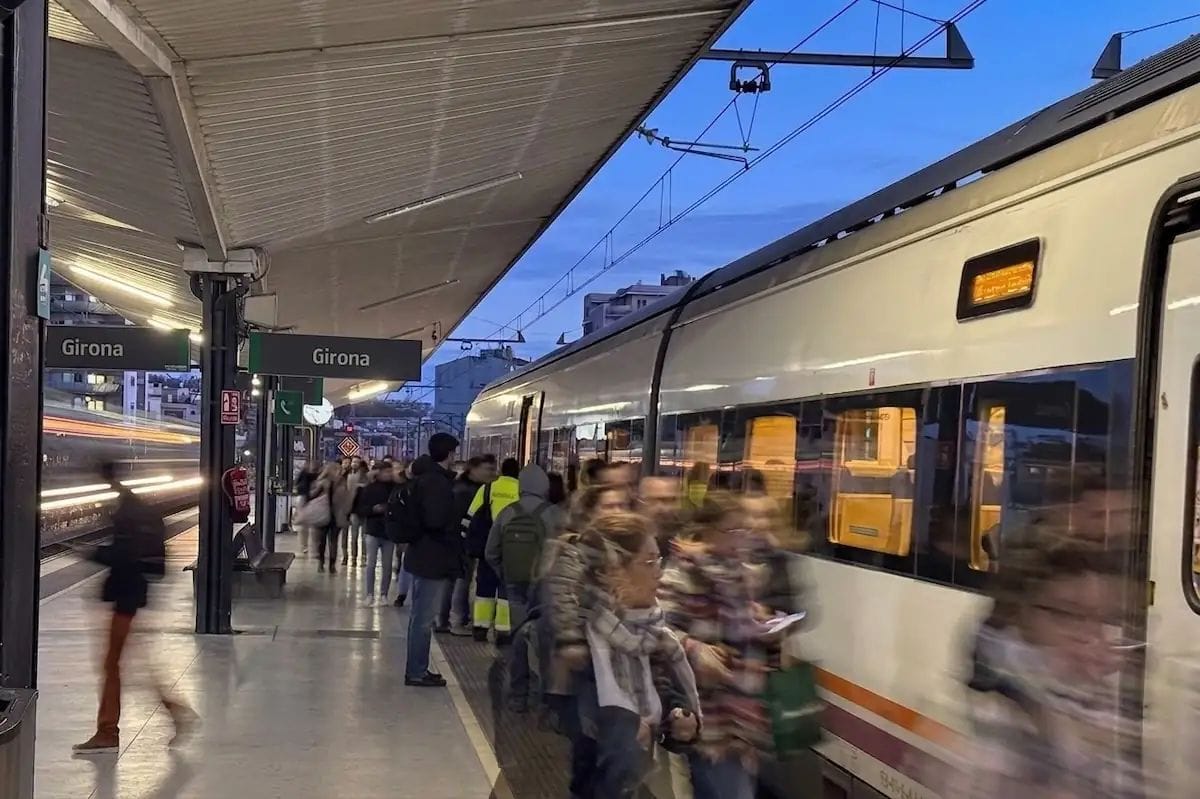
The incident began at around 8:50. According to Renfe and Protección Civil, a voltage drop in the overhead line brought traffic to a halt on the high-speed section between La Sagrera and the Mollet junction. The problem affected all rail operators using that infrastructure.
One of the first trains affected was an Avant Barcelona-Figueres that had left at 8:07 and was stopped at La Sagrera with around thirty passengers. Travellers were evacuated through the area of the former Sant Andreu workshops and accompanied to Sant Andreu, where they could choose to continue north on a Media Distancia service or return towards Sants.
An international Barcelona-Lyon train that had departed shortly afterwards and was carrying around 200 people also had to turn back. The train returned to Barcelona-Sants while Adif worked on repairing the infrastructure and Protección Civil activated the pre-alert for the Ferrocat plan.
As the day went on, the disruption put the Avant services and other high-speed trains between Barcelona, Girona and Figueres out of service. Adif reported that the companies had arranged alternatives by road and by Media Distancia trains, so part of the demand shifted to conventional services connecting Barcelona with Girona and northern Catalonia.
That shift coincided with the last major weekend of August. Renfe had put more than 1.1 million seats on sale between Friday the 28th and Monday the 31st for the return operation on its long-distance, high-speed and Media Distancia services, with Barcelona among the main arrival destinations.
The rail alternative between Barcelona and Girona mainly uses the R11 and regional services, which run on the conventional line and do not depend on the high-speed section affected at La Sagrera. The journey, however, is longer than on the Avant, so diverted passengers had to accept longer travel times and adapt to the available capacity on conventional trains.
There is currently no official assessment that makes it possible to quantify how many passengers ended up using Rodalies or Media Distancia during the breakdown. For that reason, although there was a transfer of travellers to those services, official data do not support saying that the whole Rodalies network was “collapsed” by the incident.
High-speed traffic was finally able to resume at around 19:40, almost ten hours after the problem began. Renfe then warned that normalisation would be gradual because trains had been stopped, altered or left awaiting departure throughout the day.
The service is operating again this Monday, but the episode stands as one of the most significant rail incidents of the return weekend: for virtually the entire Sunday, those travelling between Barcelona, Girona and Figueres had to reorganise their journeys on a day especially busy with travel.