
News
A blown-glass sculpture revives the memory of the Gothic Quarter's washhouses
This summer, Ciutat Vella adds a different plan for those seeking art without entering a museum. The vertical garden of the Wittmore Hotel, on Riudarenes Street, hosts until 14 September a free four-metre installation connecting the Gothic Quarter with a little-seen part of its past.
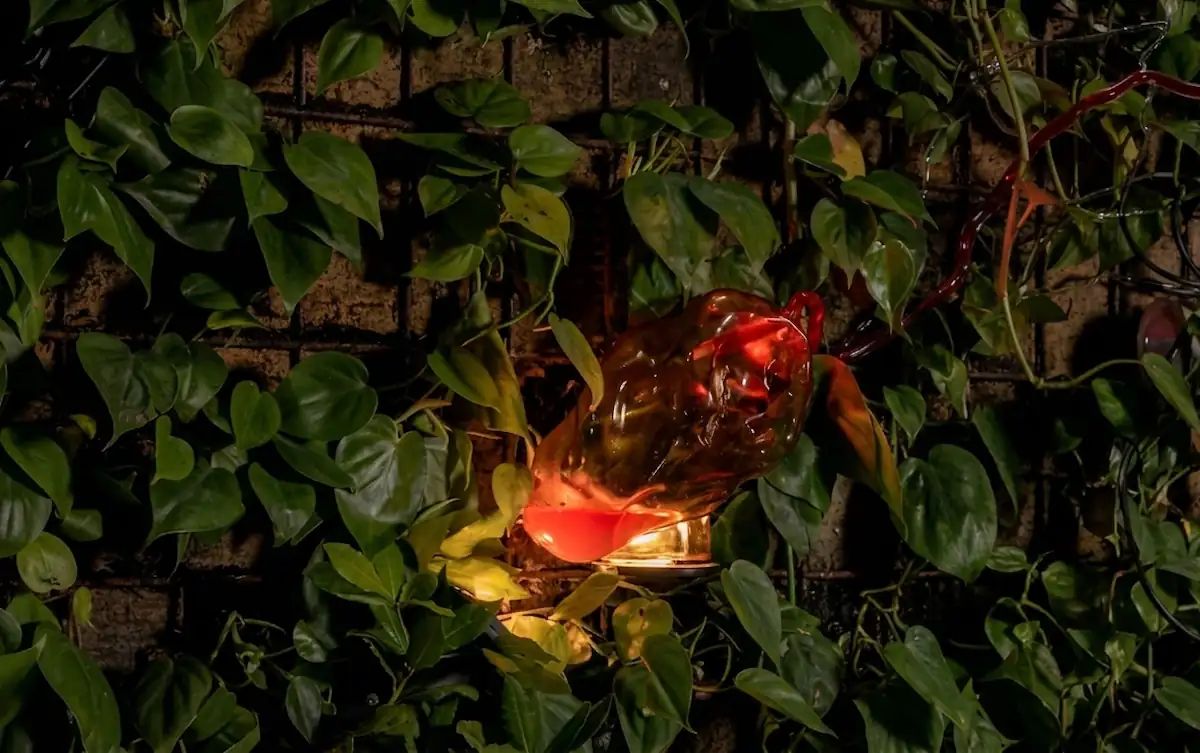
The work is titled Mnemósine and is by artist Berta Blanca T. Ivanow, curated by Dessislava Pirinchieva. Its starting point is the old public washhouses on which the hotel stands, a memory tied to the everyday lives of many women who worked and socialised in these spaces.
The piece uses blown glass to reinterpret the gestures of those anonymous washerwomen. Before reaching the garden, the project went through sketches, clay models and a process of craftsmanship developed alongside Ferran Collado.
The result is an installation that seeks not to dominate the space, but to enter into dialogue with it. The sculpture rises among more than 3,000 plants, in a green setting rarely found in the heart of the historic centre, where every square metre is usually taken up by narrow streets, terraces, hotels and a constant flow of visitors.
For those strolling through the Gòtic, the installation offers an unexpected pause. There is no need to buy a ticket or plan a long visit: simply head to the Wittmore Hotel and discover how contemporary art can open a conversation with the neighbourhood’s memory.
The installation can also be viewed from the Contraban restaurant, inside the hotel itself. This second perspective allows visitors to see the work from another angle and better understand how it fits into the vertical garden, one of the building’s most distinctive features.
Mnemósine forms part of Projecte 360º, an initiative through which the Wittmore turns its garden into a temporary gallery each year. The idea works particularly well in Ciutat Vella, where many private spaces preserve layers of history that are rarely shown to the public.
For Barcelona, the installation offers something simple but valuable: a way of looking at the Gòtic beyond its usual routes. Amid shops, tourists and crowded streets, this corner is a reminder that the neighbourhood is also made up of domestic memory, invisible trades and small stories that can still come to light.