
News
A story under construction: 144 years of the Sagrada Familia and Barcelona in an exhibition
‘The Sagrada Familia and Barcelona, 144 years of a shared journey’ is the new exhibition that Palau Robert hosts from 27 April to 26 July to share a joint story: that of Gaudí’s emblematic building and its connection with Barcelona.
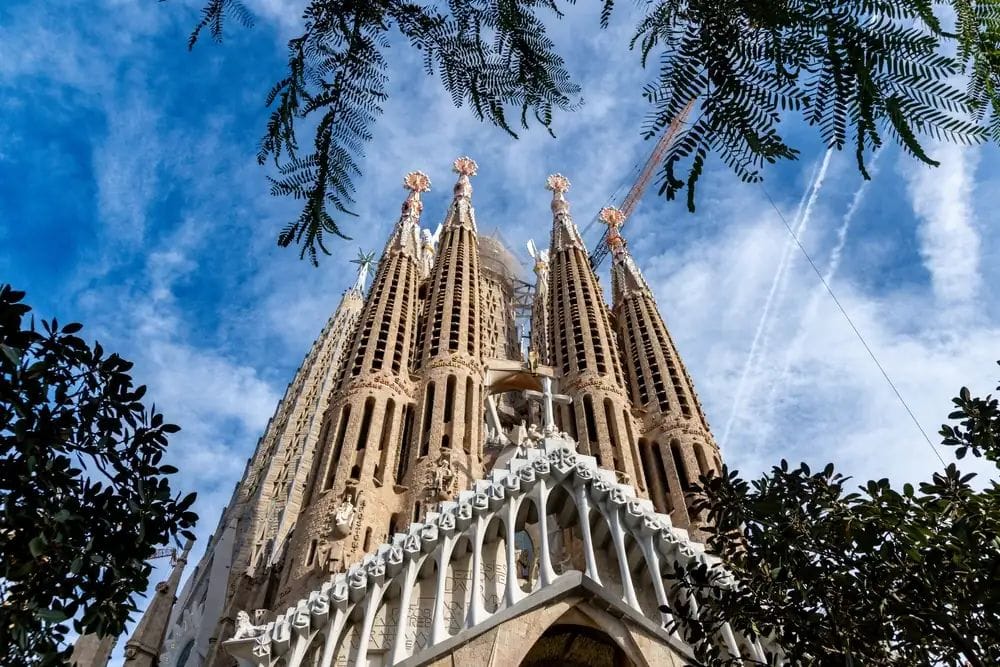
Few architectural works are as closely linked to a city’s identity as the Sagrada Familia. A symbol of Barcelona around the world, it is known to everyone as Antoni Gaudí’s unfinished work.
Since work began in the 19th century, the basilica of the Sagrada Familia has grown at the same time as the city that houses it. Its towers, still under construction for decades, have witnessed urban transformations, social changes and generations of Barcelona residents who have seen this great monument progress and evolve.
Why visit “La Sagrada Familia y Barcelona, 144 años de camino compartido”
With the aim of exploring that relationship between the temple and the city, the exhibition “La Sagrada Familia y Barcelona, 144 años de camino compartido” can be seen between 27 April and 26 July 2026 in the Jardines del Palau Robert.
This exhibition offers a journey through photographs, some of them previously unseen, to view the most significant moments in the evolution of the basilica and Barcelona. Both have grown and evolved, and all of this can be seen in this exhibition, which invites visitors to observe how architecture and society have come together for more than a century.
In addition, “La Sagrada Familia y Barcelona, 144 años de camino compartido” reflects a journey through more than a century of history. Each panel in the exhibition is a specific stage in the development of the basilica and its relationship with the changes Barcelona has also undergone in that same period.
In this way, the exhibition is not limited to showing images of the building; it presents a narrative that connects the temple with the city’s evolution. In this case, the Sagrada Familia is seen in the exhibition as one of the most important architectural monuments of modernism, but also as a project that is always linked to Barcelona’s collective history.
Various studies on cultural heritage, such as those published by UNESCO, point out that great historic monuments often become symbols shared by the community around them, especially when their construction spans several generations.
Previously unseen photographs and visual memory
The exhibition “La Sagrada Familia y Barcelona, 144 años de camino compartido”, which forms part of the events commemorating 100 years since Gaudí’s death, focuses on a selection of historic photographs that trace the construction of Gaudí’s Sagrada Familia from its beginnings. Many show key moments in the temple’s construction process, while others capture scenes of the city in different periods.
The relationship between architecture and city
The Sagrada Familia project has always been closely linked to Barcelona’s development. Since work began in 1882, the basilica has accompanied the different stages of urban growth: from the expansion of the Eixample to the city’s emergence as an international cultural destination.
In this sense, the temple has become a landmark that transcends the purely religious or architectural: it is part of Barcelona’s visual identity and the collective memory of its inhabitants.
Research on urban heritage published by the European Heritage Alliance indicates that monuments which evolve alongside a city tend to acquire particularly strong symbolic value, because they reflect the passage of time and the continuity of the community.
A tour open to the public
The exhibition can be visited in the Jardines del Palau Robert. With free entry during the venue’s usual opening hours, it makes it easy to come along and enjoy the tour to see how the city’s history and that of the temple intertwine.
Ultimately, the exhibition offers a simple but powerful reflection: the Sagrada Familia is not merely a building under construction, but the result of more than a century of collective effort, a work that has grown alongside Barcelona and continues to form part of its cultural identity.