
News
Madrid Vintage Run fills the streets between Tetuán and Usera
Madrid woke this Sunday with less car haste and more trainer rhythm. The Madrid Vintage Run by TotalEnergies 2026 brought together 10,000 runners on a 10-kilometre route crossing the city from Tetuán to Usera, turning several streets usually used for traffic into a long sporting corridor.
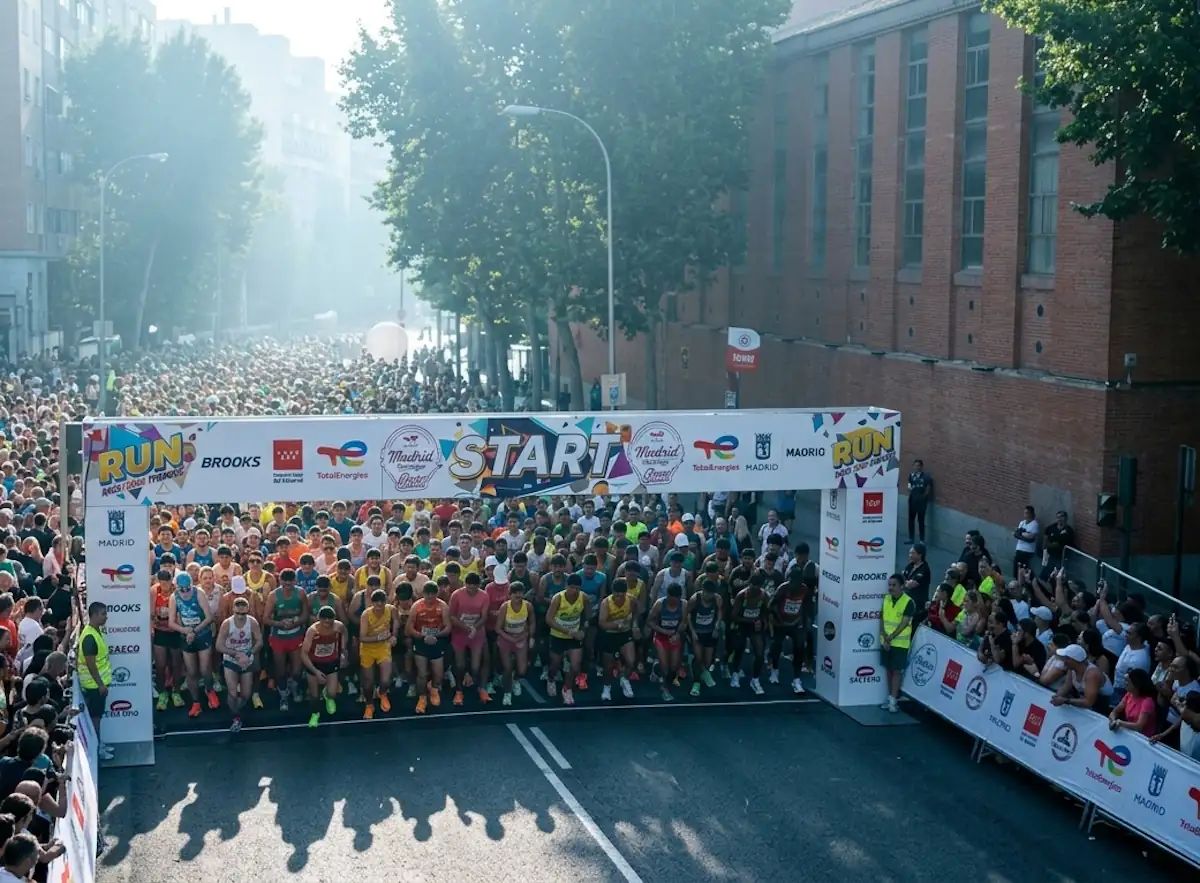
The start was on Bravo Murillo Street and the finish on Antonio López, passing through districts such as Chamberí, Centro and Arganzuela. It was not only a race for those wearing a bib: neighbours, families and curious onlookers came out to watch, cheer or simply make the most of a morning when the city could be seen from another angle.
The timetable helped organise the impact. According to the municipal mobility plan, the event took place from 9:00 to 11:00, although road closures and preparations were noticeable before and after on several roads along the route. Those crossing the centre had to change their routes; for those running, it was one of those occasions when Madrid seems friendlier because it can be crossed without traffic lights or engine noise.
Among the participants was Mariano de Paco Serrano, the Community of Madrid's Regional Minister for Culture, Tourism and Sport, who joined an event supported by the regional government. His presence added institutional visibility to a race that is already part of the city's popular calendar.
Vintage Run also retains its own appeal: it is not simply about running 10 kilometres, but doing so with a retro aesthetic, classic-style shirts and a route designed for speed. The organisers present it as one of the fastest 10K events, and this year the sporting focus was also on Rodrigue Kwizera's attempt to set a historic mark in Madrid.
Beyond the times, the race works because it connects neighbourhoods that do not always appear together in the same postcard. Tetuán, Chamberí, Centro, Arganzuela and Usera are linked by a line of runners crossing the city without asking the usual traffic for permission. For a couple of hours, Madrid is measured differently: by footsteps, applause and breathing.
That is the urban value of events like this. They do not change the city forever, but they suspend it for a while and allow it to be seen without the routine of each day. Those who ran took away their time; those who watched from the pavement took away an unusual scene: thousands of people occupying the asphalt not to protest or wait for a traffic jam, but to cross Madrid together, from north to south, with their bodies in motion.