
News
The Grec opens its 50th anniversary with a night of culture, heat and fans
Barcelona opened the Grec Festival’s 50th anniversary with a very July-like night: culture, politics, theatre, quick greetings and a great deal of heat. Teatre Grec again served as a meeting point for Barcelona’s cultural life, although this time fans almost shared the spotlight with speeches and guests.
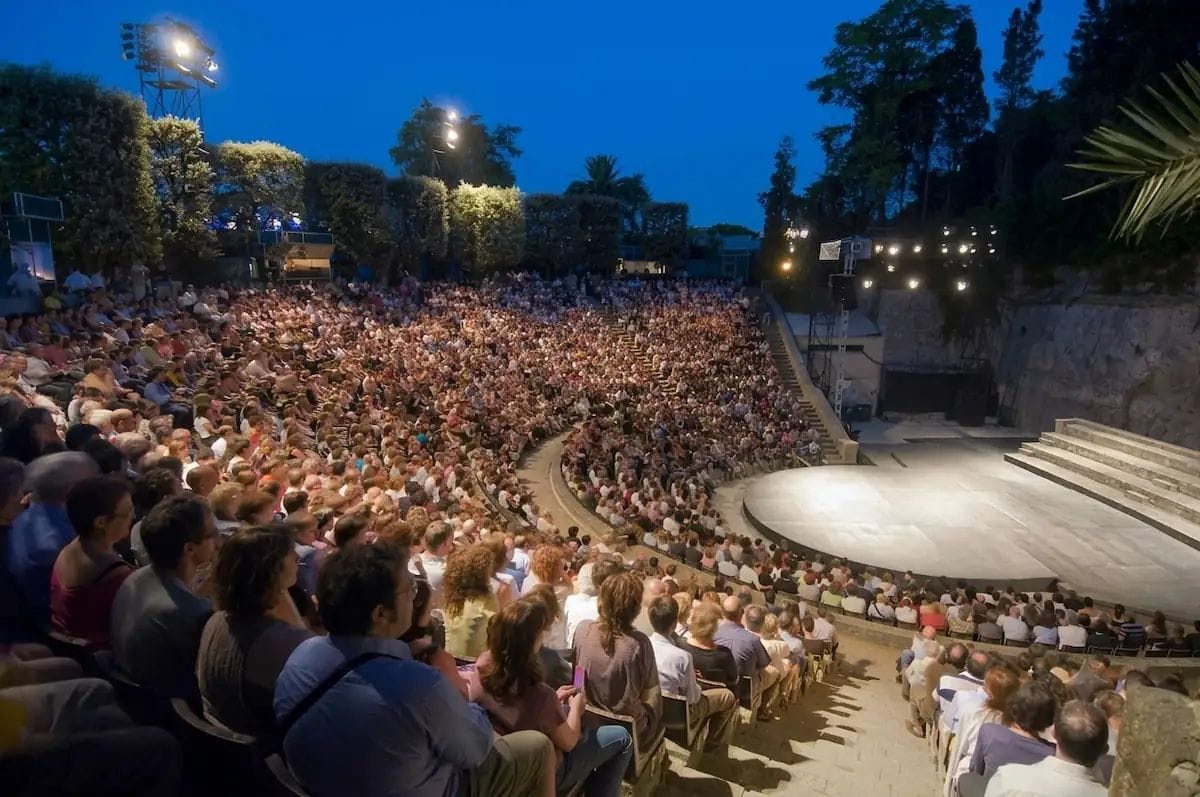
The festival's opening brought together institutional representatives, artists, cultural managers and familiar faces from the city. The president of the Generalitat, Salvador Illa, and Barcelona's mayor, Jaume Collboni, led the political presence at an evening where protocol coexisted with a temperature that made people seek air however they could.
No one seemed willing to abandon formal dress entirely, but the heat began imposing its own rules. Blazers stayed in place, although fans passed from hand to hand and became the night's most useful accessory. In an open-air auditorium, summer spares not even the most important events.
Collboni was one of those who made the most of his fan, while Illa was seen relaxed and smiling during parts of the performance. The solemnity of the opening loosened as the evening went on, becoming one of those occasions where the conversation in the courtyard carries almost as much weight as what happens on stage.
This year, the Grec reached its half-century with a special symbolic weight. The 2026 edition is no ordinary one: it celebrates 50 years of a festival that was born in 1976 as an explosion of stage freedom, cultural self-management and a desire to open Barcelona to new forms of theatre, dance and music.
The opening was linked to ‘L’òpera de tres rals’, the Catalan version of the work by Bertolt Brecht and Kurt Weill directed by Marta Pazos. The production also serves as a bridge to another anniversary: 50 years of the Teatre Lliure, a key institution for understanding the contemporary Catalan stage.
The evening also produced its own gallery of guests. Attendees included figures from Barcelona's culture, acting, communications and cultural management worlds, in a mix that recalled the Grec's role as a major meeting point before the city scatters completely for the summer.
Judit Mascó was one of the most talked-about presences, with the balance of elegance and naturalness that suits an open-air festival night. There were also familiar names from the performing and audiovisual worlds, from actors and directors to theatre managers, programmers and sector representatives.
The atmosphere was part premiere and part cultural street festival. At the Grec, the red carpet is always less rigid than at other events: people come to see theatre, but also to greet one another, discuss the season, take the pulse of the sector and be seen at an occasion that works as a barometer of local culture.
Far from remaining a simple anecdote, the heat ended up defining the tone of the night. Barcelona is experiencing an increasingly harsh summer, and every major open-air event also becomes a small test of endurance. The fans, bottles of water and search for shade made it clear that culture does not escape the climate either.
The Festival Grec will continue until the end of July with a broad programme of theatre, dance, music, circus and hybrid proposals. In this anniversary edition, the festival wants to look back without getting stuck in nostalgia, recovering some of the collective spirit of its origins.
The celebration comes at a time when Barcelona needs cultural spaces capable of combining memory, risk and audiences. The Grec remains one of the few events that connects major international names, the local scene, emblematic spaces and a city that changes completely in summer.
The opening left a clear image: half a century on, the Grec is still more than a programme of performances. It is an annual gathering of cultural Barcelona, with its gestures, debates, vanities, complicities and, this year more than ever, its fans held open against the heat.