
News
A Roman quarry from the 2nd century BC comes to light in Montjuïc during construction work
During construction of a block of flats in the Marina de Port neighbourhood of Montjuïc, the remains of a Roman quarry dating from the 2nd to the 1st centuries BC have been found, making it one of the oldest documented in Catalonia and Europe.
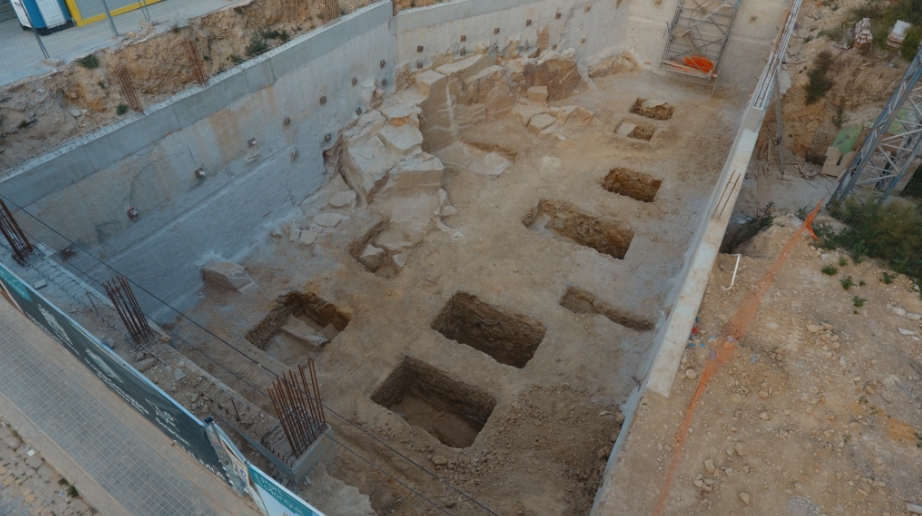
The discovery—a 30-metre-long, five-metre-high, and 4.5-metre-wide front of quarzitic white stone extraction—reinforces the hypothesis that Montjuïc was for centuries a key source of stone for the Roman urbanisation of the Pla de Barcelona.
The archaeological significance of the structure has led to part of the site being preserved on the second basement floor of the new building: a section eight metres long and three metres high. Marks from ancient tools, embedded iron remains, and signs of open-pit extraction provide clues about Roman quarrying techniques and the origins of Bàrcino.
The new section connects with another quarry discovered in 1990, suggesting that the volume of stone extracted from Montjuïc was much greater than previously estimated. In the coming months, ceramic and paleoenvironmental analyses will be carried out that could shed new light on the beginnings of Barcelona.