
News
Valdecarros will transform the southeast of Madrid with more than 51,000 homes
The southeast of Madrid is set for a massive transformation that will redefine the city over the coming decades. Valdecarros, the major urban development planned in Villa de Vallecas, will see the construction of more than 51,000 homes, extensive green spaces, and new facilities in an area designed to accommodate up to 150,000 people.
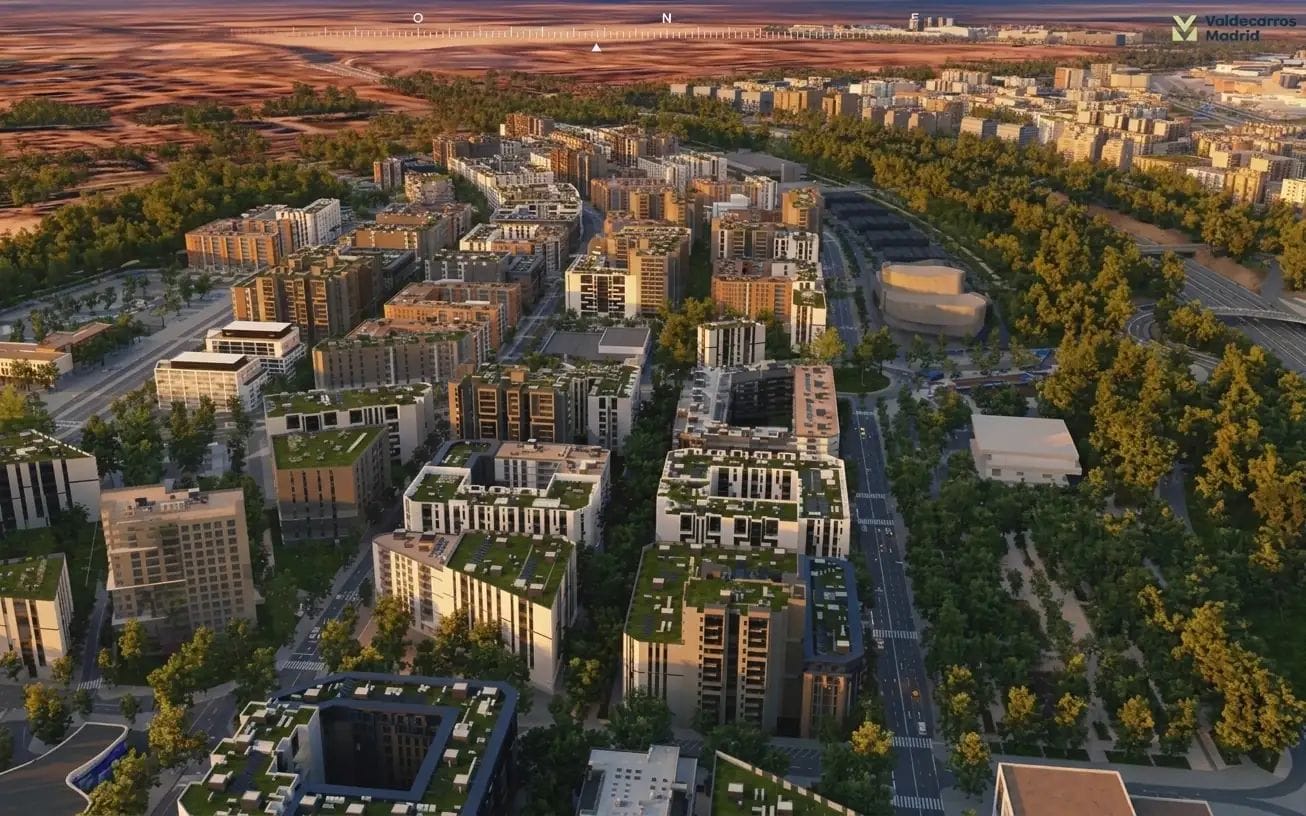
The scale of the project makes it one of the largest residential developments in Europe. More than half of the homes will have some form of public protection, something that the City Council and the regional government present as one of their major commitments to try to ease pressure on Madrid's property market over the next twenty years.
The first developments will begin construction between 2026 and 2027, and the first handovers could come between late 2028 and 2029. Growth will be gradual and divided into eight stages in order to adapt the development to real demand and avoid some of the problems of other major expansion neighbourhoods built too quickly.
The new neighbourhood will completely change the current landscape of Villa de Vallecas. Where large empty plots and outlying areas predominate today, homes, schools, health centres, shops, offices and sports areas will appear. The official aim is to prevent Valdecarros from becoming a dormitory town and to commit to a more self-sufficient and connected neighbourhood life.
Mobility will be one of the project's main axes. The plan includes more than 127 kilometres of cycle lanes and pedestrian routes, as well as connections to Metro line 1, new interchange stations and planned improvements to Cercanías and buses. The idea is to reduce dependence on cars in an area where many daily journeys are still linked to private vehicles.
The green component will also carry considerable weight. Around 40% of the entire surface area will be allocated to parks and landscaped spaces, and more than 110,000 trees will be planted as part of the future Bosque Metropolitano. The design seeks to ensure that no home is far from a green area in one of Madrid's most ambitious urban developments.
The project also involves huge economic figures. The first phases alone will exceed 1.8 billion euros in private investment, while the construction of homes and facilities will generate thousands of jobs and activity over the next two decades.
Valdecarros also symbolises the new model of expansion that Madrid is trying to build on its outskirts: denser neighbourhoods, with more protected housing, more public spaces and mobility less focused exclusively on cars. The challenge will be ensuring that infrastructure, transport and services arrive at the same pace as the new residents, to avoid the problems that marked other recent developments in the capital.