
News
Vallecas celebrates Rayo despite defeat in its first European final
Vallecas did not need a trophy to take to the streets. Rayo Vallecano lost 1-0 to Crystal Palace in the Conference League final, played in Leipzig, but the neighbourhood responded with a blend of sadness, pride and gratitude that was hard to separate. Jean-Philippe Mateta's goal left Iñigo Pérez's team without the cup, although it did not extinguish a night that is already part of Rayo's history.
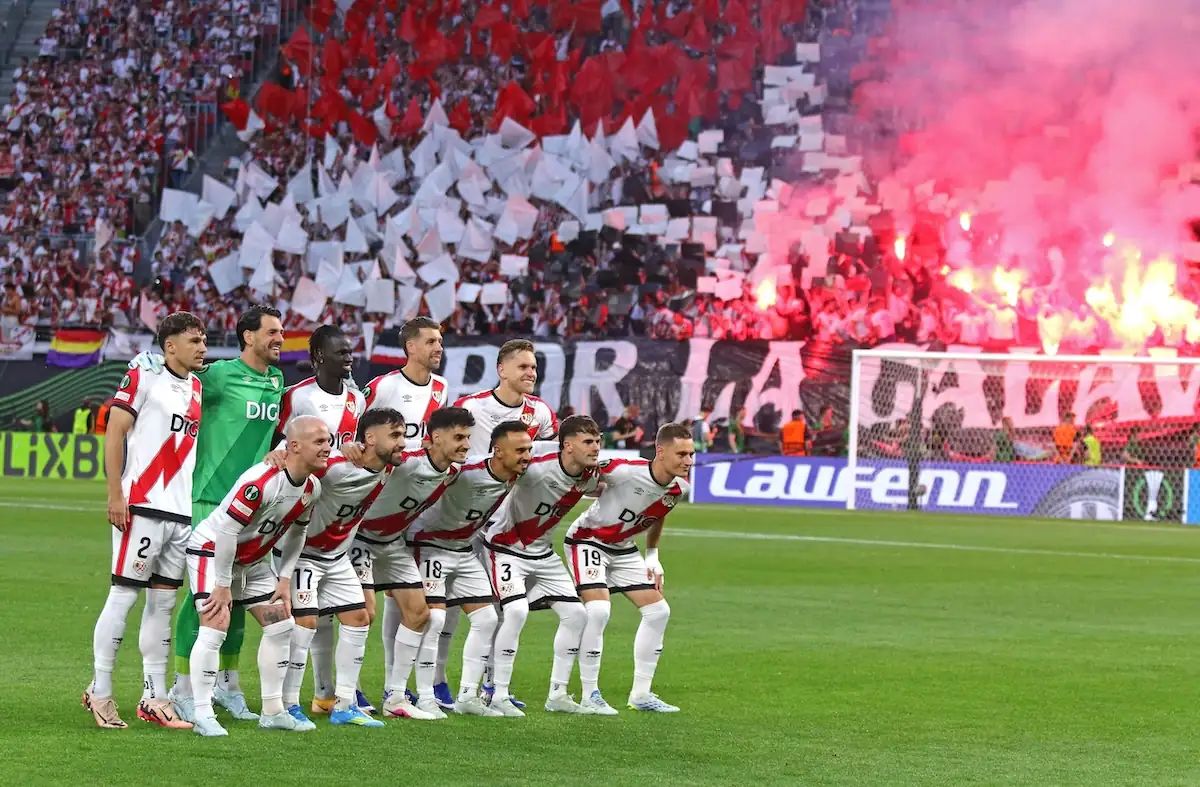
While part of the fanbase travelled to Germany, Vallecas experienced its own final in Madrid. The stadium opened its doors with giant screens and brought together thousands of supporters who did not want to watch the match alone or far from home. The regional authority had announced an arrangement with three screens, one per stand, and capacity for more than 14,700 people; in the end, the atmosphere was that of a real stand, with nerves, chants and scarves long before kick-off.
The night spread through the neighbourhood’s bars, streets and shops. Avenida de la Albufera and Payaso Fofó Street filled with red-striped shirts, hushed conversations during the match and applause at the end. Every Rayo attack was experienced as a promise; every loss of possession, as a shared blow.
Crystal Palace’s goal, at the beginning of the second half, changed the mood for a few minutes. The English team, more physical and with more resources, knew how to see out the match and lift the first European title in its history. Rayo tried until the end, but did not find the goal that would have unleashed one of those scenes the neighbourhood had spent the whole week imagining.
The difference between the two clubs was also evident away from the pitch. Crystal Palace arrived with the economic muscle of the Premier League and a squad built on a different scale. Rayo, by contrast, took something less measurable to Leipzig: a whole neighbourhood behind them, a way of understanding football and a season that was already historic before the final was played.
That is why the defeat was not experienced as a failure. There were tears, of course, but also a long ovation for a team that took Vallecas to a European final for the first time. The players themselves acknowledged the pain of coming so close, but also the pride of reaching that point with a fanbase that made an enormous effort to accompany them.
Vallecas has its own way of turning football into identity. Its stands and streets contain celebration, protest, memory and pride of belonging. The Leipzig final did not end with the dreamed-of image, but it did leave another one just as valuable for the neighbourhood: thousands of people applauding a defeated team together, as if they understood that some nights are not measured only by the scoreline.