
News
Two months after the L9 sinkhole, 70 affected parties file claims against the Generalitat
Two months after the sinkhole caused during construction on the central section of the L9/L10, the Putxet conflict has entered a new phase. At least 70 residents and business owners, around 90% of those affected and represented by the neighbourhood platform, are preparing a collective claim against the Generalitat for material, economic, and moral damages suffered since the collapse on 7 July. The intention is to formalise it this week.
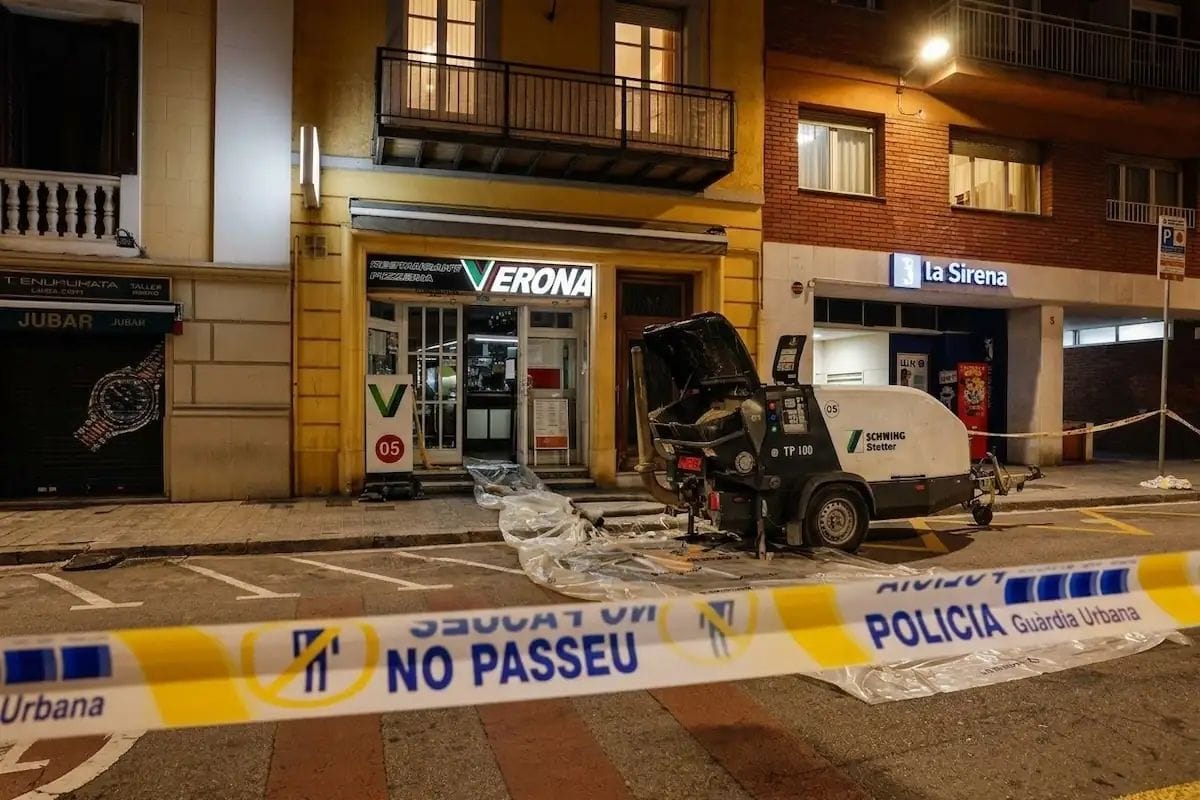
On that day, a hole about eight metres in diameter and four metres deep appeared in a courtyard near the metro works, forcing the evacuation of eight buildings, with 93 homes, on Rubinstein, Teodora Lamadrid, and Sant Gervasi de Cassoles streets. There were no injuries, but part of the Verona pizzeria on Teodora Lamadrid was severely damaged.
The initial emergency is over, but not for everyone. Residents of Teodora Lamadrid, 3, and Rubinstein, 2 and 4, along with the businesses in those buildings, now face a much longer wait: the timeline given to those affected puts their return at the start of 2027. That’s 18 homes and seven businesses. In other buildings, people may be able to return sooner, though repairs and safety checks are still pending.
The claim is being led by lawyer Carmen Pérez Pozo-Toledano and is based on the principle of culpa in vigilando: since the Generalitat is the promoter of the works, those affected believe it is responsible for supervising their execution. They will claim for damage to homes and businesses, economic losses for shops, possible impacts on property values, and the moral harm caused by months of eviction and uncertainty.
For now, however, this is not yet a court case. The route being prepared is an administrative claim against the Generalitat, and the affected parties’ representatives hope to reach an agreement on compensation without having to go to court. Each home and business will also have to be assessed separately, as the damage varies widely.
Meanwhile, work to stabilise the ground continues. Workers are still injecting material underground, and the tunnel boring machine remains stopped in this area. Residents have also requested that an independent expert certify the safety of the buildings before they are allowed to return; the Generalitat has agreed to the involvement of an external expert.
Everyday life explains much of the claim for moral damages. Some families have spent weeks living in hotel rooms or staying with relatives, business owners still cannot reopen, and some residents of buildings now deemed habitable have chosen not to return because of the noise from the works, the dust, or fear of further movement.
The comparison with the 2005 Carmel sinkhole inevitably comes up, as Pérez Pozo-Toledano was also involved in that case, where some families received up to 15,000 euros in compensation for moral damages. But the two incidents are on a very different scale, and there is an important correction: the Carmel sinkhole did not occur during the L9 works, but during the extension of the L5.
In Sant Gervasi, it is still impossible to calculate the final bill. Repairs are not finished, and new consequences are still emerging in each building. For residents who will not be able to return until 2027, the L9 timetable is no longer about when a new station will open: since July, the much more pressing question is when they will be able to return home.
UPD: The collective claim by those affected by the L9 sinkhole will no longer be directed solely at the Generalitat. Residents and business owners have decided to include the Ayuntamiento de Barcelona as well, holding it potentially responsible for a lack of oversight of the works. The action will be administrative and is expected to be filed with both authorities by 14 September at the latest. The affected parties are maintaining their claim for material, economic, and moral damages under the principle of culpa in vigilando.