
News
How to take a bike on Madrid Metro without mistakes: timetables, carriages and rules you need to know
Madrid Metro allows travel with a bicycle, but not always or in every way: restricted times, where to stand on the train and access rules make the difference in avoiding conflicts and moving around the city more comfortably.
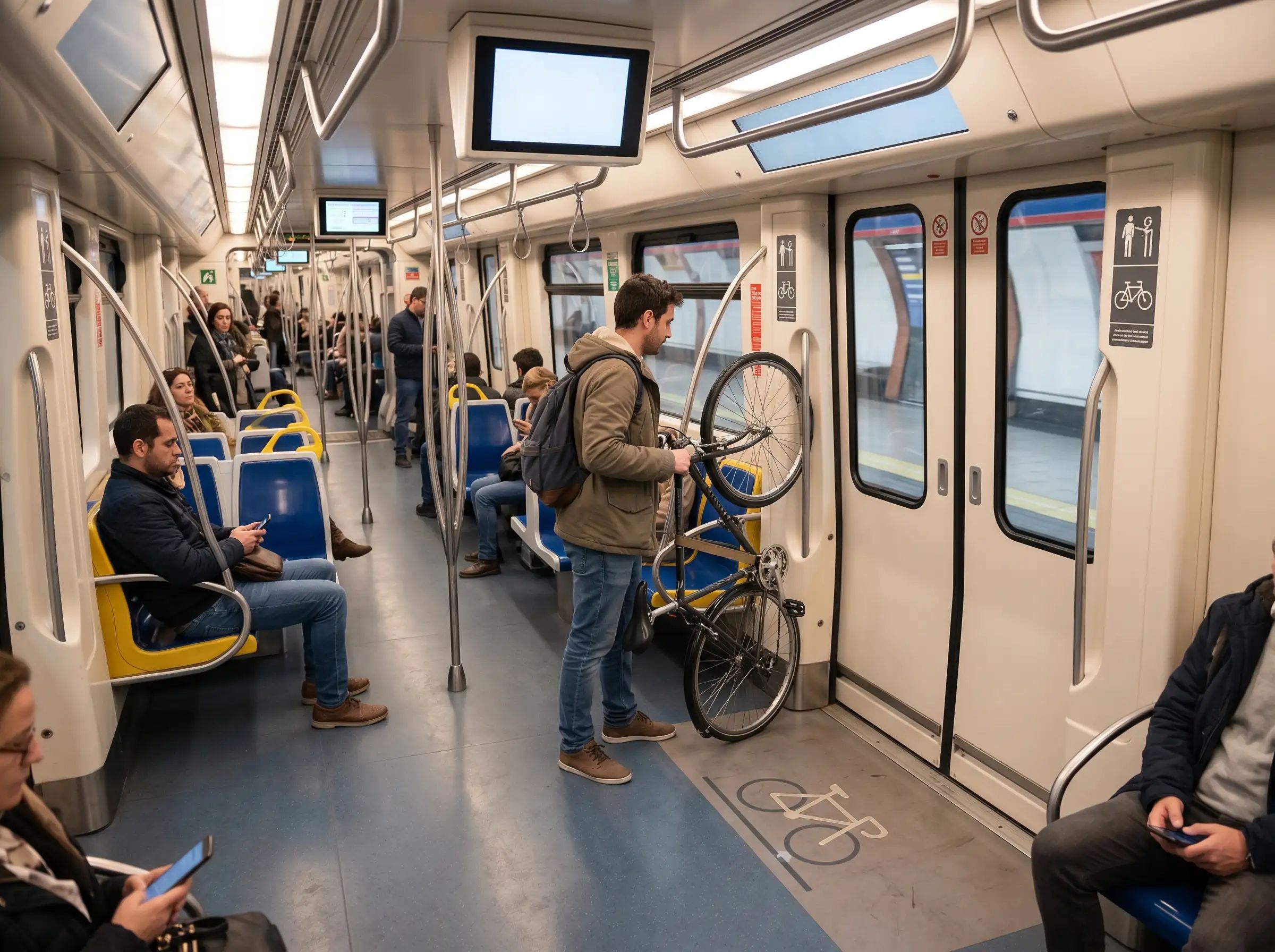
Getting around on the Madrid Metro with a bicycle is possible, but requires attention to the rules. Timetables, where you stand on the train and behaviour make all the difference. This avoids conflicts and makes things more comfortable for everyone. Changes that affect those who combine cycling and public transport in the city.
Those who combine a bicycle and the Metro in Madrid know that every detail matters if the journey is not to become a problem. The network allows access with a bicycle for a large part of the day, but imposes clear rules so that coexistence works and safety is not compromised. The aim: to make getting around by bicycle and metro compatible, without friction or blockages.
Conventional bicycles may enter at no additional cost, but only outside peak hours from Monday to Friday. In other words, the busiest periods must be avoided: from 7:30 to 9:30, from 14:00 to 16:00 and from 18:00 to 20:00. At weekends and on public holidays, access is permitted throughout service hours. Folding and children’s bicycles, considered hand luggage, may travel at all times, although during peak hours they must be folded before boarding the train.
On lines such as 8, 11 and 12, and on some journeys that go beyond the M-40, bicycles are allowed all day, provided the carriage is not full. If there are incidents or crowds, staff may temporarily restrict the entry of bicycles, even outside the restricted periods.
Location inside the train is key. Madrid Metro recommends standing next to the driver’s cabins, in the first or last carriage. Only two bicycles are permitted per carriage and, if the train has designated bicycle spaces, they must be used in preference. This avoids blockages at doors and in corridors, especially at busy stations or during transfers.
Placing the bicycle against the side of the carriage, with the handlebars parallel to the flow of passengers and leaving space at the doors, makes it easier for other travellers to get on and off without problems. If the train is very crowded, the most sensible thing is to wait for the next one or change carriages so as not to create uncomfortable situations on the platform.
Only one bicycle is permitted per person and each user is responsible for ensuring it causes no inconvenience or damage. Riding the bicycle within the network is not permitted: you must walk through corridors, platforms and concourses. Access must be through staffed concourses, where staff open wide gates or entrances for people with reduced mobility, avoiding congestion at the usual turnstiles.
On escalators, moving walkways and lifts, it is advisable to take extra care and wait until they are not overcrowded before entering with the bicycle. If occupancy is high or there are incidents, staff may ask you to wait for the next train or not access the system with a bicycle at that time.
Madrid Metro has spent years adapting to new forms of mobility. Coexistence between cyclists and regular passengers is a challenge that the network faces with clear rules and a certain flexibility. The city is already starting to move in this direction: more and more Madrid residents combine cycling and public transport to go further and avoid traffic jams. The Metro, with its adjustments, seeks to ensure everyone finds their space without losing pace or comfort.
Madrid Metro and bicycles: 2026 rules. Conventional bicycle: outside peak hours on working days and all day on public holidays; folding and children’s bicycles, always.
First/last carriage, 2 bicycles per carriage and access through staffed concourses.