
News
Travelling underground in Madrid: between haste, heat and habit
Madrid also moves underground. Every day, thousands of people go down to the Metro to cross the city, get to work, return home, go to class or connect with another neighbourhood without thinking too much about the distance. The underground is as much a part of Madrid's routine as traffic lights, terraces or the morning rush.
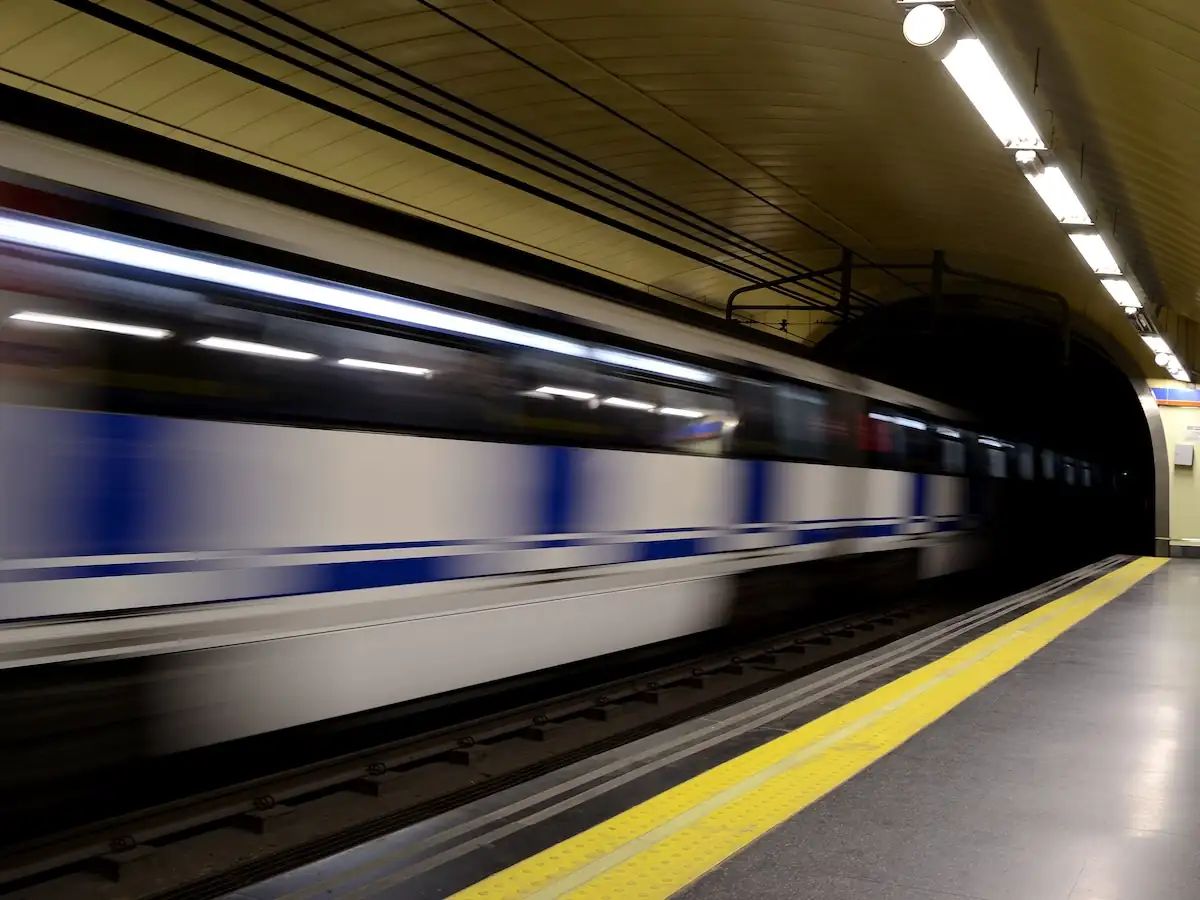
The metro saves time, brings the outskirts closer, and keeps the city running even when the streets above are gridlocked. But travelling underground has its own wear and tear: crowded platforms, hot waits, carriages with barely any space, and that feeling of moving together towards somewhere, even though everyone leads a different life.
At rush hour, the metro becomes a choreography of almost automatic movements. Regulars know where to stand, which door suits them, when to pick up the pace, and how to squeeze into a carriage that seems full—until one more person gets in.
There’s a very recognisable humanity on the platforms. Young people with headphones staring at their phones, workers finishing off a coffee, tourists hesitating in front of the map, women who have mastered balancing bags and sudden stops, pensioners waiting with a calm the city seems to have lost.
When the train arrives, differences fade. For a few minutes, everyone shares the same air, the same rattling, the same white light, and the same resigned expression if the carriage is too crowded. In summer, the heat turns every journey into a small test of patience.
The Madrid network is extensive, fast, and in many cases efficient. For much of the city, the metro is the simplest way to avoid traffic jams, impossible parking, and endless journeys above ground. Without it, Madrid would be a much slower and much harder city to live in.
But comfort isn’t always guaranteed. There are stations where the wait drags on, transfers that feel longer than the map suggests, and carriages where sharing space is measured in centimetres. In the metro, urban manners are practised in silence: letting people off before getting on, stepping aside, not taking up more space than necessary.
Opened in 1919, Metro de Madrid has grown into one of the largest networks in Europe. Its lines connect neighbourhoods, municipalities, transport hubs, universities, hospitals, offices, and leisure areas, making it a basic part of daily life.
It’s also a social barometer. On its trains, you can tell when the school year starts, when summer arrives, when there’s a match, a concert, a demonstration, or a long weekend. The noise changes, the clothes change, the rush changes. The metro doesn’t just carry passengers: it shows how Madrid breathes at every moment.
That’s why travelling underground in Madrid is much more than getting from A to B. For a few minutes, you step into a concentrated version of the city: fast, diverse, sometimes uncomfortable, almost always efficient, and full of small scenes that repeat themselves without anyone announcing them.
Above ground, Madrid is seen in its streets and squares. Below, it’s understood differently: in polite shoves, tired looks, the relief of finding a seat, and that moment when the doors close and the city starts moving again.