
News
Who pays for street cats: the protest that reached Sant Jaume this Sunday
Around a hundred people gathered this Sunday, 6 September, in front of Barcelona City Council to demand more public resources for community cat colonies. Orange T-shirts and a banner reading 'Town halls, comply with the law' occupied Plaça Sant Jaume during a mobilisation held simultaneously in dozens of Spanish cities.
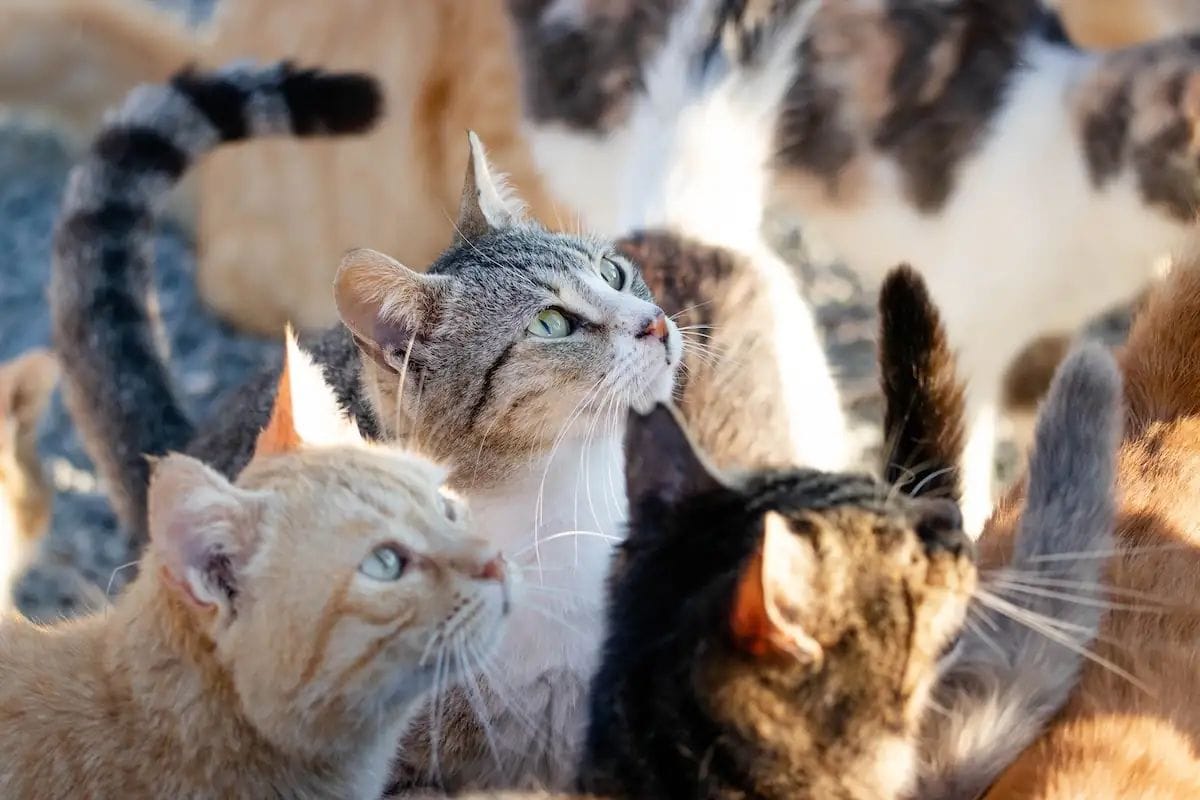
The protest was part of “Cats Have a Law”, a call promoted by people who manage feral-cat colonies and supported by animal-protection organisations. There were 38 demonstrations in Spain, and the shared aim was to demand that the obligations introduced by Law 7/2023 should not depend mainly on volunteers’ work and money.
The regulation assigns concrete responsibilities to town and city councils. Municipalities must develop colony-management programmes, register and map community cats, guarantee their sterilisation, provide veterinary care, establish health and neighbourhood-conflict protocols, and identify the animals by microchip under municipal responsibility.
One of the participants’ main criticisms is financial. People who care for these colonies report that they still pay out of their own pockets for some food, veterinary treatment, sterilisation and other needs, while also giving hours of voluntary work. Their demand is not merely to recognise their work, but to provide adequate funding for a service whose management legally belongs to local authorities.
In Barcelona, however, the situation requires qualification. The city is not starting from zero and does not lack a municipal programme. The City Council has worked for years with protection organisations through the controlled-colony model and in 2026 allocated 160,000 euros to a specific call for their control and care. The decision distributes the aid among 11 projects managed by organisations in different parts of the city.
That is precisely the conflict that took to the streets on Sunday: associations and carers consider that support insufficient in view of the real volume of work. The latest published municipal count estimated around 6,700 cats distributed across more than 600 colonies, managed with participation that the City Council itself describes as indispensable from volunteers.
The debate also goes beyond feeding animals. The CER model — capture, sterilisation and return — seeks to progressively stabilise populations, monitor their health and prevent new litters. State legislation strengthens that system and establishes that necessary healthcare and sterilisation programmes form part of municipal functions.
The Barcelona gathering thus put figures and faces to an activity that is little visible in everyday neighbourhood life. Participants did not demand a new law: they asked that the one in force since 2023 be translated into more resources, protocols and public responsibility for those who maintain the city’s colonies every week.