
News
Collserola loses 90% of its visitors due to swine fever alert in Barcelona
Access to Collserola has dropped by 90% since restrictions were put in place due to African swine fever, with 238 infected wild boars and police presence at the main entrances to the park.
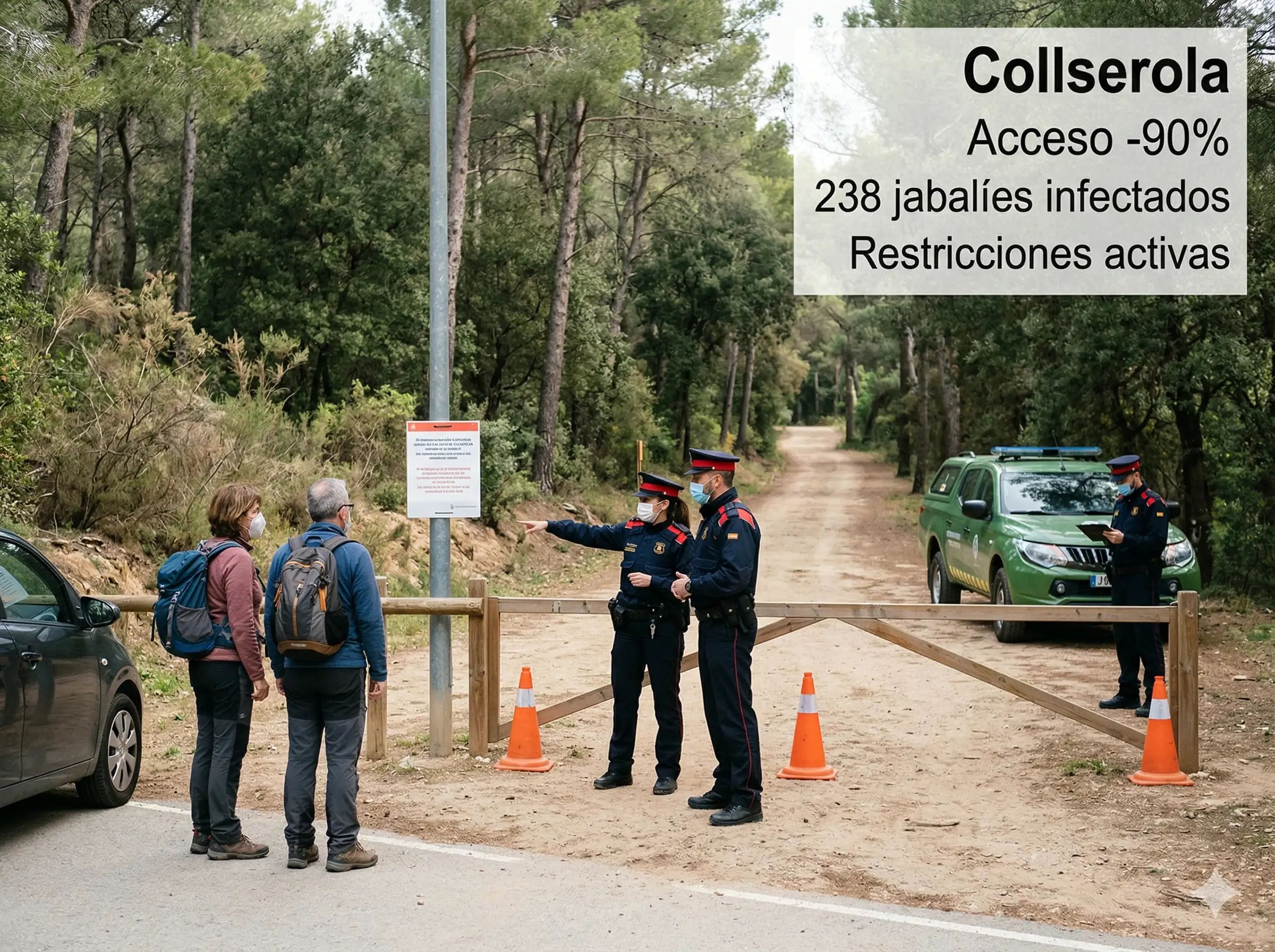
Access to Collserola park has plummeted by 90%. Most local residents are respecting the restrictions. Police patrol and explain the reasons for the closure. There are already 238 cases of African swine fever in wild boars. The situation is causing concern in Barcelona.
Life in Barcelona has changed suddenly for those who used to walk or exercise in Collserola. The park, one of the city's largest green lungs, has seen its visitor numbers fall by 90% in recent days. The restrictions imposed by the health alert have transformed the routines of thousands of Barcelona residents.
According to park officials, most locals are complying with the access limitations. Police presence has increased on the main paths and entrances, where officers inform those approaching about the ban and the reasons behind it.
The reason for these measures is the spread of African swine fever among the wild boar population. The latest count brings the number of infected animals to 238, a figure that has heightened concern among both authorities and local residents.
The temporary closure of Collserola affects not only those seeking nature close to home, but also those who depend on the park for their daily wellbeing. Uncertainty about when the area will reopen adds tension to everyday life in the city.
Collserola is much more than a park: it is a protected natural area covering more than 8,000 hectares and connects Barcelona with several municipalities in the metropolitan area. Its biodiversity and its role as a refuge for local wildlife make it an essential enclave for urban quality of life. Managing health emergencies in this environment requires coordination between administrations and constant vigilance to protect both public health and ecological balance.